
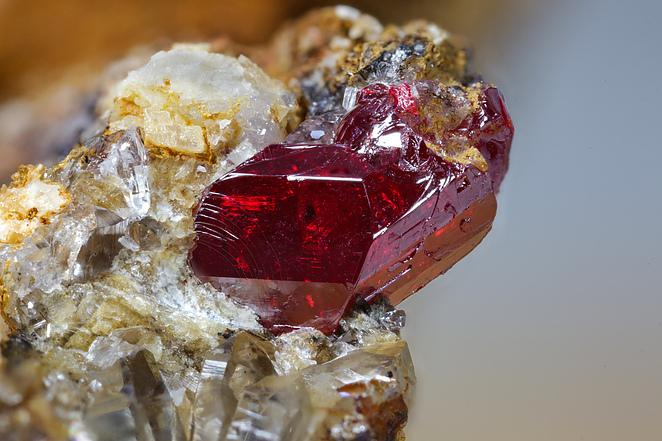
Cinnabar and its distinctive red color
Cinnabar is a mineral composed of mercury sulfide, with the chemical formula HgS. It is known for its vivid red color and has historically been used as a source of mercury and as a pigment.
Its appearance may range from bright scarlet to darker red, depending on its form and characteristics.
Cinnabar has been important in the history of mineral extraction, art, decoration, and pigment production. Its color made it particularly valuable in contexts where intense red materials were difficult to obtain.
Formation of cinnabar deposits
Cinnabar commonly forms in hydrothermal environments, where mineral-rich fluids move through fractures and rock formations.
These deposits may occur in association with volcanic activity, hot springs, faults, and other geological structures that allow fluid circulation.
The mineral can develop within veins, cavities, or altered rock zones. Its formation depends on the chemistry of the fluids, temperature, pressure, and the availability of mercury and sulfur.
Cave environments and mineral deposits
Caves can contain a variety of mineral deposits depending on the surrounding rocks, groundwater chemistry, and geological history.
However, cinnabar is not a typical cave mineral in every environment. A cave occurrence would require specific geological conditions and evidence of mercury mineralization.
The title's reference to cinnabar in a Peloponnesian cave is hypothetical and should not be treated as a confirmed deposit.
Historical and scientific importance
Cinnabar has a long history of human use. Its red pigment was valued for decorative purposes, and mercury obtained from cinnabar was historically used in various technological and industrial processes.
The study of cinnabar can provide information about mineral formation, hydrothermal systems, and the history of mineral exploitation.
A hypothetical cinnabar occurrence in a Peloponnesian cave would be important if it could be documented through geological mapping and mineralogical analysis. Researchers would examine the surrounding rocks, identify associated minerals, and establish the deposit's geological context.
Safety and conservation
Cinnabar contains mercury and must be handled with caution. Although the mineral itself has different properties from elemental mercury, exposure to mercury-containing materials can pose health risks, particularly when materials are crushed, heated, or processed.
A geological investigation should therefore rely on proper mineral identification, risk assessment, and professional handling procedures rather than casual collection or experimentation.
The study of cinnabar would contribute to understanding the geological and historical significance of mercury-bearing minerals while emphasizing the importance of responsible conservation and safety.





