
• MAIN PAGE
  • LATEST NEWS
    • Lost Cities
    • Archaeology's Greatest Finds
    • Underwater Discoveries
    • Greatest Inventions
    • Studies
    • Blog
  • PHILOSOPHY
  • HISTORY
  • RELIGIONS
    • Africa
    • Anatolia
    • Arabian Peninsula
    • Balkan Region
    • China - East Asia
    • Europe
    • Eurasian Steppe
    • Levant
    • Mesopotamia
    • Oceania - SE Asia
    • Pre-Columbian Civilizations of America
    • Iranian Plateau - Central Asia
    • Indus Valley - South Asia
    • Japan
    • The Archaeologist Editor Group
    • Scientific Studies
    • Aegean Prehistory
    • Historical Period
    • Byzantine Middle Ages
    • Predynastic Period
    • Dynastic Period
    • Greco-Roman Egypt
  • Rome
  • PALEONTOLOGY
  • About us
Menu

The Archaeologist

  • MAIN PAGE
  • LATEST NEWS
  • DISCOVERIES
    • Lost Cities
    • Archaeology's Greatest Finds
    • Underwater Discoveries
    • Greatest Inventions
    • Studies
    • Blog
  • PHILOSOPHY
  • HISTORY
  • RELIGIONS
  • World Civilizations
    • Africa
    • Anatolia
    • Arabian Peninsula
    • Balkan Region
    • China - East Asia
    • Europe
    • Eurasian Steppe
    • Levant
    • Mesopotamia
    • Oceania - SE Asia
    • Pre-Columbian Civilizations of America
    • Iranian Plateau - Central Asia
    • Indus Valley - South Asia
    • Japan
    • The Archaeologist Editor Group
    • Scientific Studies
  • GREECE
    • Aegean Prehistory
    • Historical Period
    • Byzantine Middle Ages
  • Egypt
    • Predynastic Period
    • Dynastic Period
    • Greco-Roman Egypt
  • Rome
  • PALEONTOLOGY
  • About us
No results found

Obscure Agate in Antiparos Karst

November 28, 2026

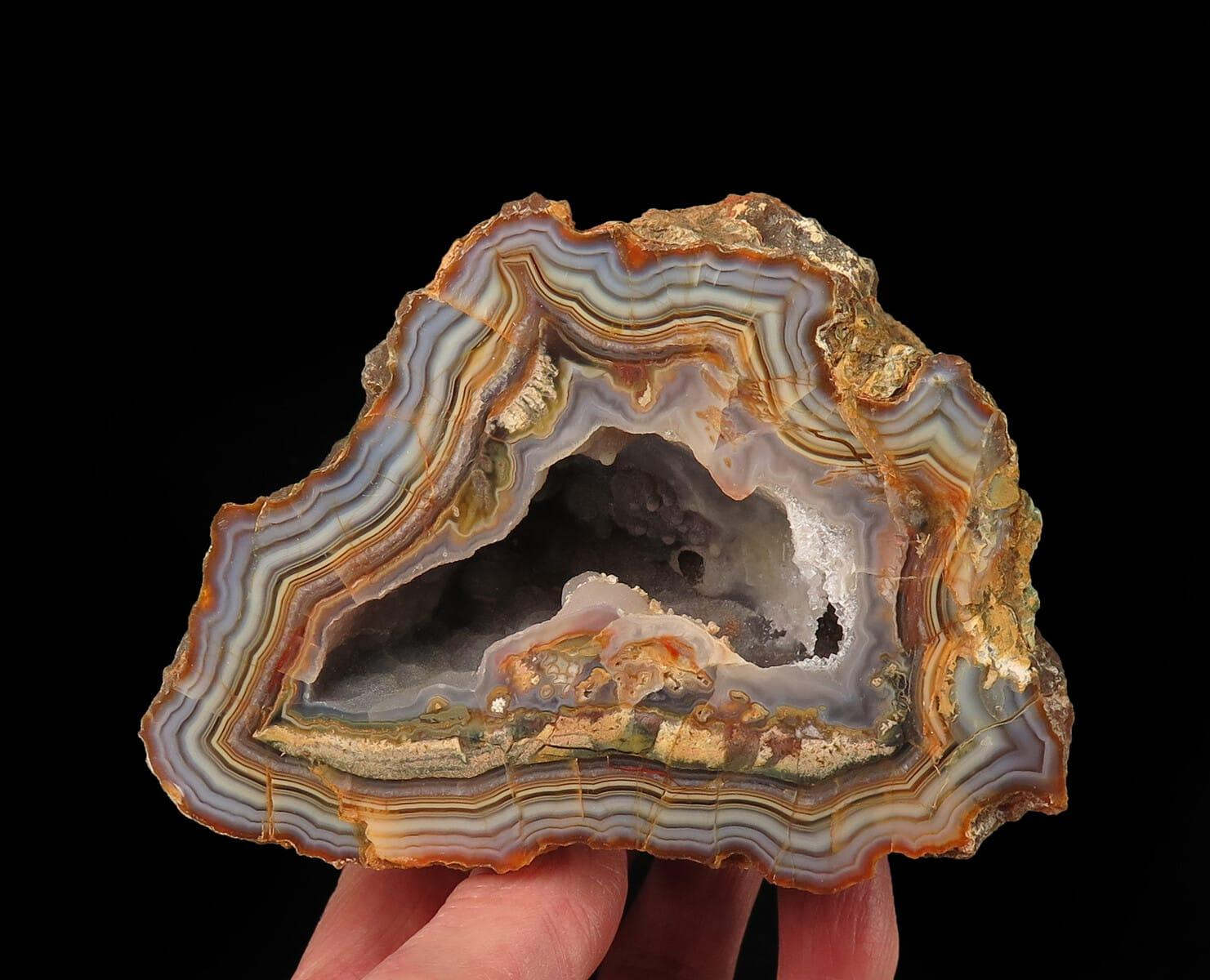
Agate and its layered structure

Agate is a variety of chalcedony, a microcrystalline form of silica. It is commonly characterized by banding, color variations, and layered structures that develop through the deposition of silica-rich materials.

The bands may appear in different colors, including white, gray, brown, red, blue, and other shades. Their patterns can be curved, concentric, irregular, or finely layered.

Agate commonly forms within cavities in rocks, where silica-rich fluids gradually deposit material along the walls. Over time, repeated deposition can produce distinctive banded structures.

Agate formation in cavities

The formation of agate is associated with the movement of silica-bearing fluids through cavities, fractures, or other spaces in rocks.

As the chemistry of the fluids changes, silica may precipitate in layers. These layers can preserve variations in mineral composition, texture, and color.

Agate is often associated with volcanic environments, but it can also form in other geological settings where the appropriate conditions for silica deposition exist.

Antiparos and karst environments

Antiparos is part of the Cyclades and is known for its geological landscape, including limestone formations and the famous Antiparos Cave.

Karst environments develop through the dissolution of soluble rocks, particularly limestone and other carbonate rocks. Water containing dissolved carbon dioxide can gradually dissolve carbonate material, creating cavities, caves, fissures, and underground drainage systems.

The title's reference to agate in Antiparos karst is hypothetical. Agate is not automatically associated with limestone caves, and its presence would depend on the local geological history and the availability of silica-rich materials.

Geological investigation

A potential agate occurrence in Antiparos would require examination of the host rock, the mineral's structure, and the geological processes responsible for its formation.

Researchers could investigate whether the material developed within a cavity, was introduced through a fracture, or was transported into the area from another source.

Such a study would be useful for examining mineral deposition, the relationship between karst systems and mineralization, and the geological diversity of the Cyclades.

It would also highlight the importance of preserving caves and karst environments, which can contain fragile geological formations and sensitive underground ecosystems.


← Hidden Turquoise in Thasos MarbleHidden Cinnabar in a Peloponnesian Cave →
Featured
image_2026-11-19_213714038.png
November 28, 2026
Forgotten Byzantine Tiles in a Karpathos Hill Chapel
November 28, 2026
Read more →
November 28, 2026
image_2026-11-19_213753883.png
November 28, 2026
Hidden Venetian Drain Pipes in a Spetses Townhouse
November 28, 2026
Read more →
November 28, 2026
image_2026-11-19_213831169.png
November 28, 2026
Little-Known Ottoman Well Rims in Kastellorizo Towers
November 28, 2026
Read more →
November 28, 2026
image_2026-11-19_213905700.png
November 28, 2026
Obscure Minoan Jars in a Kavala Farmhouse Cellar
November 28, 2026
Read more →
November 28, 2026
image_2026-11-23_155132050.png
November 28, 2026
Obscure Moonstone in Schinoussa Inlets
November 28, 2026
Read more →
November 28, 2026
image_2026-11-23_155216642.png
November 28, 2026
Hidden Hematite in an Othrys Gully
November 28, 2026
Read more →
November 28, 2026
read more

Powered by The archaeologist



