
• MAIN PAGE
  • LATEST NEWS
    • Lost Cities
    • Archaeology's Greatest Finds
    • Underwater Discoveries
    • Greatest Inventions
    • Studies
    • Blog
  • PHILOSOPHY
  • HISTORY
  • RELIGIONS
    • Africa
    • Anatolia
    • Arabian Peninsula
    • Balkan Region
    • China - East Asia
    • Europe
    • Eurasian Steppe
    • Levant
    • Mesopotamia
    • Oceania - SE Asia
    • Pre-Columbian Civilizations of America
    • Iranian Plateau - Central Asia
    • Indus Valley - South Asia
    • Japan
    • The Archaeologist Editor Group
    • Scientific Studies
    • Aegean Prehistory
    • Historical Period
    • Byzantine Middle Ages
    • Predynastic Period
    • Dynastic Period
    • Greco-Roman Egypt
  • Rome
  • PALEONTOLOGY
  • About us
Menu

The Archaeologist

  • MAIN PAGE
  • LATEST NEWS
  • DISCOVERIES
    • Lost Cities
    • Archaeology's Greatest Finds
    • Underwater Discoveries
    • Greatest Inventions
    • Studies
    • Blog
  • PHILOSOPHY
  • HISTORY
  • RELIGIONS
  • World Civilizations
    • Africa
    • Anatolia
    • Arabian Peninsula
    • Balkan Region
    • China - East Asia
    • Europe
    • Eurasian Steppe
    • Levant
    • Mesopotamia
    • Oceania - SE Asia
    • Pre-Columbian Civilizations of America
    • Iranian Plateau - Central Asia
    • Indus Valley - South Asia
    • Japan
    • The Archaeologist Editor Group
    • Scientific Studies
  • GREECE
    • Aegean Prehistory
    • Historical Period
    • Byzantine Middle Ages
  • Egypt
    • Predynastic Period
    • Dynastic Period
    • Greco-Roman Egypt
  • Rome
  • PALEONTOLOGY
  • About us
No results found

Hidden Turquoise in Thasos Marble

November 28, 2026

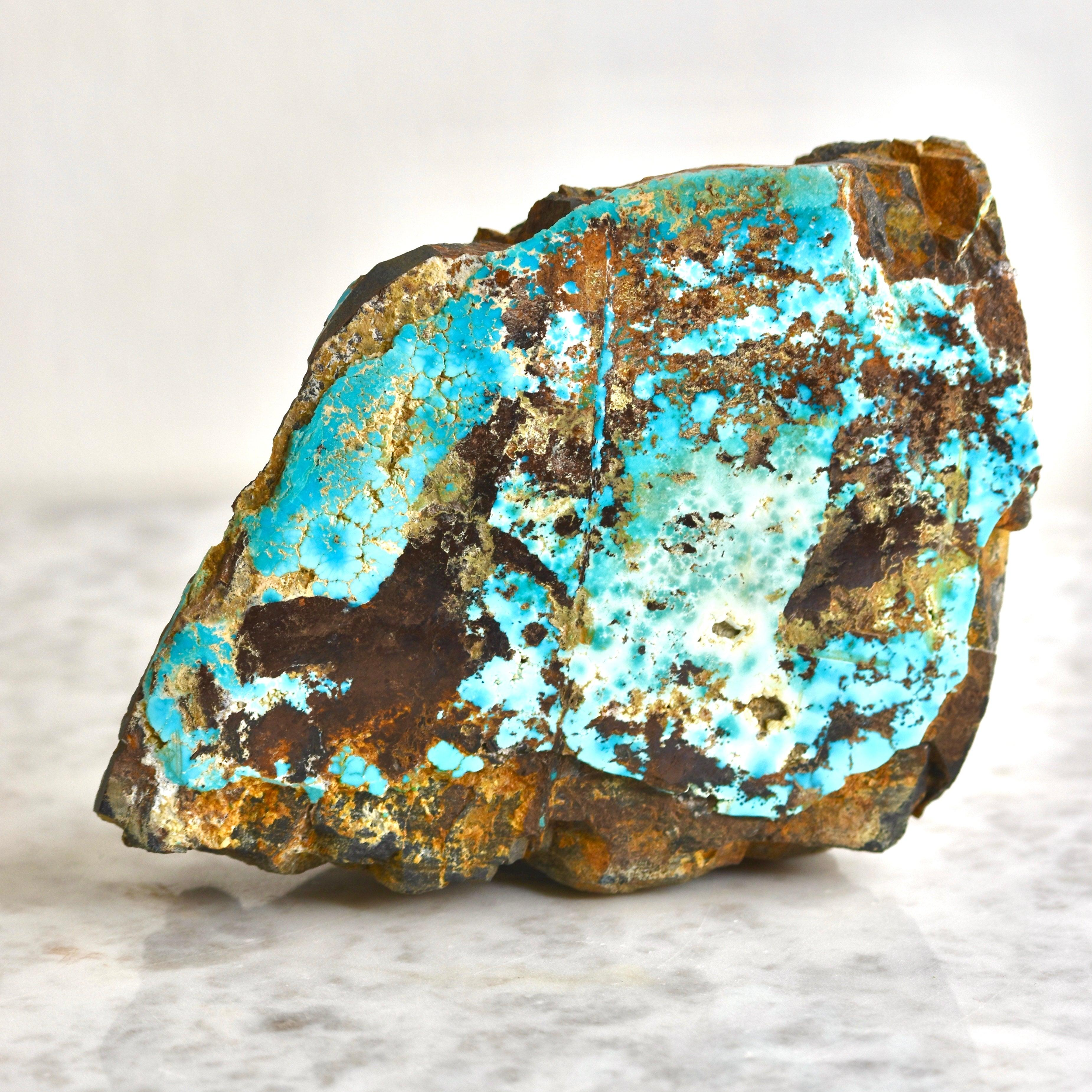
Turquoise and its mineral composition

Turquoise is a blue to green mineral composed primarily of hydrated copper and aluminum phosphate. Its color is influenced by its chemical composition, particularly the presence of copper, while variations in other elements can contribute to changes in appearance.

Turquoise is known as a decorative stone and has been valued in jewelry, ornaments, and artistic objects for thousands of years.

Its color can vary from vivid blue to greenish blue and pale green. The mineral may occur as compact masses, veins, nodules, or irregular fillings within surrounding rock.

Mineral formation

Turquoise generally forms in the near-surface environments of copper deposits where phosphate-bearing materials interact with copper and aluminum under suitable conditions.

Its formation depends on the availability of these elements and the chemical conditions that allow the mineral to precipitate.

Turquoise may occur in association with other secondary minerals that form through the alteration of copper-bearing rocks.

Thasos and its marble geology

Thasos is famous for its marble, particularly the white marble historically associated with the island's quarries. Marble forms through metamorphism of carbonate rocks, producing recrystallized mineral structures dominated by calcite or dolomite.

The title's reference to turquoise within Thasos marble is hypothetical and requires geological verification.

Turquoise is not a typical component of pure marble. A potential occurrence would need to be examined to determine whether it is associated with fractures, impurities, neighboring rock formations, or a separate mineralized deposit.

The presence of blue-green material within marble would not automatically identify it as turquoise, because other minerals can produce similar colors.

Geological and cultural significance

Thasos has a long history of quarrying and the use of stone in construction, sculpture, and architecture. Its marble is an important part of the island's geological and cultural heritage.

A hypothetical turquoise occurrence would be interesting because it could indicate a localized mineralization process distinct from the formation of the marble itself.

The study would require mineralogical analysis, geological mapping, and investigation of the relationship between the mineral and its host rock.

It could contribute to understanding the island's geological diversity while emphasizing the need to distinguish decorative stone resources from rare mineral occurrences.


← Obscure Amber in Prespa RiverbanksObscure Agate in Antiparos Karst →
Featured
image_2026-11-19_213714038.png
November 28, 2026
Forgotten Byzantine Tiles in a Karpathos Hill Chapel
November 28, 2026
Read more →
November 28, 2026
image_2026-11-19_213753883.png
November 28, 2026
Hidden Venetian Drain Pipes in a Spetses Townhouse
November 28, 2026
Read more →
November 28, 2026
image_2026-11-19_213831169.png
November 28, 2026
Little-Known Ottoman Well Rims in Kastellorizo Towers
November 28, 2026
Read more →
November 28, 2026
image_2026-11-19_213905700.png
November 28, 2026
Obscure Minoan Jars in a Kavala Farmhouse Cellar
November 28, 2026
Read more →
November 28, 2026
image_2026-11-23_155132050.png
November 28, 2026
Obscure Moonstone in Schinoussa Inlets
November 28, 2026
Read more →
November 28, 2026
image_2026-11-23_155216642.png
November 28, 2026
Hidden Hematite in an Othrys Gully
November 28, 2026
Read more →
November 28, 2026
read more

Powered by The archaeologist



