
Introduction
The archaeological study of Viking maritime activity has traditionally relied on ship remains, settlements, burial sites, tools, weapons, trade goods, and written sources.
Arctic environments offer a different archaeological setting. Cold conditions, frozen soils, and limited biological activity can sometimes preserve organic materials that would normally deteriorate rapidly in warmer climates.
The concept of ice-trapped Viking cargoes along the Arctic Circle presents an opportunity to investigate the preservation of maritime materials, transportation systems, and trade networks in northern environments.
The specific frozen cargoes described in this title are not verified as a particular archaeological assemblage. The article examines the archaeological potential of cold-region preservation and Viking maritime research.
Viking Maritime Networks
Viking Age communities were involved in extensive maritime activity across northern Europe and the North Atlantic.
Ships were essential for transportation, trade, migration, exploration, fishing, warfare, and communication.
Viking maritime networks connected Scandinavia with the British Isles, continental Europe, the North Atlantic islands, and routes extending toward the Baltic and eastern European regions.
Cargoes transported by sea could include:
Timber and woodworking products.
Iron objects.
Tools.
Textiles.
Ceramics.
Food supplies.
Animal products.
Trade goods.
Personal belongings.
Ship cargoes could provide information about commercial activity, navigation, settlement movement, and cultural interaction.
Arctic Preservation Conditions
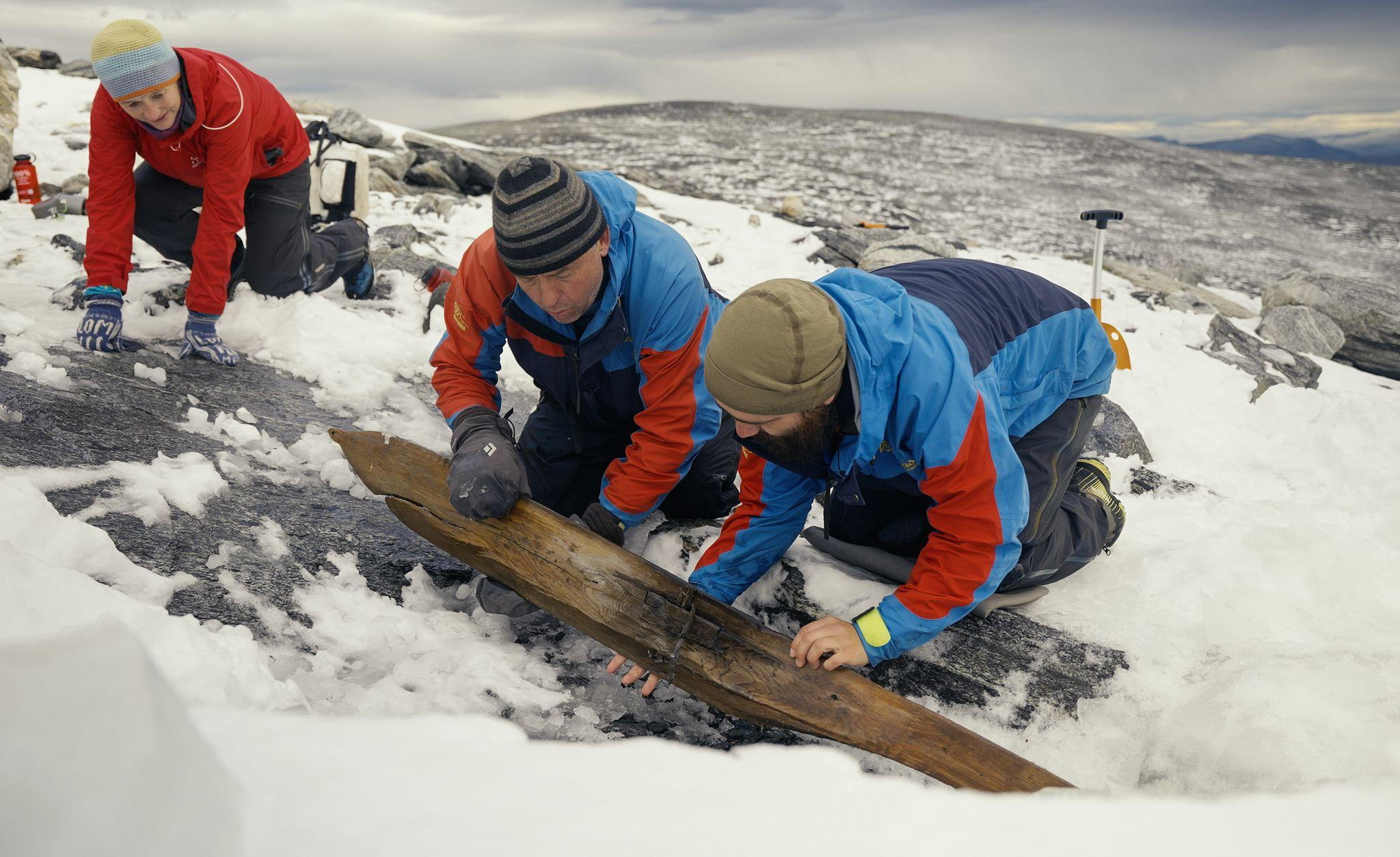
Permafrost is ground that remains frozen for at least two consecutive years. In many northern regions, frozen conditions may preserve organic materials by slowing decomposition.
Depending on local conditions, archaeological materials may survive within frozen sediments, ice-rich deposits, or cold environments.
Potentially preserved materials include:
Wood.
Leather.
Textiles.
Plant remains.
Food residues.
Animal remains.
Rope and cordage.
Organic containers.
However, preservation varies considerably. Not every Arctic archaeological deposit is frozen, and not every frozen context preserves materials equally well.
Temperature, moisture, oxygen availability, sediment chemistry, and the stability of the frozen environment all affect preservation.
Cargoes and Maritime Archaeology
A cargo assemblage may provide evidence about the purpose of a voyage and the economic relationships involved.
The composition of a cargo could help researchers distinguish between commercial transportation, provisioning, migration, military activity, or other maritime functions.
If a Viking-period cargo were preserved in a frozen Arctic context, archaeologists could examine the spatial arrangement of materials, packaging, containers, and relationships between objects.
The context of the cargo would be particularly important. Materials found together may have been part of a single event, but they may also have accumulated through later activity or environmental processes.
Researchers would need to establish whether the cargo was associated with a vessel, transport structure, storage location, or other archaeological feature.
Frozen Archaeological Materials and Scientific Analysis
Cold-preserved materials may provide opportunities for specialized scientific research.
Wood could be analyzed to identify species and investigate timber selection. Textile fibers could reveal manufacturing techniques. Plant remains could provide information about food and cargo contents.
Residue analysis may identify traces of substances that were stored or transported in containers.
Depending on preservation and the research question, other methods could include radiocarbon dating, stable isotope analysis, microscopy, DNA analysis, and chemical characterization.
Such methods could help reconstruct the contents of a cargo and its relationship to Viking maritime activity.
Climate Change and Archaeological Vulnerability
Arctic archaeological sites are increasingly vulnerable to environmental change.
Rising temperatures, thawing permafrost, coastal erosion, changing drainage, and increased exposure to oxygen may cause the rapid deterioration of materials that have remained preserved for centuries.
Organic archaeological remains may be especially vulnerable once they are removed from stable frozen conditions.
The discovery of frozen cargoes would therefore require immediate conservation planning.
Excavation, documentation, sampling, transport, and storage must be coordinated carefully to prevent the loss of fragile materials.
Maritime Routes and Arctic Exploration
The Arctic Circle contains a complex network of coastlines, islands, fjords, and waterways.
The investigation of Viking-period maritime activity in northern environments may help researchers understand how communities navigated difficult conditions, exploited seasonal resources, and interacted with northern populations.
Archaeological discoveries could contribute to discussions about maritime knowledge, climate adaptation, settlement expansion, and transportation technologies.
However, the presence of Viking objects in an Arctic region does not necessarily demonstrate direct Viking settlement or a specific maritime voyage. Objects may have moved through trade, exchange, migration, or later activity.
Conclusion
Ice-trapped Viking cargoes would provide valuable opportunities to investigate maritime transportation, trade, material culture, and organic preservation.
The Arctic environment can preserve archaeological materials that are rarely recovered elsewhere, but such preservation is increasingly threatened by climate change.
The study of frozen maritime remains would therefore contribute not only to Viking archaeology but also to broader discussions about environmental change, archaeological conservation, and the protection of vulnerable heritage landscapes.





