• MAIN PAGE
  • LATEST NEWS
    • Lost Cities
    • Archaeology's Greatest Finds
    • Underwater Discoveries
    • Greatest Inventions
    • Studies
    • Blog
  • PHILOSOPHY
  • HISTORY
  • RELIGIONS
    • Africa
    • Anatolia
    • Arabian Peninsula
    • Balkan Region
    • China - East Asia
    • Europe
    • Eurasian Steppe
    • Levant
    • Mesopotamia
    • Oceania - SE Asia
    • Pre-Columbian Civilizations of America
    • Iranian Plateau - Central Asia
    • Indus Valley - South Asia
    • Japan
    • The Archaeologist Editor Group
    • Scientific Studies
    • Aegean Prehistory
    • Historical Period
    • Byzantine Middle Ages
    • Predynastic Period
    • Dynastic Period
    • Greco-Roman Egypt
  • Rome
  • PALEONTOLOGY
  • About us
Menu

The Archaeologist

  • MAIN PAGE
  • LATEST NEWS
  • DISCOVERIES
    • Lost Cities
    • Archaeology's Greatest Finds
    • Underwater Discoveries
    • Greatest Inventions
    • Studies
    • Blog
  • PHILOSOPHY
  • HISTORY
  • RELIGIONS
  • World Civilizations
    • Africa
    • Anatolia
    • Arabian Peninsula
    • Balkan Region
    • China - East Asia
    • Europe
    • Eurasian Steppe
    • Levant
    • Mesopotamia
    • Oceania - SE Asia
    • Pre-Columbian Civilizations of America
    • Iranian Plateau - Central Asia
    • Indus Valley - South Asia
    • Japan
    • The Archaeologist Editor Group
    • Scientific Studies
  • GREECE
    • Aegean Prehistory
    • Historical Period
    • Byzantine Middle Ages
  • Egypt
    • Predynastic Period
    • Dynastic Period
    • Greco-Roman Egypt
  • Rome
  • PALEONTOLOGY
  • About us

Israel is trying to rewrite history – and British institutions risk helping them do it

February 16, 2026

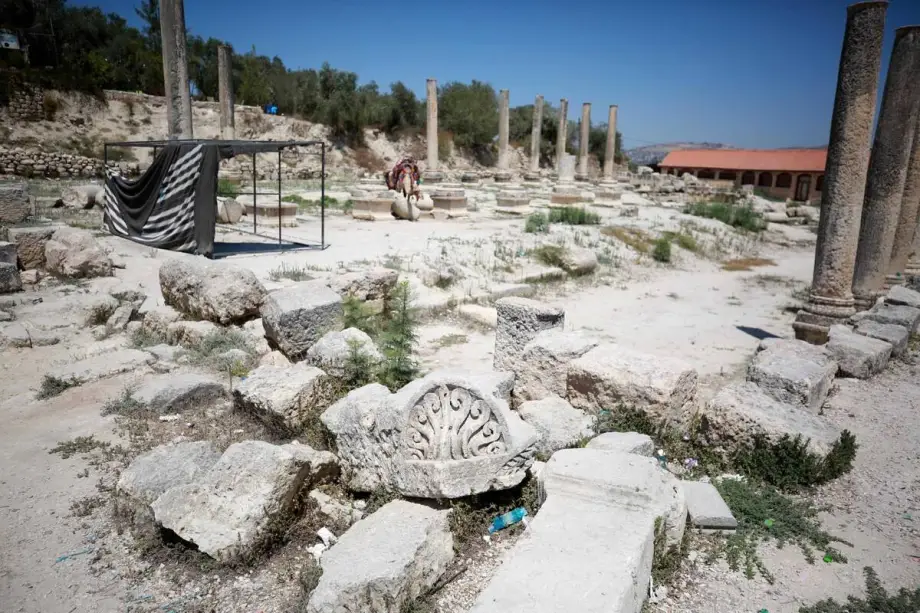
The author argues that Israel is attempting to reshape interpretations of ancient history in ways that marginalize or erase Palestinian heritage. In Palestine itself, they claim, archaeological sites—such as the ancient town of Sebastia near Nablus—have been damaged or appropriated. They also warn that international institutions, including museums and universities, may unintentionally support this effort. For example, UK Lawyers for Israel (UKLFI) recently contacted the British Museum urging it to remove references to “Palestine” from exhibit labels, which the author interprets as part of a broader political attempt to eliminate Palestinian historical identity.

The author notes that their own workplace, The Open University in the UK, received a similar request from UKLFI to delete the phrase “ancient Palestine” from teaching materials. According to the author, UKLFI argued that the term is historically inaccurate and potentially harmful to Jewish students. The author rejects these claims, stating that “ancient Palestine” is a long-established scholarly term, used as early as the 5th century BCE by Herodotus and widely accepted in academic research today.

They contend that objections to the term stem from ideological motives rather than historical accuracy. In their view, challenging the phrase supports narratives that question Palestinian legitimacy while portraying Jewish political claims as rooted in antiquity. The author further argues that revising ancient history to justify modern political projects is a common tactic in colonial contexts. They cite examples such as British interpretations of Great Zimbabwe under Cecil Rhodes and French colonial narratives in Algeria, where historical reinterpretations were used to legitimize European control.

The author asserts that Zionism follows a similar pattern by reshaping historical narratives to reinforce claims of exclusive belonging. They emphasize that ancient Palestine was multicultural and multireligious, with Jewish communities forming part of a broader, diverse society. Replacing the term “ancient Palestine” with labels like “Judea” or “Samaria,” they argue, risks presenting the past as exclusively Jewish and detached from its wider context.

They also warn that conflating Jewish identity with Zionism may inadvertently foster both Islamophobia and antisemitism. In their view, accurately describing the ancient region as “Palestine” reflects its historical diversity and resists ethnonationalist interpretations. The author concludes that universities and museums must defend academic freedom and resist political pressure to alter historically grounded terminology, arguing that failing to do so could contribute to the distortion of history and the marginalization of Palestinian heritage.
← Public space to be created beneath water towerArchaeologists Found a 5,000-Year-Old Fortress That Nature Had Hidden for Centuries →
Featured
image_2026-02-16_202620014.png
Feb 16, 2026
First Solid Evidence of Hannibal's Infamous War Elephants Discovered in Spain
Feb 16, 2026
Read More →
Feb 16, 2026
image_2026-02-16_202346199.png
Feb 16, 2026
A 7,500-Year-Old Neolithic Clay Figurine Discovered in Transylvania
Feb 16, 2026
Read More →
Feb 16, 2026
image_2026-02-16_202255460.png
Feb 16, 2026
Public space to be created beneath water tower
Feb 16, 2026
Read More →
Feb 16, 2026
image_2026-02-16_185054776.png
Feb 16, 2026
Israel is trying to rewrite history – and British institutions risk helping them do it
Feb 16, 2026
Read More →
Feb 16, 2026
image_2026-02-16_184952865.png
Feb 16, 2026
Archaeologists Found a 5,000-Year-Old Fortress That Nature Had Hidden for Centuries
Feb 16, 2026
Read More →
Feb 16, 2026
image_2026-02-16_184823467.png
Feb 16, 2026
Illegal structure found near Naneghat caves in Pune’s Junnar, FIR registered by ASI
Feb 16, 2026
Read More →
Feb 16, 2026
read more

Powered by The archaeologist