• MAIN PAGE
  • LATEST NEWS
    • Lost Cities
    • Archaeology's Greatest Finds
    • Underwater Discoveries
    • Greatest Inventions
    • Studies
    • Blog
  • PHILOSOPHY
  • HISTORY
  • RELIGIONS
    • Africa
    • Anatolia
    • Arabian Peninsula
    • Balkan Region
    • China - East Asia
    • Europe
    • Eurasian Steppe
    • Levant
    • Mesopotamia
    • Oceania - SE Asia
    • Pre-Columbian Civilizations of America
    • Iranian Plateau - Central Asia
    • Indus Valley - South Asia
    • Japan
    • The Archaeologist Editor Group
    • Scientific Studies
    • Aegean Prehistory
    • Historical Period
    • Byzantine Middle Ages
    • Predynastic Period
    • Dynastic Period
    • Greco-Roman Egypt
  • Rome
  • PALEONTOLOGY
  • About us
Menu

The Archaeologist

  • MAIN PAGE
  • LATEST NEWS
  • DISCOVERIES
    • Lost Cities
    • Archaeology's Greatest Finds
    • Underwater Discoveries
    • Greatest Inventions
    • Studies
    • Blog
  • PHILOSOPHY
  • HISTORY
  • RELIGIONS
  • World Civilizations
    • Africa
    • Anatolia
    • Arabian Peninsula
    • Balkan Region
    • China - East Asia
    • Europe
    • Eurasian Steppe
    • Levant
    • Mesopotamia
    • Oceania - SE Asia
    • Pre-Columbian Civilizations of America
    • Iranian Plateau - Central Asia
    • Indus Valley - South Asia
    • Japan
    • The Archaeologist Editor Group
    • Scientific Studies
  • GREECE
    • Aegean Prehistory
    • Historical Period
    • Byzantine Middle Ages
  • Egypt
    • Predynastic Period
    • Dynastic Period
    • Greco-Roman Egypt
  • Rome
  • PALEONTOLOGY
  • About us
No results found

Ivane Valley: PNG's 49,000-Year Highland Settlers

July 22, 2026

Introduction

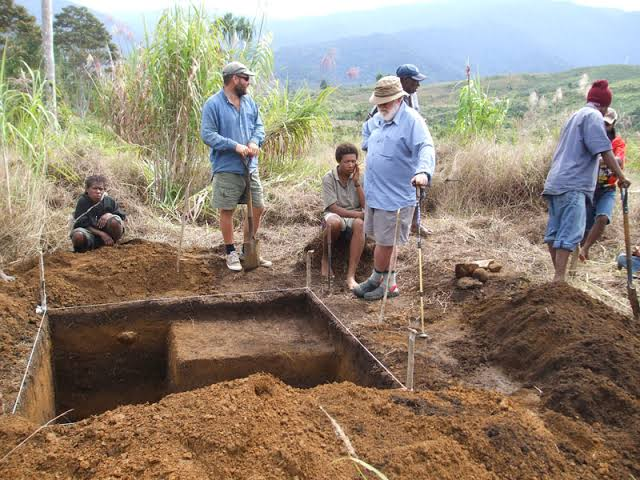
High in the Owen Stanley Range of Central Province, Papua New Guinea, the Ivane Valley sits at an elevation of 2,000 meters above sea level. Archaeological research in this cold, montane basin has pushed back the timeline for human adaptation to high-altitude environments to an extraordinary 49,000 to 44,000 years ago.

Sites such as Vilakuav and Kosipe within the valley demonstrate that early Homo sapiens entering Sahul (the combined Pleistocene landmass of Australia and New Guinea) did not remain confined to coastal margins, but rapidly penetrated challenging, high-altitude interior zones during the Late Pleistocene.

High-Altitude Adaptations and Lithic Technology

To survive in the Pleistocene Ivane Valley—where temperatures regularly dropped near freezing and thick oak/podocarp rainforests alternated with subalpine grasslands—early human groups developed targeted economic strategies:

  • Pandanus Exploitation: Archaeological layers contain abundant carbonized nutshell fragments of highland wild Pandanus species (Pandanus jiulianettii and Pandanus brosimos). These high-fat, energy-dense nuts were gathered seasonally, roasted, and served as a crucial nutritional foundation for highland foraging groups.

  • Residue-Analyzed Waisted Axes: Excavations yielded flaked stone artifacts, including distinct waisted axes (stone blades notched at the sides for secure hafting to wooden handles). Micro-wear and starch grain analyses conducted on these stone edges revealed starch granules from Pandanus nuts and yams, as well as wood resin and plant tissue, indicating their use in clearing vegetation, ringing trees to encourage starch-rich decay, and processing plant foods.

The presence of burned clay, scattered charcoal hearths, and stone tool manufacturing debris across multiple open-air sites indicates that these early foragers systematically used fire to manage vegetation, maintaining open patches in the forest to attract game and encourage nut-bearing trees.

Conclusion

The 49,000-year-old sites of the Ivane Valley stand among the earliest evidence globally for human habitation of high-altitude montane environments. They showcase the remarkable behavioral flexibility and technical ingenuity of the first Papuans, who successfully adapted to mountain ecosystems within a few thousand years of arriving on the continent.
← Kosipe: PNG's 48,000-Year Stone ToolsKuk Swamp: PNG's 7,000-Year Wetland Farming →
Featured
image_2026-07-21_213118317.png
July 22, 2026
Gò Mun: Vietnam's 2,500-Year Bronze Casters
July 22, 2026
Read more →
July 22, 2026
image_2026-07-21_213232100.png
July 22, 2026
Óc Eo: Mekong Delta's Funan Empire Port
July 22, 2026
Read more →
July 22, 2026
image_2026-07-21_212955348.png
July 22, 2026
Lách-Báu Cave: Vietnam's 4,000-Year Dong Son Drums
July 22, 2026
Read more →
July 22, 2026
image_2026-07-21_212901393.png
July 22, 2026
Yuku Rockshelter: PNG's Lapita Expansion Site
July 22, 2026
Read more →
July 22, 2026
image_2026-07-21_212748667.png
July 22, 2026
Kosipe: PNG's 48,000-Year Stone Tools
July 22, 2026
Read more →
July 22, 2026
image_2026-07-21_212653218.png
July 22, 2026
Ivane Valley: PNG's 49,000-Year Highland Settlers
July 22, 2026
Read more →
July 22, 2026
read more

Powered by The archaeologist