
Introduction
Lapita pottery is among the most important archaeological evidence for early human settlement and movement across the Pacific.
The Lapita cultural complex is associated with distinctive ceramics, maritime mobility, settlement expansion, and the development of communities across parts of the western Pacific during the late second and early first millennia BCE.
The title's focus on microstratigraphy of workshop floors offers an opportunity to examine how ceramic production was organized, how craftspeople worked, and how pottery manufacturing may have contributed to exchange networks.
The specific workshop-floor discoveries described in the title are not verified as a particular assemblage or excavation. The article explores the archaeological potential of microstratigraphic analysis in Lapita ceramic production research.
Lapita Ceramics and Pacific Expansion
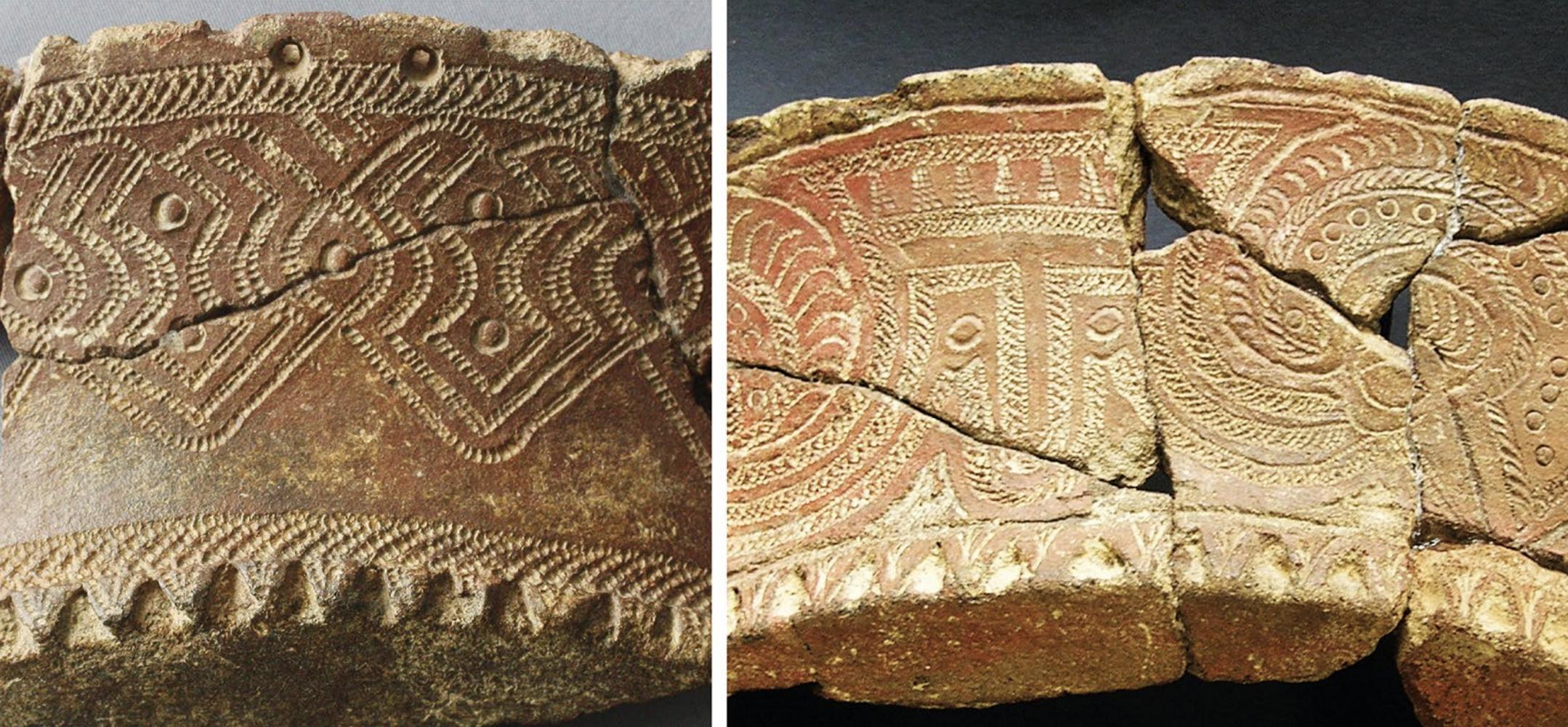
Lapita pottery is known for its distinctive decorative techniques, including dentate-stamped patterns, geometric designs, and other surface treatments.
The distribution of Lapita pottery across island environments has contributed to research on prehistoric maritime movement, settlement, cultural interaction, and technological transmission.
Ceramic assemblages may provide information about:
Pottery manufacturing techniques.
Decorative traditions.
Regional similarities and differences.
Vessel forms and functions.
Exchange and interaction.
Settlement activities.
Chronological relationships.
Pottery is particularly valuable archaeologically because fragments may survive even when other materials have deteriorated.
Ceramic Production and Workshop Organization
Pottery production involves several stages.
Clay may be collected, cleaned, prepared, and mixed with temper. Vessels may be shaped using different forming techniques. Surfaces may be smoothed, decorated, dried, and fired.
Production may take place within households, specialized workshops, or communal spaces.
Archaeologists investigate ceramic production through evidence such as clay deposits, forming tools, firing installations, unfinished vessels, ceramic wasters, ash, and production debris.
The presence of pottery fragments alone does not establish that a settlement produced ceramics locally. Some pottery may have been imported, exchanged, or transported from another community.
Microstratigraphy and Workshop Floors
Microstratigraphy involves the detailed examination of very thin sediment layers and their formation processes.
In archaeological workshop settings, floor deposits may preserve evidence of repeated activity. Small accumulations of ash, clay, charcoal, fragments of pottery, pigments, and other materials can become incorporated into the surface over time.
Micromorphological analysis involves examining undisturbed soil or sediment samples under a microscope. Researchers can identify the composition, structure, and formation processes of archaeological deposits.
A workshop floor might preserve:
Thin layers of clay preparation.
Ash associated with firing or other activities.
Small ceramic fragments.
Foot traffic and compaction.
Repeated cleaning deposits.
Organic residues.
Changes in surface use.
The analysis of these layers may help reconstruct the sequence of activities within a production space.
Reconstructing Ceramic Manufacturing
Microstratigraphic evidence could help researchers distinguish different stages of pottery production.
For example, a deposit containing concentrated clay residues and fragments of unfinished vessels might indicate shaping activity.
A layer containing ash, charcoal, and damaged ceramics might suggest proximity to firing operations, although such deposits could also result from other activities.
The interpretation becomes stronger when microstratigraphic observations are combined with ceramic analysis, chemical characterization, and experimental archaeology.
Researchers could examine whether local clay sources were used or whether materials were transported from elsewhere.
Petrographic analysis of ceramic fabrics may help identify mineral inclusions and compare vessels with potential clay sources.
Lapita Exchange and Craft Specialization
Lapita ceramics have been central to debates about Pacific settlement and interaction.
The movement of pottery styles and manufacturing techniques may reflect migration, exchange, shared traditions, imitation, or interaction among communities.
The presence of similar decorative motifs across islands does not automatically mean that vessels were manufactured in the same workshop.
Researchers must distinguish between the movement of finished vessels and the transmission of pottery-making knowledge.
Microstratigraphic analysis could contribute to this discussion by identifying production activities within settlements and helping determine whether ceramics were manufactured locally.
Experimental Archaeology
Experimental pottery production may help interpret archaeological workshop remains.
Researchers could recreate vessels using comparable clay, temper, forming methods, and firing techniques.
Experiments may investigate:
Clay preparation.
Vessel construction.
Decoration.
Drying conditions.
Firing temperature.
Fuel use.
Production waste.
The resulting materials could be compared with archaeological deposits.
Experimental work can help establish whether particular residues or production patterns are consistent with a proposed activity, although it cannot reproduce every condition of ancient pottery manufacture.
Conclusion
Microstratigraphic analysis of Lapita workshop floors could provide a detailed understanding of pottery production and craft organization in prehistoric Pacific communities.
By examining microscopic deposits alongside ceramics, architectural remains, and environmental evidence, researchers could investigate manufacturing activities, local production, and the relationship between pottery and maritime exchange.
Such research would contribute to a more detailed understanding of how technological traditions developed and moved through the Pacific.





