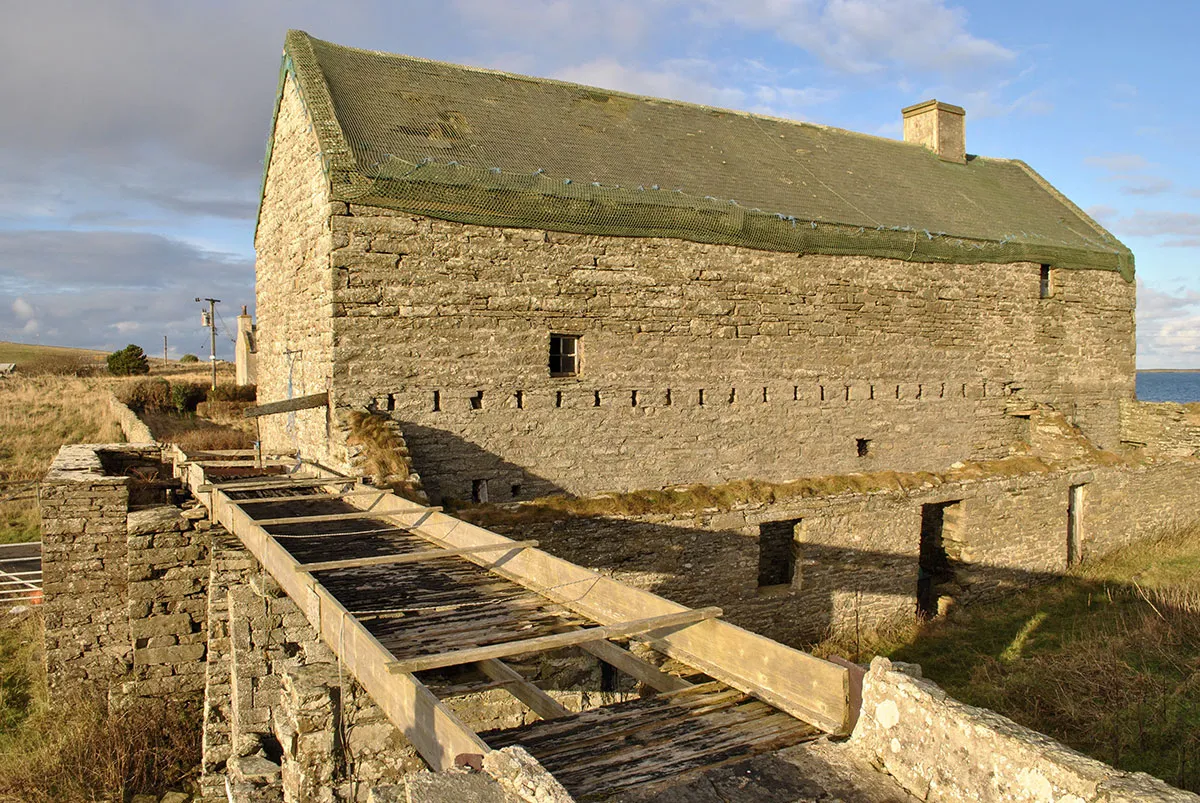
Mill of Linga Sound: Stronsay's Viking
The Viking Age transformed the Northern Isles into a major maritime crossroads.
The Mill of Linga Sound site represents part of Stronsay's archaeological evidence for this Scandinavian period.
The Northern Isles and the Viking World
Orkney was strategically positioned between Scandinavia, the British Isles, the North Atlantic, and the Irish Sea.
Viking ships could use the islands as:
Stopping points
Bases
Settlement zones
Agricultural territories
Trading locations
This geographical position helps explain why Scandinavian influence became so strong.
Viking Settlement
Scandinavian settlers introduced or expanded new systems of:
Farming
Landholding
Naming
Language
Burial
Political organization
Old Norse became the dominant language of Orkney for centuries.
Many modern place names preserve this linguistic heritage.
Farming and the Sea
The Viking economy of Stronsay was not based entirely on raiding.
Settlers became farmers.
They raised livestock, cultivated crops, fished, hunted, and exploited marine resources.
The sea remained essential for transportation.
A farm situated near a sound could potentially participate in maritime networks extending across the Northern Isles and beyond.
Archaeological Evidence
Viking and Norse activity can survive archaeologically through:
Longhouses
Farm mounds
Burials
Boat-related remains
Metalwork
Norse pottery
Bone artifacts
Imported objects
Place names
Even a relatively modest site can therefore contribute to reconstructing the broader Viking landscape.
Stronsay in the Norse World
Stronsay was not a remote island at the edge of civilization.
From a Viking perspective, it occupied a position within a connected North Atlantic world.
People could travel between Orkney, Shetland, Caithness, the Hebrides, Ireland, Iceland, and Scandinavia.
Goods, people, stories, technologies, and religious ideas moved along these maritime routes.
From Viking Age to Medieval Orkney
The Viking Age eventually developed into the medieval Norse earldom.
Christianity became established, churches appeared, and political institutions became more formalized.
Yet the Scandinavian foundations remained visible in language, place names, settlement patterns, and cultural traditions.
The archaeological evidence from sites such as Mill of Linga Sound therefore helps bridge the transition between prehistoric Stronsay and medieval Orkney.
Conclusion
The archaeological sequence from Eday to Stronsay demonstrates just how deeply layered the Northern Isles are.
Across these fifteen sites, we move through:
Neolithic houses and farms
Chambered cairns
Stone circles
Iron Age brochs
Viking graves
Norse settlement
Early Christian communities
Medieval chapels
Agricultural landscapes
The most important lesson is that these sites should not be viewed as isolated curiosities. They form parts of interconnected landscapes that were repeatedly inhabited, modified, remembered, and reinterpreted.
Eday's prehistoric communities built substantial houses and funerary monuments. Iron Age communities constructed powerful broch towers. Later Scandinavian settlers transformed the islands' language, economy, politics, and religious life. Christianity subsequently created new sacred landscapes while incorporating communities into the medieval European world.