Communication between shepherds and livestock
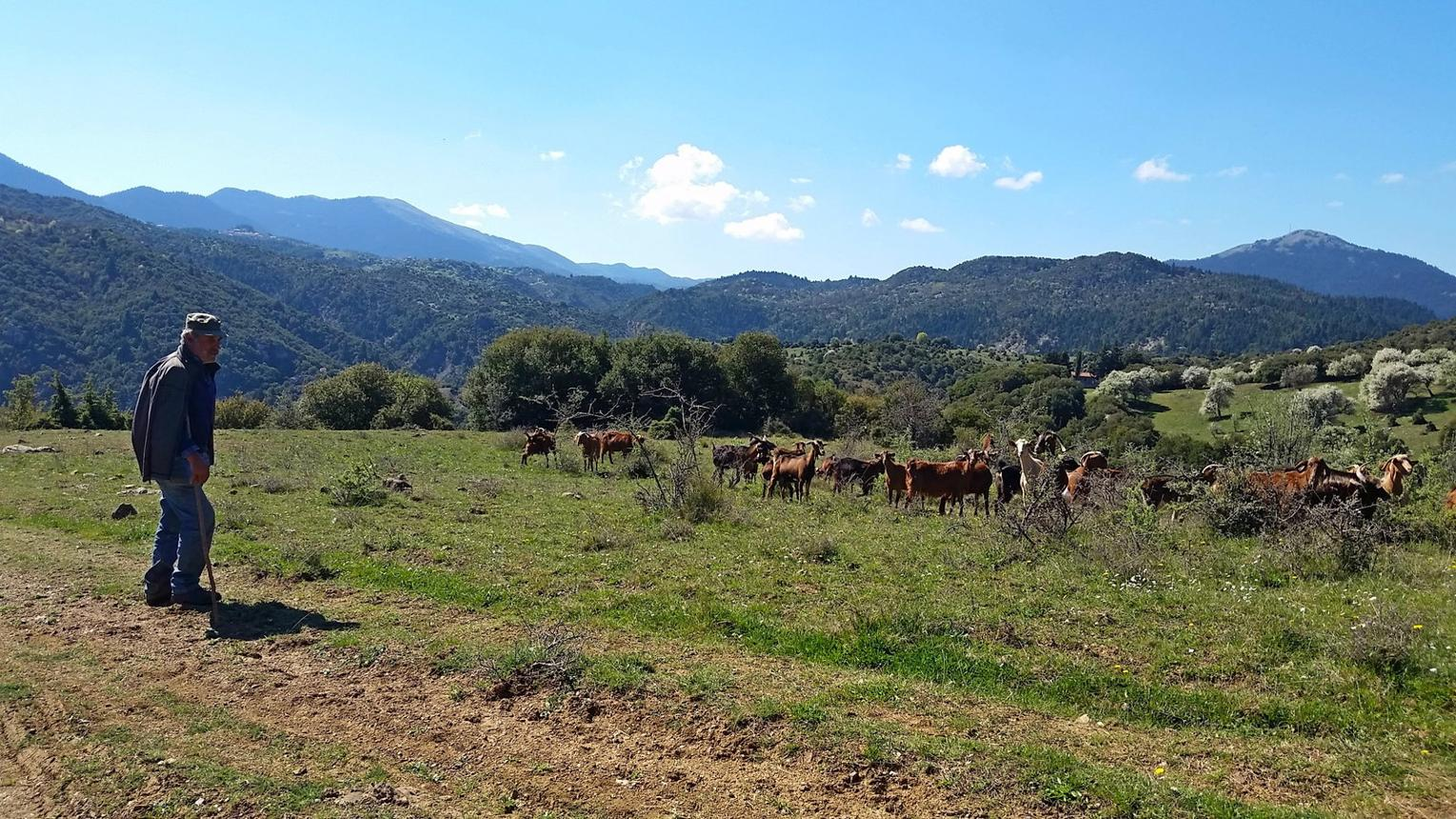
Goat herding requires close attention to animal behavior, movement, grazing conditions, and the surrounding environment. Shepherds often develop specific vocal signals, whistles, calls, and sounds to guide animals or attract their attention.
Such calls may be learned through practical experience and passed down through families or local communities. Their effectiveness can depend on pitch, rhythm, repetition, tone, and the animals' familiarity with the shepherd.
In mountainous areas such as Menalon, where terrain can be uneven and visibility limited, vocal communication may be especially useful.
Calls as part of pastoral knowledge
Animal calls are not necessarily standardized. Different shepherds may use different sounds, and their calls can vary according to the animals, local conditions, and personal habits.
Some calls may be used to gather goats, direct movement, encourage animals to follow, or signal the presence of food. Other sounds may be associated with particular animals or situations.
The study of these calls could reveal how shepherds develop practical communication systems through experience and observation.
Oral tradition and sound culture
Traditional shepherd calls may also have cultural significance beyond their immediate function. They can become recognizable sounds of a landscape and contribute to the cultural identity of pastoral communities.
The sounds of bells, whistles, animal voices, and human calls form part of the acoustic environment of rural life. Recording and studying these sounds could preserve knowledge that is rarely represented in written sources.
Ethnographic research in Menalon
A study of goat calls in the Menalon forests could involve sound recordings, interviews with shepherds, observation of herd behavior, and comparisons between different local calling systems.
Researchers could investigate whether specific calls are associated with particular tasks, whether younger shepherds continue to use them, and how modern livestock management affects their use.
The topic would demonstrate that folklore and cultural heritage include not only stories, songs, and rituals but also practical sounds and communication methods developed through everyday work.