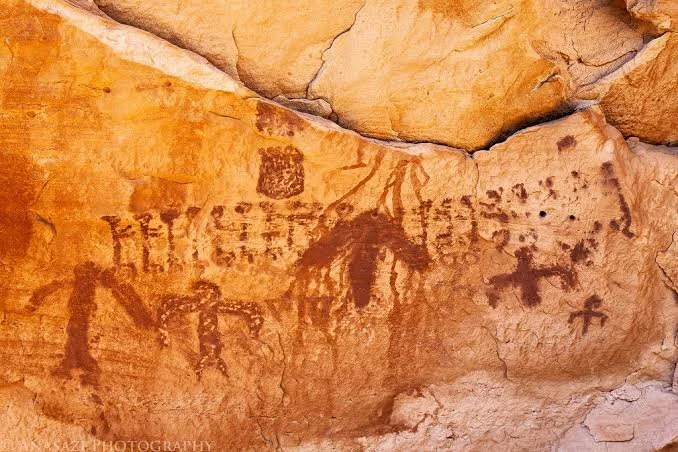
What used to be considered the world’s oldest cave art — 24,000-year-old paintings in Spain — has now been dramatically surpassed by a discovery on the Indonesian island of Sulawesi.
Artwork found inside a cave there has been dated to 51,200 years ago, making it the oldest known figurative cave painting. The scenes include human-like figures and a pig, and the finding has sparked fresh debate about early human migration and cultural development in the region.
Thanks to advances in dating technology, scientists were able to reassess the paintings with greater precision. Using a method called laser-ablation U-series imaging, researchers led by Indonesian archaeologist Adhi Agus Oktaviana determined the artwork is at least 4,040 years older than the previous estimate of 43,900 years. The team described the technique as a novel application that allows for far more accurate dating of mineral deposits layered over the art.
The discovery not only pushes back the timeline of figurative art but also reshapes our understanding of when and how early humans — or closely related hominins — were capable of symbolic expression.
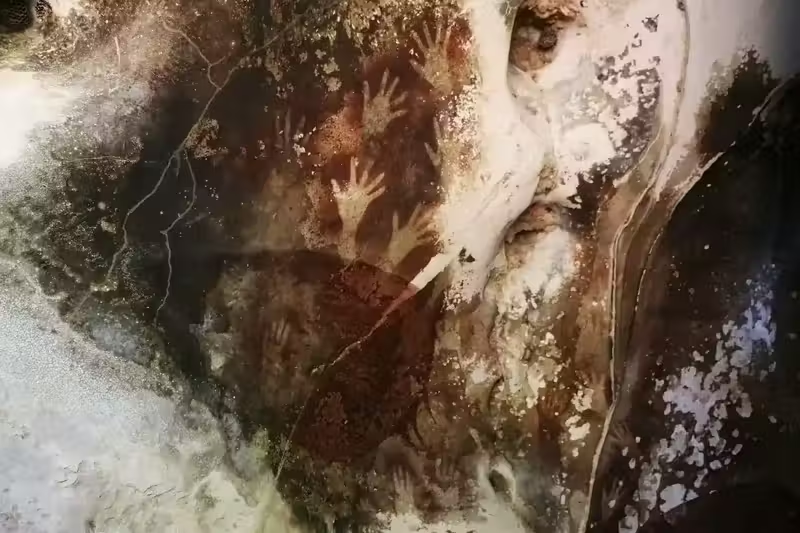
The researchers wrote that the scene—painted at least 51,200 years ago—is now the oldest known surviving example of representational art and visual storytelling, showing human-like figures interacting with a pig in a clear narrative composition.
But the updated dating complicates the question of who created it. While many models suggest modern humans may have left Africa as early as 90,000 years ago, the earliest confirmed Homo sapiens remains on Sulawesi date to about 25,000 years ago. Still, there is older evidence of human presence on the island in the form of stone tools and rock shelters.
If the artwork were proven to have been made by a hominin species predating modern humans, it would fundamentally reshape assumptions about the cognitive abilities of our evolutionary relatives.
Regardless of the exact species responsible, the team argues that the paintings reveal a sophisticated culture of storytelling very early in the region’s history. The use of scenic, figurative imagery suggests an established tradition of visually narrating relationships between humans and animals—pointing to complex symbolic thought far deeper in time than previously recognized.