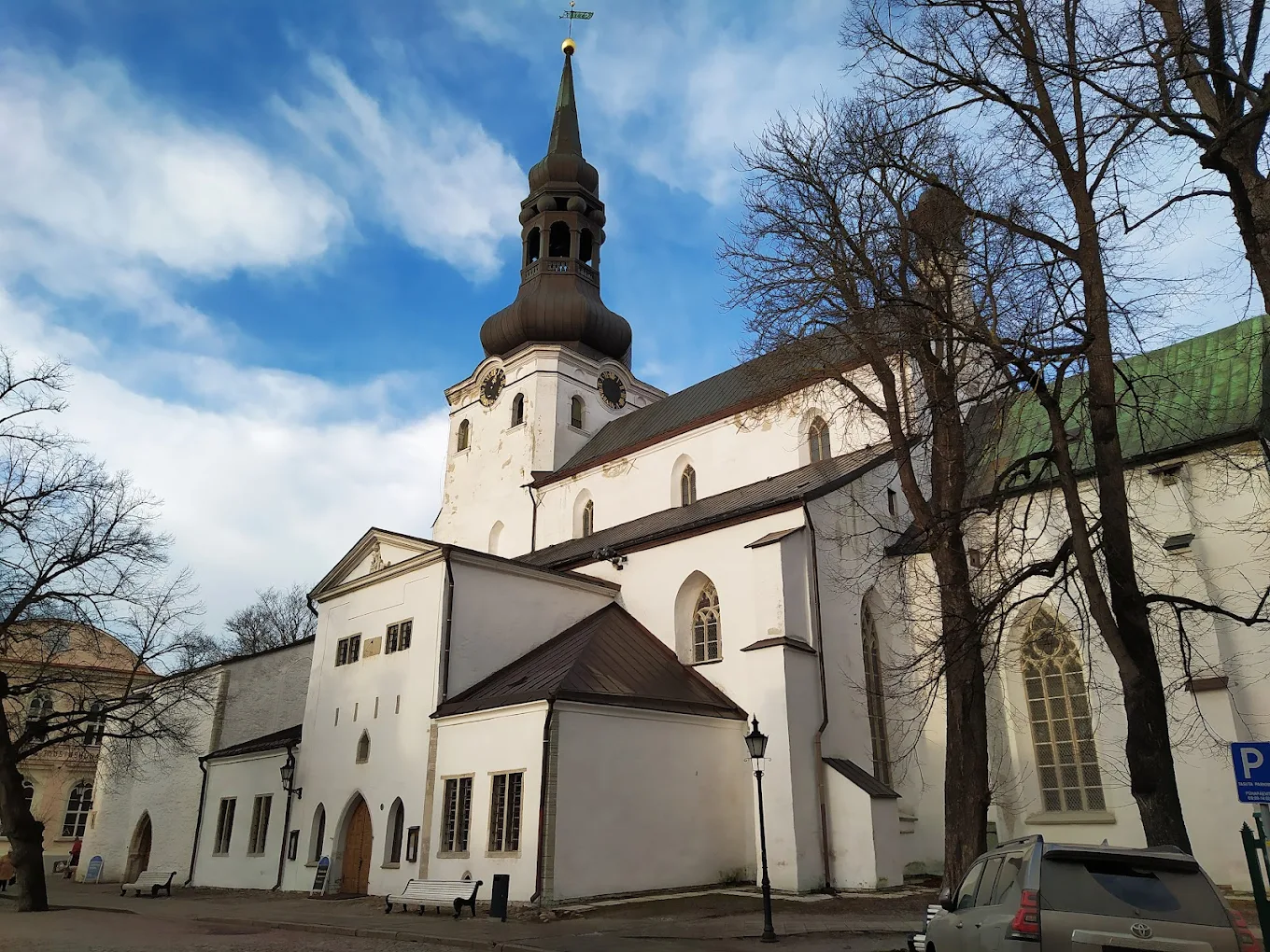
Researchers in Estonia have identified what is now thought to be the country’s oldest surviving wooden door—and among the oldest in Northern Europe. Tucked away inside St. Mary’s Cathedral (Toomkirik) in Tallinn’s Old Town, the medieval door is around 650 years old, providing a rare, physical connection to Estonia’s late medieval past.
The finding was confirmed through a scientific study using dendrochronology, or tree-ring dating. Analysis showed that the wood was most likely cut and worked between 1378 and 1394, with the strongest evidence pointing to 1382. This means the door predates the one in Tallinn’s Bremen Tower by about 16 years, overturning long-held assumptions about which was the oldest.
Older Than the Former Record Holder
Until now, historians believed the roughly 630-year-old door in the Bremen Tower—part of Tallinn’s medieval city wall—was the oldest surviving example in Estonia. The newly dated door is located inside the King’s Chapel, a small, double-vaulted space built into the thick western wall of St. Mary’s Cathedral in the latter half of the 14th century.
Though visible to visitors climbing the cathedral tower, the door is rarely opened. It leads into the King’s Chapel, a quiet and secluded room whose original function is still debated. Scholars suggest it may have served as a private chapel for a ruler or noble, aligning with the cathedral’s historical ties to Baltic German elites.
How the Door Was Dated
To determine its age, researchers carefully removed the door from its hinges and examined its construction. The interior is made mainly of pine planks, while the exterior is faced with oak boards and strengthened with iron rivets. The growth rings in both woods were compared with established regional tree-ring records from the Baltic and Northern Europe, allowing for precise dating.
Medieval Craftsmanship Preserved
The door’s significance lies not only in its age but also in its craftsmanship. The use of pine and oak reflects typical medieval building practices, balancing availability with durability. Oak provided a tough outer layer, while pine formed a sturdy internal structure.
Experts note that the door appears to have been purpose-built rather than assembled from reused materials. Its hinges, construction techniques, and overall design match what is known of late 14th-century workmanship, further supporting the scientific dating results.
A Matter of Cultural Heritage
Identifying Estonia’s oldest door is more than a historical curiosity. Heritage specialists say it helps clarify the building history of St. Mary’s Cathedral and enriches understanding of medieval architecture in the Baltic region. Each accurately dated feature adds to the broader picture of Tallinn’s development during the Hanseatic period.
Once the analysis was complete, the door was returned to its original position. Church officials have stressed the importance of safeguarding such a significant artifact so future generations can continue to encounter a tangible piece of Estonia’s medieval history.
Could There Be an Even Older One?
Researchers caution that while the King’s Chapel door is currently the oldest known surviving door in Estonia, it may not be the oldest ever made. As research methods advance and more historic structures are examined, older examples could still be discovered.
For now, the sturdy wooden door in St. Mary’s Cathedral remains a remarkable survivor from the 14th century—quietly standing witness to more than six centuries of history in the heart of Tallinn’s Old Town.