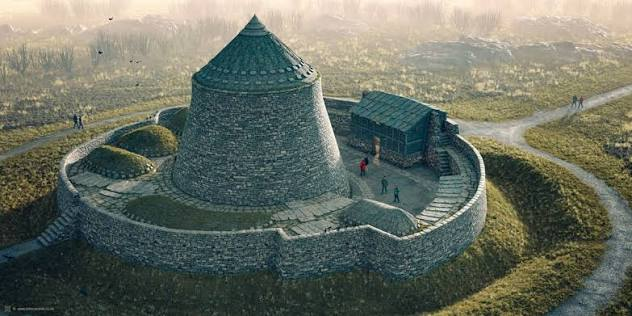
The Ousdale Broch in Sutherland is an important example of northern Scotland's Iron Age tower architecture.
Its coastal setting highlights how prehistoric communities combined monumental stone construction with agricultural and maritime resources.
A Coastal Broch
Ousdale occupies a landscape where land and sea resources were closely connected.
A coastal position could provide:
fishing;
shellfish;
seabirds;
transportation;
and strategic visibility.
The Broch Structure
Brochs were built with thick double walls.
The internal wall space could contain:
stairs;
galleries;
storage;
and small chambers.
Engineering
Constructing a stable tower from dry stone required considerable skill.
Builders had to understand:
stone weight;
pressure;
wall thickness;
and structural stability.
Defense
The tower's height and thick walls could provide protection.
But defense was probably only one function.
Status and Power
The monumental appearance of a broch could demonstrate the importance of the community or household that controlled it.
It may have functioned as a visible statement of authority.
Agriculture
The surrounding land supported:
grazing;
cereal cultivation;
and livestock management.
Marine Economy
The sea provided complementary resources.
Fishing could supply protein throughout the year.
Regional Connections
Brochs were part of a wider architectural tradition extending across northern Scotland.
Their distribution indicates cultural connections among communities separated by considerable distances.
Why Ousdale Matters
The site demonstrates how prehistoric communities adapted monumental architecture to coastal landscapes.
Conclusion
Ousdale Broch reflects the engineering skill and social organization of Iron Age Sutherland.
Its combination of monumental stone construction, coastal resources, and agricultural surroundings demonstrates how prehistoric communities built complex societies around both land and sea.