
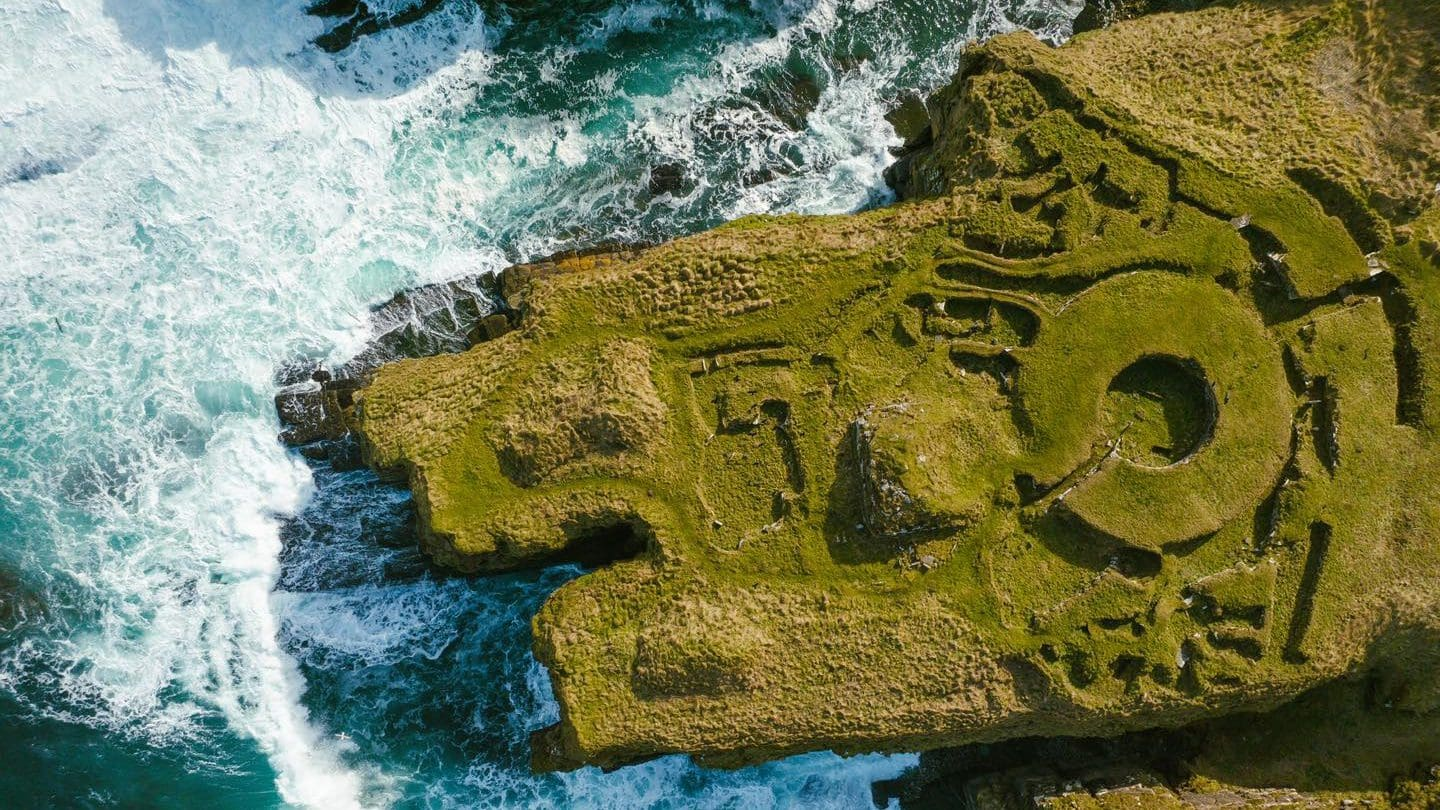
Nybster Broch is one of Caithness's most fascinating Iron Age sites.
The complex is associated with both broch architecture and later settlement traditions, including the distinctive wheelhouse form.
The site provides evidence for architectural development and changing patterns of settlement in northern Scotland.
The Wheelhouse
A wheelhouse is a circular stone building with internal radial partitions.
The walls create spaces that resemble the spokes of a wheel.
These internal divisions give the structure its name.
Architectural Innovation
Wheelhouses represent an adaptation of the circular architectural tradition.
Instead of one large open interior, the space was divided into multiple compartments.
These could have served:
household;
storage;
craft;
or livestock functions.
The Broch Connection
Some wheelhouses were built within or around earlier broch structures.
This demonstrates that later communities reused existing architectural landscapes.
Reuse of Ancient Buildings
Reusing a monumental structure can provide practical advantages.
Existing walls could:
save labor;
provide shelter;
offer defensive protection;
or hold symbolic importance.
Iron Age Caithness
Caithness supported farming communities.
People cultivated cereals and raised livestock.
They also exploited marine resources.
Stone Architecture
The scarcity of timber encouraged sophisticated stone construction.
Walls could be:
thick;
carefully fitted;
and structurally complex.
Household Life
Wheelhouses likely contained multiple activity areas.
Evidence may include:
pottery;
animal bones;
tools;
and hearths.
Social Change
The transformation from broch-centered architecture to wheelhouse settlements may reflect broader changes in:
society;
economy;
political organization;
or household structure.
Why Nybster Matters
Nybster provides evidence for architectural evolution.
It demonstrates that prehistoric communities did not simply abandon older traditions.
They modified and reused them.
Conclusion
Nybster Broch and its wheelhouse settlement illustrate the dynamic nature of Iron Age architecture in Caithness.
The site preserves evidence for technological skill, domestic organization, and the reuse of monumental structures across generations.





