Petroglyphs are images or symbols carved, pecked, or engraved into rock surfaces. They may depict animals, people, geometric patterns, or abstract designs, and they provide important evidence of how past communities represented their environments and expressed cultural ideas. Dating petroglyphs is often difficult because the images themselves may contain no organic material suitable for conventional scientific dating. In temperate climates, lichenometry has been investigated as one possible method for estimating the relative or approximate age of exposed rock surfaces and their markings. The method can be useful in certain circumstances, but it requires careful evaluation because lichen growth is influenced by many environmental and biological factors.
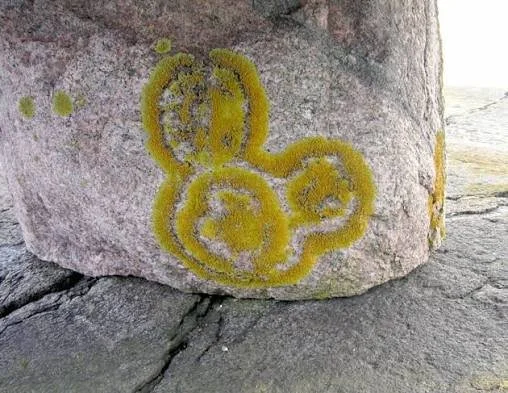
Lichenometry uses the growth characteristics of lichens to help estimate how long a rock surface has been exposed. Lichens are organisms formed through a partnership between a fungus and a photosynthetic partner, usually an alga or cyanobacterium. They grow on many exposed surfaces, including stone, and their size or distribution can sometimes be related to the time available for growth. In suitable environments, researchers can compare lichen measurements on surfaces of known age with those on undated surfaces. This relationship may provide a basis for estimating the age of certain rock exposures or deposits.
Applying lichenometry to petroglyphs is more complicated than dating a newly exposed rock surface. An engraving changes the physical characteristics of the rock by creating grooves, edges, and small depressions. These altered surfaces may retain moisture differently, collect dust, or provide protected areas where lichens can establish themselves. The growth pattern on an engraving may therefore differ from that on the surrounding rock, even when both surfaces have been exposed for the same amount of time. Shallow engravings present a particular challenge because their edges may be difficult to distinguish from natural surface irregularities or weathering.
One possible approach is to compare lichen growth on an engraved feature with growth on nearby surfaces whose exposure history is better understood. Researchers may measure the largest suitable lichens, document their distribution, and assess whether the rock surface has remained stable. However, the largest lichen on a surface does not necessarily represent the oldest organism present. Lichens can die, fragment, grow at different rates, or be replaced by other species. Disturbances caused by animals, people, fire, frost, or cleaning can also reset or alter growth patterns. Reliable interpretation therefore requires more than a simple relationship between lichen size and age.
Temperate climates contain a wide range of environmental conditions that affect lichen development. Temperature, humidity, precipitation, sunlight, wind exposure, and air quality can all influence growth. A rock face exposed to direct sunlight may support different lichen communities from a shaded surface nearby. Coastal locations may experience salt spray, while mountainous areas can undergo repeated freezing and thawing. Even surfaces only a short distance apart may therefore provide unsuitable comparisons if their microclimates differ. Researchers need to establish whether a calibration developed for one location can reasonably be applied to another.
The relationship between lichen growth and the creation of an engraving also needs to be considered. If a petroglyph was carved into an old, already lichen-covered rock, some existing organisms may have been removed during engraving. New growth might then provide information about the period after the surface was disturbed, but only if the relevant lichen communities can be distinguished from surviving older growth. If the engraving was made on a relatively bare surface, the relationship may be different. Without understanding the surface history, lichen measurements could produce an age estimate that reflects environmental exposure rather than the actual creation of the image.
Researchers can improve confidence by combining lichenometry with independent dating evidence. Archaeological deposits beneath or around a carved surface may provide information about when the feature became accessible or how it was used, although the age of associated material does not automatically date the engraving. Historical records, inscriptions, securely dated nearby structures, and changes in the surrounding landscape may also offer useful constraints. In some settings, other rock-surface dating methods may help establish whether an estimate is plausible. Each method has its own assumptions, and agreement between independent approaches is generally more informative than relying on a single measurement.
Documentation is essential because petroglyph surfaces can be fragile. Researchers should record the location, orientation, dimensions, and condition of the engraving, as well as the species and distribution of lichens where identification is possible. High-resolution photography, photogrammetry, and three-dimensional surface recording can help preserve the shape of shallow marks for future study. Sampling or removing lichens may damage the archaeological surface and should not be undertaken casually. Research must follow local heritage protections and involve the relevant communities, especially where the engravings remain culturally significant.
Lichenometry can contribute to the study of petroglyphs, but it should be treated as a specialized method rather than a universal dating solution. Its reliability depends on the stability of the rock surface, the ecology of the lichens, the availability of appropriate calibration data, and the relationship between biological growth and the engraving process. In temperate climates, where environmental conditions can vary substantially over short distances, these factors are particularly important. Used alongside archaeological context and independent dating techniques, lichenometry may help constrain the history of rock engravings while making clear where uncertainty remains.