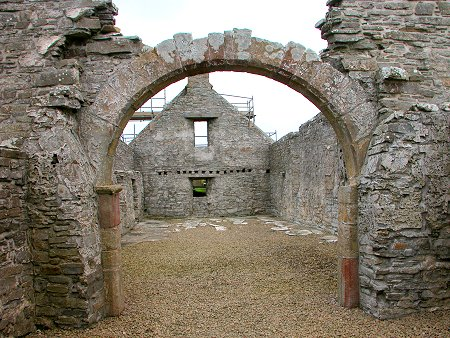
Pierowall Kirk, located on the island of Westray in Orkney, is an important part of the island's medieval religious landscape. The surviving church remains provide evidence for the spread and development of Christianity in an island society that had previously been deeply influenced by Norse culture and religion.
The ruins are particularly valuable because they represent the transformation of Westray from a Viking-age community into a Christian medieval society.
Christianity Comes to Orkney
Christianity gradually became established in Orkney during the Viking Age and early medieval period.
The transition was not instantaneous.
For generations, Christian beliefs existed alongside older Norse religious traditions.
Eventually, Christianity became the dominant religious system.
The Church as a Community Center
A medieval church was more than a building for worship.
It could serve as a center for:
baptism;
marriage;
burial;
prayer;
festivals;
and community gatherings.
The church therefore played an important role in organizing social life.
Stone Construction
Medieval churches in Orkney were commonly constructed from locally available stone.
Stone was an ideal material because it was:
durable;
abundant;
resistant to weather;
and capable of supporting substantial walls.
The Norse-Christian Transition
Westray had been part of the Norse world for centuries.
The adoption of Christianity transformed burial traditions and religious practices.
Earlier pagan burials could include weapons and other objects.
Christian cemeteries generally emphasized burial within consecrated ground.
The Medieval Parish
As Christianity became institutionalized, churches became associated with organized parishes.
A parish could include:
farms;
villages;
crofts;
and surrounding communities.
The church therefore served a broad geographic population.
Burial
Churchyards were important places of burial.
Being buried in or near a church could communicate membership in the Christian community.
Graves also created physical connections between generations.
Architecture
The surviving remains can reveal:
wall construction;
doorway arrangements;
floor levels;
and later modifications.
Architectural changes may indicate rebuilding or changing religious needs.
Westray's Medieval Landscape
Pierowall was not isolated.
The island contained:
farms;
harbors;
cemeteries;
churches;
and earlier archaeological sites.
The church formed one component of this broader settlement system.
Archaeological Importance
Medieval churches can preserve evidence for social changes that written records may not fully document.
Archaeologists can study:
building materials;
graves;
ceramics;
metal objects;
and architectural phases.
Why Pierowall Kirk Matters
The church represents the long-term transformation of Westray.
The island moved from a society strongly influenced by Norse pagan traditions toward a Christian medieval political and social system.
Conclusion
Pierowall Kirk's ruins preserve evidence of an important stage in Westray's history.
The church became part of a Christian landscape in which worship, burial, community identity, and local administration were closely connected.
Its remains demonstrate how religious transformation could reshape the physical landscape as well as the beliefs of the people who lived there.