Introduction
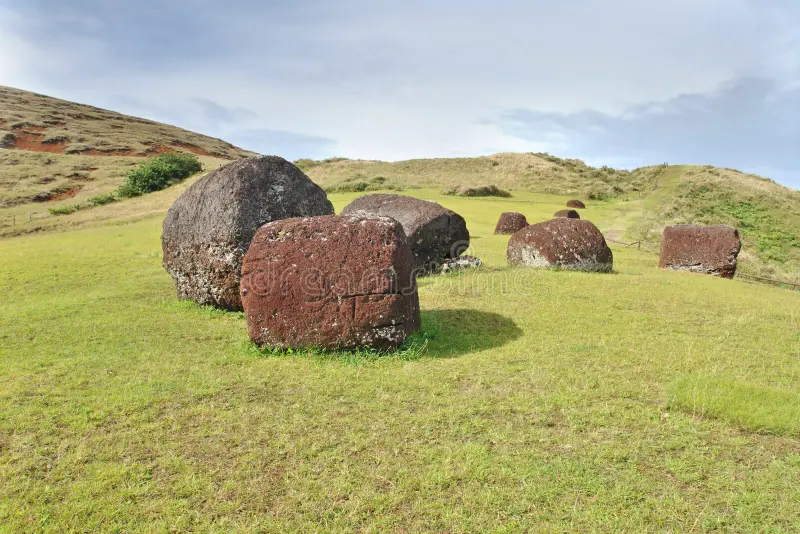
Formed within a small, extinct volcanic crater just outside the modern town of Hanga Roa, the quarry of Puna Pau represents a highly specialized, industrial node that provided the final symbolic element to Rapa Nui's monumental moai tradition. Puna Pau is the island’s exclusive source of red scoria—a highly porous, iron-rich volcanic rock prized for its vibrant crimson hue. From this single crater, ancient stone cutters excavated and carved dozens of massive, cylindrical topknots known as pukao, which were transported across the island to be placed atop the heads of select statues. While early European accounts viewed these stone cylinders as mere architectural decorations, landscape archaeology has unmasked Puna Pau as a sacred industrial landscape deeply tied to the concepts of elite status and spiritual power.
Industrial Logistics and the Symbolism of the Pukao
The industrial output of Puna Pau has been mapped through the intensive documentation of its internal crater walls and the dozens of abandoned pukao scattered along ancient transport trails. The extraction process required immense skill: stone cutters utilized heavy basalt picks (toki) to carve the soft, air-pocketed red scoria directly from the quarry walls, shaping the stone into massive cylinders weighing up to 12 metric tons.
Excavations within the quarry have unearhed specialized soil paths and stone rollers, proving that the pukao were deliberately moved out of the crater as raw cylinders, allowing them to be rolled long distances across the island's landscape without damaging the fine ornamental details.
Once a cylinder arrived at its destination ahu, sculptors carved out a distinct, recessed notch in the base, allowing the red topknot to lock securely onto the narrow, sloped head of the standing moai. Anthropological investigations have revealed that the vibrant red color carried profound spiritual significance across ancient Polynesia, directly representing sacred blood, high status, and divine power (mana). The pukao did not represent hats, but rather stylized topknots or bound hair structures common among elite warriors and deified high chiefs, serving as a powerful visual crown that amplified the spiritual authority of the ancestor staring inland.
Conclusion
The systematic unmasking of the Puna Pau quarry provides a fascinating look into the highly organized specialization of Rapanui society. It demonstrates that the construction of a moai was not an isolated project, but an integrated industrial network that required the simultaneous coordination of distant quarries, diverse geological materials, and specialized transport teams. The monumental red cylinders and ancient extraction markings preserved at Puna Pau stand as an enduring monument to Pacific engineering and artistic complexity. They show a deeply creative society that mobilized its entire landscape to materialize its grandest spiritual and political ideals.