Introduction
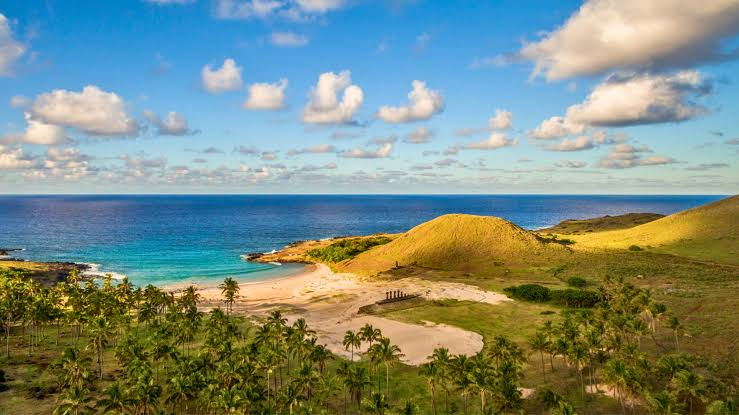
Nestled within a pristine, white-sand cove on the isolated northern coast of Rapa Nui, Anakena Beach serves as the legendary and material birthplace of the island's unique human history. According to deeply rooted oral traditions, this protected bay is the exact location where the founding voyager-king, Hotu Matuʻa, first guided his double-hulled voyaging canoes ashore after an epic journey across the open waters of East Polynesia, establishing the first permanent settlement. For decades, researchers debated the historical accuracy of these migration legends; however, multi-disciplinary stratigraphic excavations at Anakena have provided irrefutable physical proof that this cove holds the earliest occupational layers on the island, dating to approximately 1200 CE.
Palaeoenvironmental Sequences and Early Settlement Stratigraphy
The deep history of Anakena has been systematically mapped through deep stratigraphic soundings conducted within the sand dunes directly behind the modern beach line. The lowest occupational layers, buried beneath meters of windblown sand, revealed an ancient primary rainforest floor dominated by the root molds and carbonized nuts of an extinct, giant species of Rapa Nui palm tree (Paschalococos disperta).
Within this early matrix, archaeologists unearhed the structural remnants of the earliest human occupation: fire pits containing the bones of the Polynesian rat (Rattus exulans), pelagic deep-sea fish, and extinct seabirds, alongside a highly diagnostic toolkit of polished basalt adzes and pearl-shell fishhook fragments that display clear stylistic ties to the Gambier and Marquesas islands.
Directly above these initial domestic layers sits the monumental ceremonial site of Ahu Nau Nau. Excavations at this platform yielded an extraordinary architectural discovery: during a phase of intense political rebuilding, the ancient masons dismantled older stone structures and incorporated weathered carved fragments into the new platform's facade. The seven beautifully preserved moai standing atop Ahu Nau Nau today survived structural decay because they were buried in protective sand drifts shortly after being toppled, preserving their fine details, anatomical carvings, and coral-and-scoria inlaid eyes that originally brought the ancestral spirits to life.
Conclusion
The scientific unmasking of Anakena Beach provides a vital foundation for tracking the colonization timeline of the remote Pacific. It demonstrates an unbroken line of development from a classic East Polynesian maritime settlement into the highly specialized, megalithic culture that came to define Rapa Nui. The deep sand stratigraphy and pristine architectural remnants preserved at the site show a resourceful population that successfully transformed a wild palm forest into a highly structured ceremonial and political landscape. Today, the majestic statues of Ahu Nau Nau overlooking the northern waves stand as an enduring monument to those first Pacific voyagers.