
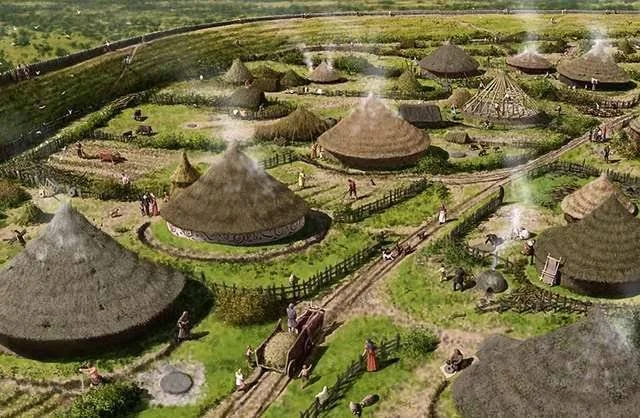
Pastoral landscapes, ambiguous architecture, and the danger of interpreting every fortified-looking ruin as a military installation.
The Problem of Identifying a Hilltop Fort
Hilltop ruins often attract attention because their elevated positions seem naturally suited to defense. A stone enclosure overlooking a valley may appear to be the remains of a fortress, particularly when it has thick walls, a restricted entrance, or a commanding view of surrounding routes.
Yet elevation alone does not establish military function. Across many regions and periods, communities built walls and enclosures for different purposes, including livestock management, seasonal occupation, storage, agricultural activity, and protection against animals or environmental hazards.
The title proposes reassessing certain hilltop forts as seasonal herding sites rather than military posts. This is a useful archaeological question because it challenges interpretations based mainly on appearance. However, it should not be applied universally: some hilltop structures were genuinely defensive, while others served multiple functions.
Seasonal Herding and Mountain Landscapes
Pastoral communities often move livestock between different grazing areas according to season. In mountainous environments, animals may be taken to higher elevations during warmer months and returned to lower ground when temperatures fall or snow limits access.
This form of seasonal movement can require temporary shelters, corrals, water access, storage facilities, and routes suitable for people and animals. Some structures may be occupied repeatedly for generations without becoming permanent settlements.
A hilltop location might offer access to summer pasture, a broad view of grazing animals, or a convenient point along a seasonal route. Walls could help keep livestock together or protect them from predators.
Such functions can produce architecture that resembles a defensive installation, particularly when the structure is isolated and built from substantial stone.
Architecture Does Not Speak for Itself
Researchers examine a structure's layout, wall thickness, entrances, internal divisions, and relationship to the surrounding terrain. A narrow entrance may help control movement, but that movement could involve livestock rather than soldiers.
Internal spaces may provide clues. Separate enclosures, water installations, dung deposits, animal remains, or surfaces shaped by repeated trampling could support a pastoral interpretation. Defensive features such as carefully positioned towers, protected gateways, and strategic lines of sight may support a military interpretation, but none is decisive in isolation.
A building could also serve different purposes over time. An enclosure initially used for herding might later become a refuge during conflict, while a military structure could be reused for agricultural activity after its defensive function declined.
Archaeological Evidence for Pastoral Use
Animal bones can help researchers identify the species kept or consumed at a site. Their age profiles, butchery marks, and distribution may provide clues about whether animals were raised, slaughtered, or brought to the location for other reasons.
Dung deposits and associated microscopic remains can provide further evidence of livestock presence. Pollen, plant remains, and soil chemistry may help reconstruct the vegetation available around the site and the kinds of activities that took place there.
Researchers can also examine access to water, grazing land, and seasonal routes. A location that is practical for moving livestock may be less suitable for a permanent garrison, although the same terrain can support both activities.
Dating is essential. Pastoral activity documented in a later period cannot automatically establish the original function of an ancient structure.
Evidence for Military Function
A military interpretation may be supported by defensive architecture, weapon-related artifacts, evidence of destruction, or a position that fits into a documented network of forts. Historical texts or maps may identify the site as part of a defensive system.
However, weapons can be lost, traded, or used in nonmilitary contexts, while the absence of weapons does not prove that a site was not defensive. Some forts were occupied for long periods without leaving distinctive military artifacts.
Researchers must consider the full pattern of evidence rather than relying on one object or architectural feature.
Combining Archaeology with Landscape Research
The most productive approach places a hilltop structure within its wider landscape. Researchers map nearby settlements, water sources, paths, grazing areas, agricultural terraces, and other buildings.
A site that appears isolated on a modern map may have been connected to a network of seasonal movement. Conversely, a fort that overlooks a strategic route may have formed part of a larger system of defense.
Environmental reconstruction can reveal whether past vegetation and climate made a particular area suitable for seasonal grazing. Changes in land use over time may also explain why a structure was abandoned or repurposed.
Avoiding a False Choice
The distinction between herding site and military post is not always absolute. Pastoral communities could require protection, and an enclosure might have served both economic and defensive functions. In periods of conflict, a seasonal shelter might become a refuge, while a military installation could support livestock and other domestic activities.
The title's proposed reinterpretation should therefore be tested site by site. Some hilltop forts may prove to have been pastoral structures, others military installations, and still others multifunctional sites whose roles changed over time.
Why Reassessment Matters
Reexamining hilltop structures can correct assumptions inherited from earlier research and recover evidence about activities that leave less monumental traces than warfare. Herding, food production, seasonal movement, and the management of livestock were fundamental to many past societies.
The strongest interpretation is the one that best explains the complete archaeological record. Rather than assuming that every imposing wall belonged to a garrison, researchers should consider how people used the landscape and whether the evidence supports defense, pastoralism, or a combination of both.




