
Introduction
The Chesapeake Bay is one of North America's most important maritime landscapes. Its extensive waterways supported fishing, trade, transportation, shipbuilding, military activity, and settlement for centuries. Many vessels that operated in these waters eventually sank, leaving archaeological remains beneath mud, sand, and other sediments.
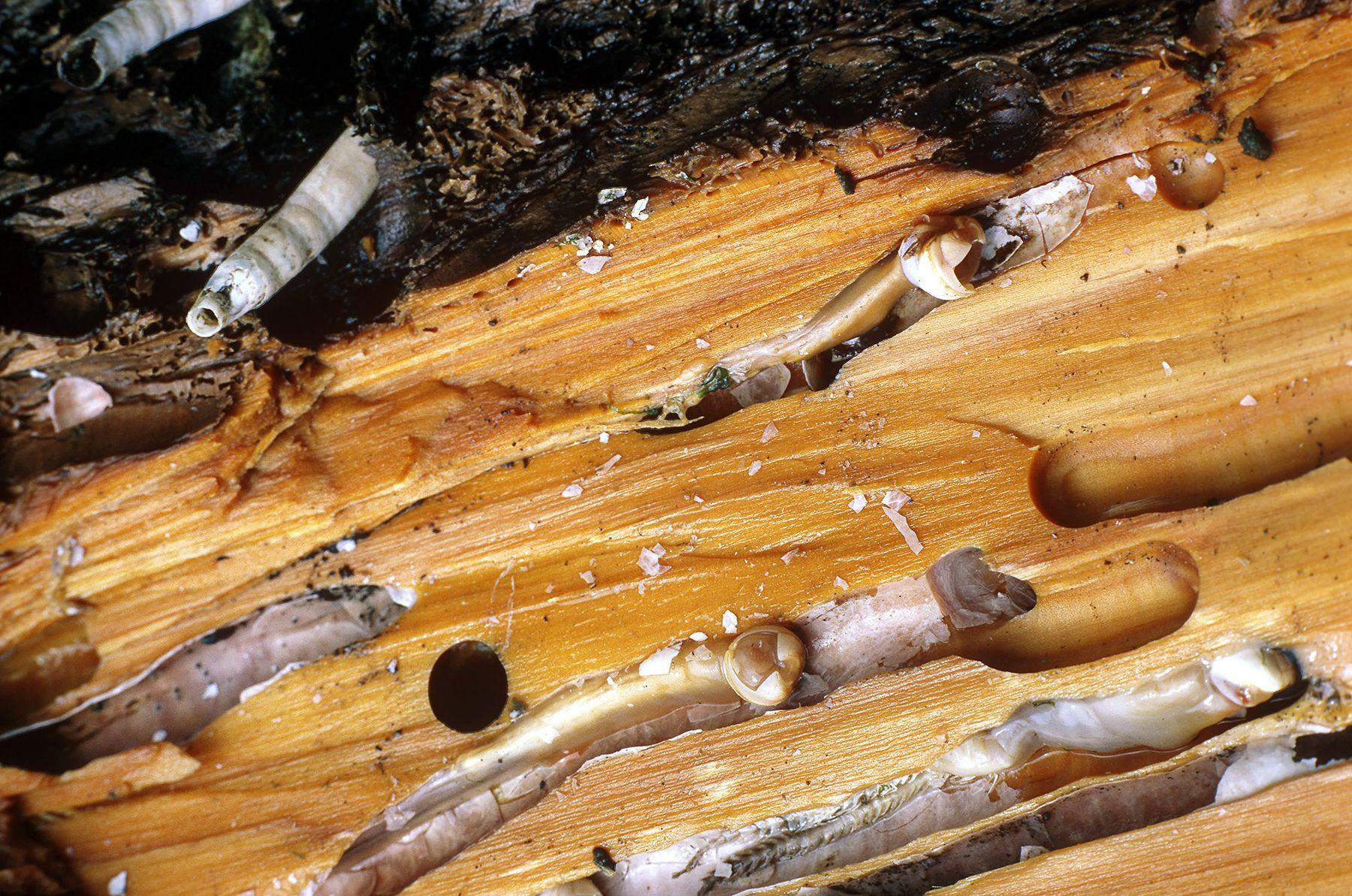
Wooden shipwrecks are particularly vulnerable to biological deterioration. One of the most destructive marine organisms affecting submerged timber is the shipworm, a mollusk that burrows into wood and creates extensive tunnels. Although shipworms can damage wreck structures, their remains and activity may also provide information about the environmental conditions in which a vessel was submerged.
The study of recovered shipworm traces in Chesapeake wrecks could contribute to understanding vessel deterioration, environmental history, and the dating of maritime archaeological materials.
Shipworms and Wooden Hulls
Shipworms are marine bivalves adapted to living inside wood. Despite their name, they are not worms. They excavate tunnels in submerged timber, using specialized structures to break down wood and obtain nourishment.
Their activity can weaken:
Ship hulls.
Wooden piers.
Harbor structures.
Piles and pilings.
Submerged timber installations.
In warm and brackish environments, shipworm activity can be particularly significant, although the distribution and intensity of infestation depend on species, water conditions, salinity, temperature, and other ecological factors.
Shipworm Traces as Archaeological Evidence
Shipworm tunnels can reveal the environmental history of submerged wood.
The presence of shipworm damage may indicate that timber was exposed to marine or brackish conditions for a period of time. Tunnel density and distribution can provide information about the degree of exposure and biological deterioration.
Recovered shipworm shells, tunnel fillings, or associated materials may be studied to understand the conditions surrounding a wreck.
However, shipworm damage alone cannot provide an exact date for a shipwreck. A vessel could have been exposed to shipworms before sinking, during a later period of submersion, or through secondary exposure after changes in sediment coverage.
Dating Wooden Hulls
The dating of wooden shipwrecks generally relies on several complementary methods.
Dendrochronology can compare tree-ring patterns in ship timbers with regional reference sequences. Where the wood preserves sufficient rings and the species is suitable, researchers may estimate the date when the tree was cut.
Other methods include:
Radiocarbon dating.
Historical shipbuilding records.
Construction features.
Ceramic and metal artifacts associated with the wreck.
Timber species identification.
Analysis of the vessel's structural design.
Shipworm evidence may contribute to environmental interpretation, but it should not be treated as a substitute for established dating techniques.
Chesapeake Environmental Conditions
The Chesapeake Bay contains a complex mixture of freshwater, brackish, and marine environments. Water salinity changes with location, season, rainfall, and river discharge.
These environmental variations influence shipworm distribution and preservation.
A wreck in an exposed channel may experience different biological activity from one buried in soft sediment. Burial may reduce oxygen exposure and limit access by marine organisms, while exposed timber may be more vulnerable to deterioration.
The location of shipworm damage across a vessel could help researchers reconstruct how different sections of the hull interacted with the underwater environment.
Conservation Challenges
Shipworm-damaged wood can be structurally fragile. Recovery may cause further damage if the timber is lifted without proper support.
Conservation requires careful documentation before and during excavation. Wooden structures may need stabilization, controlled drying, or specialized treatment after recovery.
Excavation should also consider the wreck's ecosystem and archaeological context. Shipwrecks can become habitats for marine organisms and may contain hazardous materials.
Conclusion
Shipworms are both destructive agents and potential sources of archaeological information. Their activity can reveal aspects of underwater exposure, environmental conditions, and the preservation history of wooden vessels.
The study of shipworm-damaged Chesapeake wrecks would be most effective when combined with dendrochronology, archaeological documentation, marine ecology, and conservation science.





