
Introduction
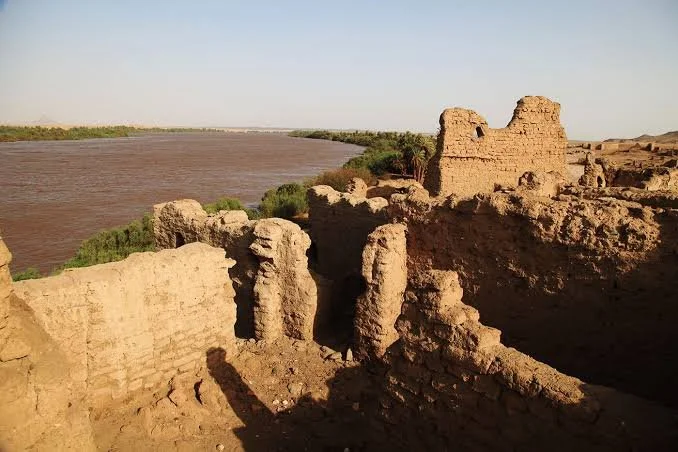
Sai Island is one of the most important archaeological landscapes in the Nile Valley. Situated between the Second and Third Cataracts in modern Sudan, the island contains evidence spanning thousands of years, including prehistoric occupations, Kerma-period remains, Egyptian settlements, New Kingdom fortifications, and later cultural phases.
Its strategic position made Sai Island especially valuable during periods when control of the Nile corridor was politically important.
Geography and Strategic Importance
An island in the Nile offered several advantages.
The surrounding water could provide natural protection, while the location allowed settlements to monitor river traffic.
Sai Island lies within an important section of Nubia where river transportation, agricultural land, mineral resources, and routes toward the interior converged.
This geography helps explain why the island attracted repeated settlement.
Kerma and Egyptian Interaction
Archaeological evidence indicates that Sai was important before the major Egyptian expansion of the New Kingdom.
The island was connected to the Kerma cultural sphere, associated with the powerful Nubian kingdom that developed farther south.
Egyptian expansion later introduced new settlements and administrative structures.
The archaeological record therefore documents a transition from Nubian political influence to stronger Egyptian control.
The New Kingdom Fortress
The New Kingdom Egyptian settlement at Sai included substantial defensive architecture.
Fortifications were intended to protect strategic installations and support Egyptian administration.
As with other Nubian fortresses, however, military purposes were only one aspect of the settlement.
Administrative buildings, temples, workshops, storage areas, and residences demonstrate that Sai functioned as a complex community.
Gold and Economic Resources
Nubia's gold resources were one of the major motivations for Egyptian expansion.
Gold had enormous economic and symbolic importance in ancient Egypt. It was used for jewelry, religious objects, royal equipment, diplomatic gifts, and temple decoration.
Sai Island's position within the larger Nubian economic landscape made it relevant to these networks.
Archaeologists can investigate trade and resource extraction through pottery, tools, metallurgical remains, and settlement patterns.
Archaeological Layers
One of Sai Island's greatest strengths is chronological depth.
Different archaeological layers allow researchers to examine changing political systems over long periods.
Instead of representing a single civilization, the island preserves a sequence of communities and administrations.
This makes Sai especially useful for studying cultural transformation.
Conclusion
Sai Island demonstrates why Nubia cannot be understood simply through the history of Egypt.
Its archaeological record preserves Nubian kingdoms, Egyptian imperial expansion, economic activity, religious institutions, and everyday settlement.
The island's fortifications were part of a much larger network connecting the Nile Valley's political and economic systems.





