
Introduction
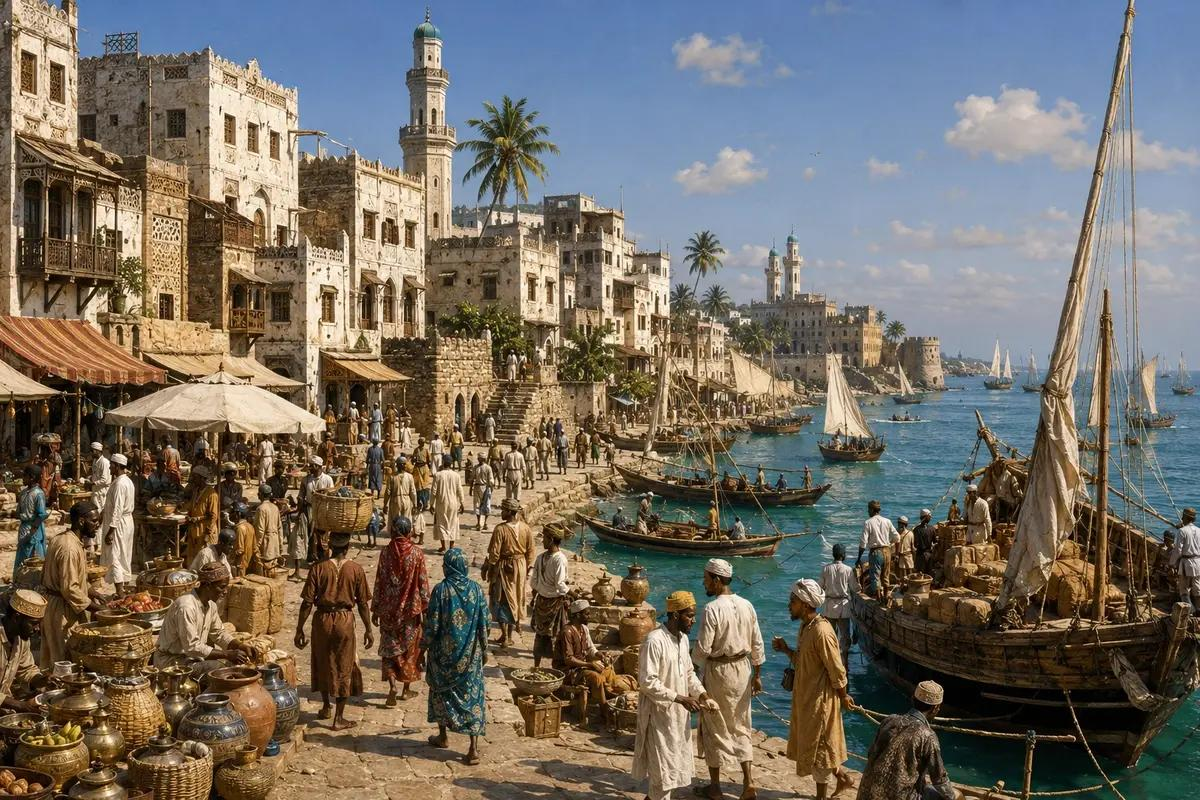
The medieval East African coast was an important region of maritime exchange linking African communities with the Indian Ocean trading world. Coastal settlements participated in commercial networks involving ceramics, beads, textiles, metals, food products, and other commodities.
Leather was a versatile material used for clothing, footwear, containers, equipment, and possibly maritime applications. The title "salt-worked leather" raises questions about the use of salt during leather processing, preservation, storage, and transport.
Although salt is widely associated with preserving animal hides, the specific techniques used in medieval East African ports would need to be investigated through archaeological evidence, historical documentation, and comparison with other leatherworking traditions.
Leather Production and Salt
Leather production begins with animal skin, which must be processed to prevent decay and improve its flexibility and durability.
Salt can be used during hide preservation, particularly before further processing. Salting helps reduce moisture availability and slows bacterial activity, allowing hides to be stored or transported.
Other leather-processing techniques may involve:
Cleaning and scraping hides.
Removing hair.
Soaking and washing.
Tanning.
Softening.
Dyeing.
Surface finishing.
Salt treatment should not be confused with tanning itself. Salt may be used during preservation, while tanning involves chemical processes that stabilize the hide and make it more durable.
Port Environments and Leatherworking
Ports provided access to diverse resources and commercial opportunities.
Leatherworking may have occurred near residential areas, workshops, markets, or storage facilities. The proximity of maritime transport could have facilitated the movement of raw hides, processed leather, tools, and finished products.
Salt was also a valuable material in many coastal economies. Its availability may have supported hide processing and preservation.
The archaeological identification of leatherworking areas would require evidence such as tools, waste fragments, processing residues, workshop features, or concentrations of animal remains.
Archaeological Evidence
Leather rarely survives in ordinary archaeological conditions because it is vulnerable to moisture, heat, microorganisms, and oxidation.
Preservation is more likely in unusual environments, including waterlogged deposits, dry conditions, or certain mineral-rich contexts.
Potential evidence of salt-related leather processing may include:
Preserved leather fragments.
Salt residues associated with processing areas.
Hide-processing tools.
Scraping implements.
Waste from animal skin preparation.
Chemical traces in workshop sediment.
Salt crystals alone would not prove leather processing. They may originate from marine environments, groundwater, food processing, or other activities.
Maritime Trade and Craft Organization
Leather products may have supported everyday maritime life.
Possible applications include footwear, straps, harnesses, containers, protective equipment, and other functional objects.
Leatherworking could have been organized through household production, specialized workshops, or commercial networks.
A port's craft economy may have depended on exchanges between livestock producers, hide processors, merchants, artisans, and consumers.
The distribution of leather artifacts across different settlement areas could provide clues about the organization of these industries.
Conservation Challenges
Salt can be particularly damaging to archaeological leather.
The movement and crystallization of salts within leather may contribute to brittleness, shrinkage, surface damage, and deterioration.
Conservation of salt-affected leather requires careful assessment of the material's condition and the type of salt present.
Treatment should avoid sudden environmental changes that could destabilize fragile artifacts.
Conclusion
Salt-worked leather provides an interesting avenue for studying preservation technology, craft production, and commercial exchange in medieval East African ports.
The research would benefit from combining archaeological evidence, organic-material analysis, historical sources, and comparisons with established leather-processing practices across the Indian Ocean world.





