
Introduction
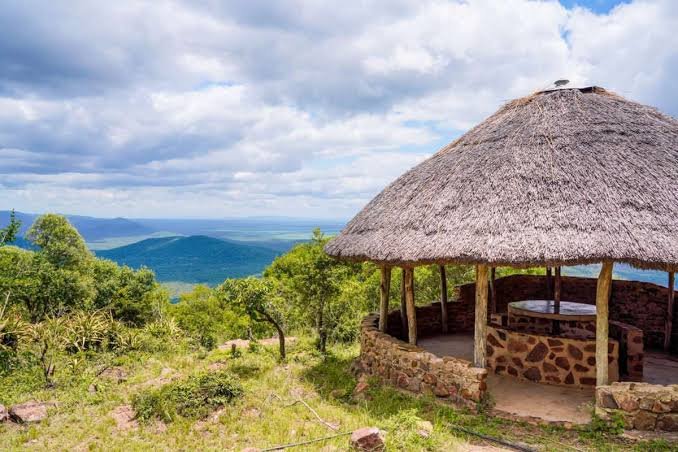
Shewula lies within the mountainous landscape of eastern Eswatini and is associated with rural communities, traditional agriculture, biodiversity, and cultural heritage.
The title Shewula: Eswatini's Remote Village Sites draws attention to settlement archaeology beyond the country's major towns and better-known monuments.
Remote villages are particularly valuable for archaeological research because they can preserve evidence of everyday life that is often absent from elite historical records.
Rural Settlement Archaeology
Archaeology frequently focuses on large monuments.
But ordinary settlements can provide equally important information.
A village may contain evidence of:
houses,
storage structures,
cooking areas,
livestock enclosures,
agricultural fields,
tools,
pottery,
and paths.
Together, these remains reveal how people organized daily life.
Mountain Environments
The landscape around Shewula contains slopes, valleys, grasslands, forests, and water sources.
Communities living in such environments must adapt agriculture to topography.
Terracing may sometimes be used to control erosion.
Livestock may graze on particular slopes.
Settlements are often positioned near reliable water sources.
Agriculture
Traditional farming systems could involve crops such as sorghum, millet, maize, beans, and other locally suitable plants, depending on period and environment.
Agricultural archaeology can examine:
field boundaries,
terraces,
grinding stones,
storage structures,
botanical remains,
and soil changes.
Architecture
Traditional rural architecture can vary according to period and community.
Structures may use mud, grass, timber, stone, or combinations of materials.
Because some materials decay quickly, archaeology may identify former homes primarily through postholes, floors, hearths, artifacts, and compacted surfaces.
Village Social Organization
The spatial arrangement of houses can reveal social relationships.
Households may be grouped according to family networks.
Livestock enclosures can occupy central or peripheral positions.
Communal spaces may have special importance.
Archaeologists therefore study settlement patterns rather than isolated buildings.
Oral History
Modern communities are essential sources of information about older landscapes.
Elders may remember:
former homesteads,
abandoned fields,
traditional pathways,
old wells,
burial locations,
and changes in settlement patterns.
Such knowledge can guide archaeological investigation.
Heritage and Development
Remote settlements are not frozen archaeological sites.
People continue to live, farm, build, and modify the landscape.
This means heritage management must recognize that archaeological landscapes can also be living cultural environments.
Conservation strategies should therefore involve local communities.
Conclusion
Shewula: Eswatini's Remote Village Sites demonstrates why archaeology should look beyond monumental structures.
Small settlements preserve evidence of ordinary people whose work sustained communities for generations.
Through houses, agricultural features, pottery, tools, livestock areas, and oral histories, researchers can reconstruct the everyday organization of rural Eswatini.





