
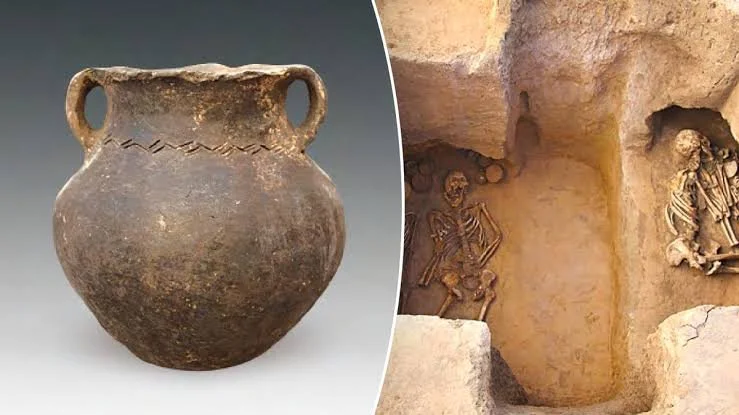
How ceramic residues, vessel shapes, and archaeobotanical evidence can illuminate the history of fermented foods and drinks across sub-Saharan Africa.
Introduction: Fermentation as an African Food Technology
Fermentation has played an important role in food preparation and preservation across many societies. By using microorganisms to transform sugars and other compounds, people can produce beverages, sour foods, and other products with distinctive flavors, textures, and storage properties.
Across sub-Saharan Africa, fermented foods and drinks have developed in connection with diverse agricultural systems, local plants, livestock, and cultural traditions. Products made from grains, fruits, milk, and other ingredients demonstrate the range of possibilities offered by fermentation. Their histories, however, vary considerably by region and period.
Archaeology can investigate these histories through ceramic vessels, food residues, plant remains, animal products, and the organization of food-processing spaces. A vessel used repeatedly for fermentation may preserve traces of its contents, while its shape and manufacturing technique may offer clues about how it was used.
The main challenge is that fermentation rarely leaves a single unmistakable archaeological signature. Residues may also result from cooking, ordinary storage, brewing without long fermentation, or later contamination. Researchers must therefore combine several forms of evidence before identifying an ancient vessel as a fermentation container.
Ceramic Vessels and the Preservation of Residues
Pottery is valuable for studying ancient food preparation because its porous structure can absorb and retain certain substances from the materials placed inside it. Organic compounds may survive within the ceramic fabric even when the original contents have disappeared.
Researchers can analyze absorbed lipids, organic acids, starch grains, proteins, and other microscopic remains. These analyses may help distinguish broad categories of contents, although their ability to identify a particular fermented product depends on the preservation of diagnostic compounds.
Vessel morphology also matters. Large jars may have been suitable for storage or batch processing, while narrow-necked containers might have reduced exposure to the surrounding environment. Yet these characteristics do not establish a fermentation function by themselves. The same vessel could have been used for several activities over its lifetime.
Archaeologists therefore examine residues alongside vessel size, surface treatment, evidence of heating, and the context in which the pottery was found. A large container from a food-processing area with consistent chemical and botanical evidence may support a fermentation interpretation more strongly than a similar vessel recovered from mixed rubbish.
Reconstructing Ingredients and Fermentation Methods
Fermentation depends on the ingredients available to a community and the microorganisms capable of transforming them. Cereal-based products, fruit beverages, fermented dairy products, and plant-based preparations can produce different chemical patterns, although these patterns are not always uniquely identifiable after burial.
Archaeobotanical remains can help establish which crops and wild plants were available. Charred grains, seeds, fruit stones, and other plant remains may reveal agricultural production and food processing. However, finding a crop at a settlement does not prove that it was fermented.
Animal remains and dairy residues may provide evidence for the use of milk, while vessel residues can contribute information about how animal products were processed. In some cases, several independent findings may support the possibility of fermented dairy foods.
Experimental archaeology offers another approach. Researchers can prepare plausible fermented products in replicas of ancient vessels and examine which chemical compounds remain after processing and burial-like conditions. These experiments can test whether a proposed interpretation is chemically plausible, but they cannot prove that ancient producers followed the same recipe.
Regional Diversity and Local Knowledge
Sub-Saharan Africa encompasses a wide range of environments and histories, from the Sahel and savannas to tropical forests, highlands, and southern African landscapes. Fermentation practices developed within these different ecological and social settings.
Local ingredients influenced the products people could make. Grain-growing communities had different options from communities relying more heavily on pastoralism, fruit gathering, or mixed subsistence strategies. Trade and migration could introduce new ingredients and techniques, but similar fermentation practices could also develop independently.
Researchers should avoid treating a single vessel form or residue pattern as representative of the entire continent. Comparisons must be geographically and chronologically specific, and modern food traditions should be used as sources of research questions rather than direct proof of ancient practice.
Ethnographic research can document how fermentation works in living communities, including the role of vessel reuse, starter cultures, temperature, and preparation techniques. Such observations can help formulate archaeological hypotheses, provided researchers recognize that practices change through time.
Fermentation, Storage, and Social Life
Fermented foods and drinks can contribute to household nutrition, food preservation, exchange, hospitality, and collective gatherings. Their production may involve shared knowledge passed between generations, as well as decisions about labor, ingredients, and timing.
Archaeological evidence may reveal differences between household production and more specialized processing. Large quantities of vessels, repeated processing installations, and storage areas could suggest substantial output, but these features must be interpreted within their local context.
Fermented products may also have circulated beyond the households that produced them. Yet pottery found far from a production center does not automatically demonstrate the trade of a finished beverage. Containers, ingredients, and production knowledge can move separately.
Written records, where available, may help establish the economic or social importance of particular products. They should not be assumed to describe every community, especially where documentary evidence is sparse.
Conclusion: Recovering Fermentation from Fragile Evidence
Ceramic residues and vessel forms provide important opportunities to investigate ancient fermentation in sub-Saharan Africa. They can help researchers explore food processing, agricultural resources, technological knowledge, and the movement of products between communities.
However, the identification of a fermentation vessel requires more than a particular shape or an organic residue. Archaeologists must consider alternative uses, contamination, preservation, and the diversity of regional food traditions.
By combining residue chemistry, botanical analysis, vessel studies, experimental archaeology, and contextual evidence, researchers can develop more reliable accounts of fermentation's history. This approach recognizes African communities as active innovators in food technology while avoiding unsupported claims about specific recipes or production traditions.




