
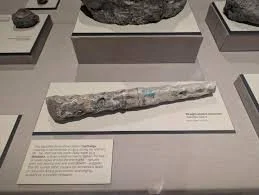
How biological traces in submerged wood can help researchers reconstruct the deterioration, exposure, and preservation of historic ships and coastal structures.
Introduction: When the Sea Becomes an Archaeological Agent
Wooden ships, harbor structures, piers, and submerged buildings can preserve extraordinary evidence of maritime history. They may reveal shipbuilding techniques, commercial connections, construction materials, and the practical knowledge required to operate in coastal environments.
Yet the underwater environment is rarely passive. Marine organisms colonize submerged materials, sediment shifts around structures, and changes in salinity, oxygen, temperature, and water movement influence how wood survives. Among the organisms capable of damaging maritime timber are shipworms, marine bivalves that bore into wood.
Despite their common name, shipworms are not worms in the strict zoological sense. They are specialized mollusks that use wood as a habitat and food source, with microorganisms helping them digest its cellulose. Their activity can create tunnels and cavities inside timber, weakening structures while sometimes leaving distinctive patterns.
Studying this damage can contribute to maritime archaeology, but it requires careful identification. Not every hole in submerged wood was made by shipworms, and damage alone rarely reveals exactly when or where an organism attacked the timber.
Understanding Shipworms and Their Effects
Shipworms belong to the bivalve family Teredinidae. Unlike many familiar shellfish, they have elongated bodies adapted to life inside wood. Their small shell structures function in boring, allowing them to excavate tunnels as they grow.
The resulting damage can be extensive. A wooden plank may appear relatively intact on the outside while containing a network of internal galleries. Over time, this can reduce the timber's structural strength and contribute to the collapse of vessels or coastal installations.
The severity of damage depends on several factors, including the species involved, the duration of exposure, water conditions, and the characteristics of the wood. Not every coastal environment supports the same shipworm species or levels of activity.
These differences matter when interpreting archaeological remains. A heavily bored timber may have spent time in biologically favorable waters, but the damage cannot automatically identify a particular harbor or route. Environmental reconstruction and additional evidence are needed to narrow the possibilities.
Identifying Biological Damage in Archaeological Wood
The investigation begins with detailed recording of the wood's external and internal condition. Researchers document holes, galleries, fractures, missing surfaces, and the relationship between biological damage and other forms of deterioration.
Three-dimensional imaging, radiography, and computed tomography can help reveal internal tunnel systems without immediately cutting the specimen apart. Where destructive sampling is justified, cross-sections can provide more detailed information about the relationship between galleries and wood anatomy.
Microscopic analysis may help distinguish shipworm damage from the activity of other marine borers, fungi, and physical processes. Some organisms produce characteristic tunnel forms or leave shell fragments and other traces, but identification depends on preservation and comparison with appropriate reference material.
Researchers also need to consider damage that occurred after recovery. Archaeological wood may shrink, crack, or become distorted as it dries. Conservation treatments can alter its appearance, and modern handling may create additional marks. A forensic assessment must separate ancient biological damage from later deterioration wherever possible.
Reconstructing the History of a Shipwreck
Shipworm damage can contribute to the reconstruction of a vessel's history before and after its final deposition. Timber may have been exposed to seawater during the ship's working life, while other damage may have developed after the vessel sank.
The distinction is not always easy to establish. A ship that operated in warm coastal waters might have suffered biological attack before sinking. Alternatively, a vessel entering a new environment could have encountered different marine organisms during its final voyage or while lying submerged.
Researchers therefore examine where the damage occurs. Boring in external planking, internal structural timbers, replacement components, and sheltered surfaces may reflect different exposure histories. The patterns must be interpreted in relation to the vessel's construction and the conditions in which it was found.
Shipworm damage can also complicate the interpretation of a wreck's original form. Missing wood and weakened joints may cause timbers to collapse or separate after sinking. Archaeologists must account for these processes before reconstructing the vessel's dimensions, orientation, and structural arrangement.
Environmental Reconstruction and Maritime Movement
Marine biological communities vary across geographic regions and environmental conditions. If researchers can identify the organisms responsible for damage, they may gain clues about the environments in which a timber was exposed.
This possibility must be approached cautiously. Shipworms can be transported through maritime networks, and their geographic distributions may change over time. A species found on a shipwreck does not necessarily prove that the vessel sank where the organism was collected.
Environmental indicators can strengthen the interpretation. Sediment characteristics, salinity-related evidence, other marine organisms, and the archaeological history of the wreck may help establish whether the site experienced conditions suitable for the observed damage.
The wider significance lies in understanding how biological processes interacted with human mobility. Ships transported goods and people, but their wooden structures also entered ecological environments that could affect their durability and performance.
Conservation of Waterlogged Maritime Heritage
Waterlogged wood can remain preserved for long periods because waterlogged conditions may limit some forms of decay. However, once exposed to air, archaeological timber can deteriorate rapidly if it dries without appropriate treatment.
Shipworm damage creates additional conservation challenges because the wood may contain extensive internal cavities and weakened structural connections. A specimen that looks stable externally may be fragile throughout its interior.
Conservation planning begins with documentation and assessment. Researchers evaluate the object's dimensions, degree of damage, waterlogged condition, and the importance of preserving its original structure. Stabilization methods depend on the wood's condition and the resources available to the conservation team.
Not every object needs to be removed from the water. In some cases, leaving a wreck in place may be preferable, particularly when excavation would cause substantial deterioration or when the site can be monitored and protected effectively.
The choice between in-situ preservation and recovery must consider archaeological value, environmental conditions, legal requirements, and the long-term capacity to conserve the material.
Conclusion: Reading Biological Damage as Historical Evidence
Shipworm damage is more than a destructive process. When carefully documented, it can provide information about the environmental exposure and preservation history of maritime timber.
The evidence is rarely sufficient to reconstruct a vessel's route or final voyage by itself. Biological identification, wood anatomy, environmental analysis, and the archaeological context must be considered together.
This forensic approach helps researchers understand maritime heritage as the product of both human construction and natural processes. The surviving remains of a wooden ship record not only the decisions of builders and sailors, but also the ecological conditions that shaped the vessel's life beneath the waves.




