
Introduction
The domestication of animals was one of the most important transformations in human history.
The transition from hunting wild animals to managing herds changed food production, mobility, settlement, labor, trade, and social organization.
One underappreciated environmental factor in this process is the availability of mineral resources, particularly salt.
Natural salt licks may have influenced where wild animals gathered, creating predictable locations that could become important to hunters and, later, herders.
What Is a Salt Lick?
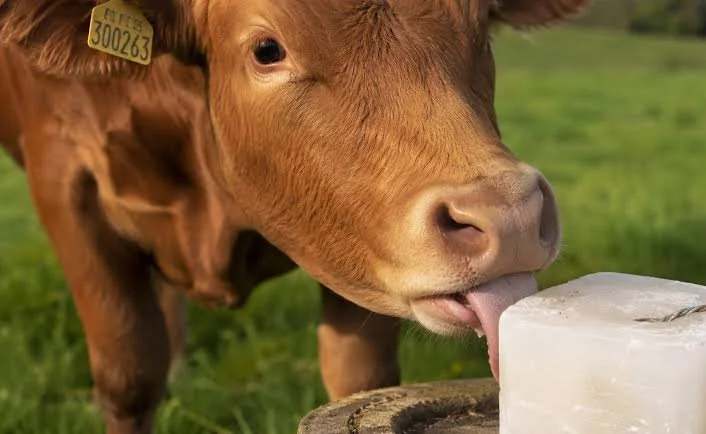
A salt lick is a naturally occurring concentration of mineral salts that animals consume.
It may occur in exposed rocks, saline soils, mineral springs, mud deposits, or other geological formations.
Many herbivores actively seek sodium and other minerals.
This behavior can concentrate animals in predictable locations.
Salt and Wild Animals
Before domestication, human hunters could exploit predictable animal behavior.
If herds repeatedly visited a mineral-rich location, hunters could identify these places as advantageous hunting grounds.
This does not mean that salt licks directly caused domestication.
Domestication is a complex process involving human selection, animal behavior, ecology, management, and social organization.
Salt licks may instead have contributed to the ecological circumstances in which human-animal relationships developed.
From Hunting to Herding
The domestication process occurred differently in different regions.
Goats and sheep were domesticated in Southwest Asia.
Cattle have complex domestication histories involving populations of wild aurochs.
Pigs, horses, camels, and other animals followed different pathways.
There was no single universal model.
Mineral Resources and Pastoral Landscapes
Once humans began managing herds, mineral resources could become even more important.
Livestock require sodium and other minerals.
Pastoralists may have known the locations of natural mineral sources and incorporated them into seasonal movement patterns.
This could influence the geography of grazing.
Archaeological Evidence
How can archaeologists identify the importance of salt licks?
Potential evidence includes:
repeated animal concentrations
mineral deposits
animal footprints
hunting structures
kill sites
dung deposits
herding pathways
changes in animal age profiles
Isotopic analysis of animal remains may also help reconstruct diets and mobility.
Salt and Animal Health
Mineral deficiencies can affect livestock health.
Access to suitable mineral sources can influence reproduction, growth, and behavior.
Modern pastoral communities often demonstrate detailed knowledge of mineral-rich landscapes.
This provides an important comparative perspective, although modern practices should not automatically be projected into prehistoric contexts.
Behavioral Archaeology
The study of salt licks highlights the importance of animal behavior in archaeology.
Humans did not domesticate animals simply by deciding to own them.
Animals had their own movement patterns, feeding preferences, social structures, and responses to human activity.
Domestication emerged through long-term interactions between humans and animals.
Environmental Change
Salt licks can change over time.
Water levels, erosion, vegetation, and mineral exposure affect their accessibility.
Ancient salt licks may therefore be difficult to identify today.
Geoarchaeology can help reconstruct former mineral environments.
Conclusion
Natural salt licks may have played an indirect but important role in prehistoric human-animal relationships.
They could concentrate wild animals, influence hunting strategies, and later become valuable resources within pastoral landscapes.
Rather than representing a simple explanation for domestication, salt licks should be understood as one component of the environmental systems within which domestication developed.





