
Introduction
The preservation of human remains in frozen environments represents one of archaeology's most extraordinary opportunities.
Normally, organic tissues decompose after death. In sufficiently cold and stable environments, however, decomposition can slow dramatically.
Glaciers, permanent snowfields, frozen soils, and other cold environments can preserve human bodies, clothing, equipment, and associated materials.
Bronze Age burial evidence from cold regions is particularly valuable because it can reveal details that skeletal remains alone cannot provide.
The Frozen Archaeological Record
Frozen environments can preserve:
skin
hair
muscle tissue
clothing
leather
wood
plant remains
food
ropes
weapons
Such preservation can provide a much more complete picture of ancient life.
The famous discovery of naturally preserved prehistoric bodies in Alpine and other high-altitude environments demonstrates the scientific potential of cold archaeology.
Burial Mounds and Climate
Burial mounds can create distinctive archaeological environments.
Stone, soil, vegetation, and internal structures may influence temperature and moisture.
If later climatic conditions cause persistent freezing, organic material may survive.
However, not every burial mound found beneath or near ice should automatically be interpreted as Bronze Age.
Dating requires independent evidence.
Dating the Body
Radiocarbon dating is frequently used for ancient organic remains.
However, researchers must carefully select uncontaminated material.
The "old wood" problem can affect wooden objects because the tree may have been centuries old before being used.
Textiles, hair, bone collagen, and other materials can sometimes provide more direct information about an individual's lifetime.
Clothing
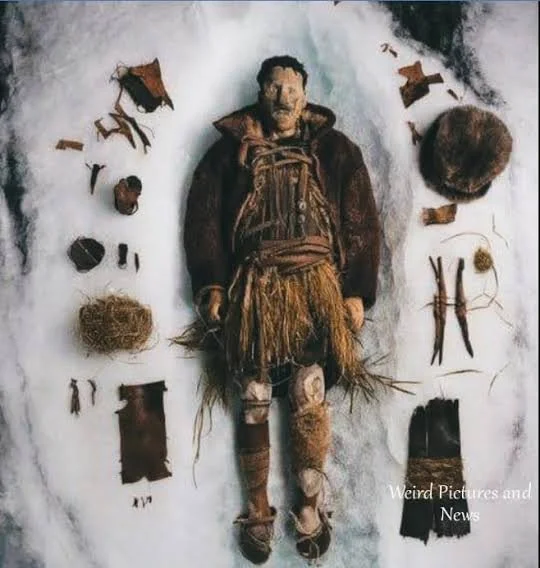
Frozen burials can preserve clothing in extraordinary detail.
Researchers can study:
fiber types
weaving methods
stitching
dyes
footwear
belts
protective garments
Clothing can reveal technology, climate adaptation, social identity, and economic resources.
Diet and Mobility
Scientific analysis of preserved bodies can reveal aspects of diet.
Stable isotope analysis may provide information about the relative importance of different food sources.
Dental evidence can indicate dietary patterns.
Strontium and oxygen isotopes may sometimes provide information about geographic mobility.
These methods can transform an individual burial into evidence for broader patterns of movement.
The Bronze Age Environment
Bronze Age communities occupied diverse environments.
Some lived in agricultural valleys.
Others relied heavily on pastoralism.
Mountain communities developed specialized strategies for seasonal movement.
Frozen archaeological sites can reveal how people adapted to cold landscapes and high-altitude environments.
Climate Change as a Threat
The discovery of ancient bodies beneath melting ice presents a major conservation challenge.
Freezing can preserve organic remains for thousands of years.
Once exposed, the same material may decay within years, months, or even days depending on conditions.
Archaeologists therefore face an urgent race against environmental change.
Ethical Considerations
Human remains require respectful treatment.
Scientific analysis must balance research objectives with cultural and ethical responsibilities.
Where descendant communities can be identified, consultation is particularly important.
Ancient human remains should not be treated simply as specimens.
Conclusion
Frozen burial sites provide extraordinary opportunities to investigate Bronze Age life at an individual level.
They can preserve clothing, food, technology, and biological information that would otherwise disappear.
At the same time, climate change threatens the very conditions responsible for their survival, making documentation and responsible conservation increasingly urgent.





