The Viking Age Runestones: The Jelling Stones and the Christianization of Denmark
Introduction
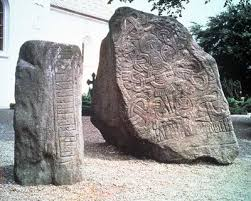
The Viking Age saw the widespread use of runestones as memorials and political statements. Among the most important are the Jelling Stones, often called “Denmark’s birth certificate.” Erected in the 10th century CE, they mark a crucial moment in the transformation of Scandinavian society: the shift from Norse paganism to Christianity.
The Jelling Site
The Jelling Stones are located in Jelling, which became a royal center of power for the early Danish kings.
The site also includes burial mounds and a church, showing its long-term religious and political importance.
King Gorm the Old and Queen Thyra
The smaller of the two stones was raised by Gorm the Old in memory of his wife Thyra.
Features of the Smaller Stone:
Runic inscription commemorating Queen Thyra
Traditional Norse pagan symbolism
Emphasis on royal lineage and authority
This reflects the final stage of pre-Christian Viking culture in Denmark.
King Harald Bluetooth and the Larger Stone
The larger Jelling Stone was erected by Harald Bluetooth, son of Gorm the Old.
It is one of the most important artifacts in Scandinavian history.
Inscription Highlights:
Harald united Denmark and Norway
He conquered parts of Scandinavia
He “made the Danes Christian”
This inscription marks the official introduction of Christianity in Denmark.
The Christianization of Denmark
The Jelling Stones are central evidence for the conversion process in Scandinavia.
Key Changes:
Replacement of Norse gods with Christianity
Construction of churches instead of pagan temples
Adoption of Christian burial practices
Integration into European Christian kingdoms
The conversion was both religious and political, strengthening royal power.
Iconography of the Stones
The larger Jelling Stone includes both pagan and Christian imagery:
A depiction of Christ
Interlaced animal-style Viking art
Runic inscriptions in Old Norse
This combination shows a transitional period where old and new beliefs coexisted.
Political Significance
The stones were not just religious markers—they were political propaganda.
They demonstrate that Harald Bluetooth:
Centralized royal authority
Strengthened Denmark as a unified kingdom
Aligned Denmark with Christian Europe
Increased legitimacy through religion
Historical Importance
The Jelling Stones are important because they:
Mark the official Christianization of Denmark
Represent early Danish national identity
Show the transition from Viking Age paganism to medieval Christianity
Provide key written evidence from the Viking Age
Legacy
Today, the Jelling Stones are:
A UNESCO World Heritage Site
A national symbol of Denmark’s origins
One of the most important runic inscriptions in the world
They also inspired modern cultural symbols, including the name “Bluetooth” technology, derived from Harald Bluetooth.
Conclusion
The Jelling Stones represent a turning point in Scandinavian history. Through their inscriptions and symbolism, they record the transformation of Denmark from a Viking pagan kingdom into a Christian European state. They stand as powerful monuments of political authority, religious change, and cultural identity during the Viking Age.