Roman Domestic Spaces: The Atrium and the Peristyle Garden
Introduction
The houses of wealthy Romans were carefully designed to reflect social status, family life, and cultural values. Two of the most important features of a traditional Roman house (domus) were the atrium and the peristyle garden. Together, these spaces formed the architectural and social heart of the home, combining practicality, beauty, and prestige.
The Roman Domus
A domus was the urban residence of wealthy Roman families, especially during the Republican and Imperial periods.
Typical features included:
Entrance hall (fauces)
Atrium
Reception rooms
Dining rooms (triclinia)
Bedrooms (cubicula)
Peristyle garden
Household shrines
The layout balanced public and private life within a single residence.
The Atrium: The Public Heart of the Home
What Was the Atrium?
The atrium was the central hall immediately inside the entrance.
It served as:
The main reception area
A place for meeting guests and clients
The symbolic center of family identity
Visitors entering the house would first encounter the atrium, making it a powerful display of wealth and status.
Architectural Features
Most atria included:
An opening in the roof called the compluvium
A shallow basin beneath called the impluvium
Decorative columns, paintings, and sculptures
Family portraits and ancestral masks
The compluvium allowed rainwater to enter, while the impluvium collected it for household use.
Social Functions
The atrium was where the head of the household (paterfamilias):
Received clients and visitors
Conducted business affairs
Demonstrated social influence
Displayed family heritage
In many ways, it functioned as a public space within a private home.
The Peristyle Garden: A Private Retreat
What Was a Peristyle?
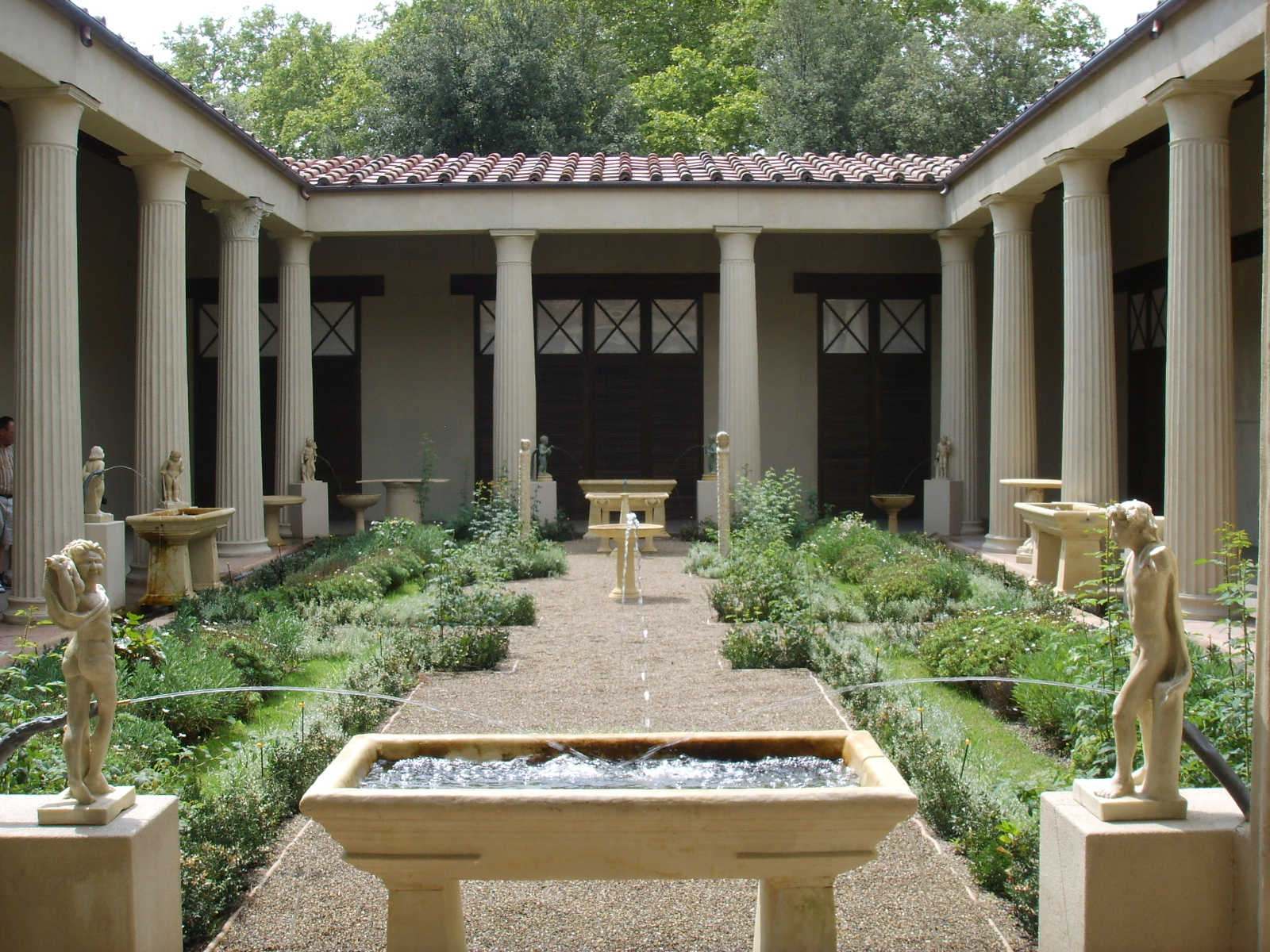
Behind the atrium was often the peristyle, a garden courtyard surrounded by columns.
This feature was influenced by Greek architecture and became increasingly popular among wealthy Romans.
Design Elements
Peristyle gardens often contained:
Flower beds
Trees and shrubs
Fountains
Statues
Decorative mosaics
Walking paths
The surrounding colonnade provided shade and elegance.
Purpose of the Garden
The peristyle offered:
Privacy from the busy street
A peaceful environment for relaxation
Space for family gatherings
Areas for dining and entertainment
Unlike the atrium, which was relatively public, the peristyle was primarily for family and invited guests.
Greek Influence on Roman Homes
Roman peristyles were heavily inspired by Greek courtyard houses.
Greek influence can be seen in:
Columned walkways
Garden-centered design
Decorative sculptures
Emphasis on symmetry and beauty
As Rome expanded, Greek artistic and architectural ideas became increasingly fashionable.
Archaeological Evidence
Many examples survive in sites such as:
Pompeii
Herculaneum
The preservation of these cities after the eruption of Mount Vesuvius in 79 CE has provided valuable insights into Roman domestic architecture.
Symbolism and Status
Both the atrium and peristyle communicated social standing:
Atrium
Public prestige
Family reputation
Political influence
Peristyle
Wealth and refinement
Appreciation of art and nature
Cultural sophistication
The larger and more elaborate these spaces were, the greater the owner's prestige.
Conclusion
The atrium and peristyle garden were central elements of the Roman domus. The atrium served as the public face of the household, while the peristyle provided a private and elegant retreat. Together, they reveal how Roman architecture balanced social obligations, family life, and aesthetic beauty, creating homes that were both functional and impressive.