
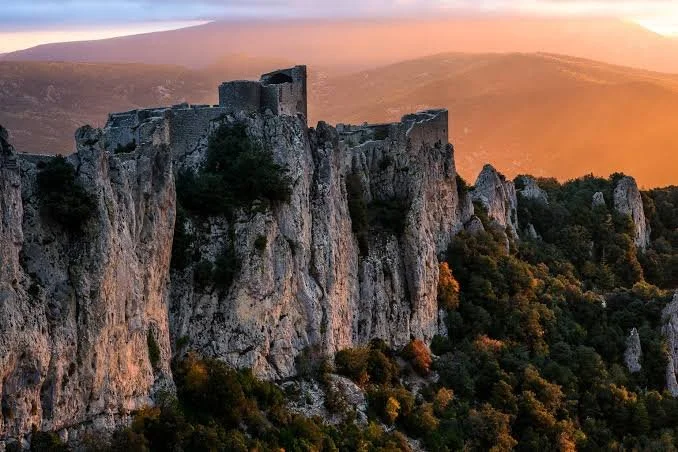
Exploring how modest deposits, unusual natural features, and repeated acts of deposition can reveal the local sacred geography of northern European communities.
Introduction: Sacred Places Beyond Monumental Temples
Archaeological discussions of prehistoric and early historic religion often emphasize impressive structures: stone circles, burial mounds, monumental halls, and elaborate sanctuaries. These places are important, but they represent only part of the ways communities may have organized religious life.
Some sacred activities could have taken place in smaller and less conspicuous settings. A narrow space beneath a ridge, a spring beside a track, a sheltered hollow, or a natural rock formation might have acquired significance through repeated visits and customary practices. Such locations may leave few architectural traces, making their identification challenging.
Northern Europe contains varied landscapes shaped by glaciers, forests, wetlands, coastlines, and extensive ridges. These environments influenced movement, settlement, resource access, and the visibility of natural landmarks. Certain places may have served as meeting points or locations for ceremonies, offerings, burial-related activities, or seasonal gatherings.
The phrase “under-ridge rituals,” however, should be treated as a research question rather than a recognized archaeological category. Demonstrating that a particular ridge sheltered ritual activity requires contextual evidence. Unusual geography alone cannot establish religious meaning.
Natural Features and the Creation of Sacred Geography
People experience landscapes through movement, memory, sound, visibility, and access. A ridge can form a boundary between ecological zones, overlook a route, or provide a recognizable landmark visible from considerable distances. Its lower slopes may contain sheltered spaces, springs, caves, or narrow passages that attract repeated use.
These practical qualities can contribute to a place's cultural importance. A location used for travel, gathering, or resource collection may eventually become associated with ceremonies or shared stories. Archaeology can sometimes identify repeated activity, although it cannot always recover the meanings participants attached to it.
Researchers therefore distinguish between a place that was repeatedly used and one that can be confidently interpreted as sacred. Evidence of deliberate deposition, unusual treatment of objects, repeated offerings, or a clear relationship with burial and ceremonial activity may strengthen a ritual interpretation.
Even then, multiple explanations must remain open. An object placed in a hollow might represent a ritual offering, but it could also have been lost, stored, discarded, or deposited during an ordinary activity. Context determines which interpretation is most persuasive.
Small Deposits and the Archaeology of Repeated Acts
Ritual activity does not necessarily produce large quantities of material. A small number of carefully selected objects deposited repeatedly over time may be more informative than a large, mixed accumulation of debris.
Archaeologists examine whether objects were arranged deliberately, whether they show signs of burning or breakage, and whether they occur in unusual combinations. The sequence of deposits is particularly important. Separate layers containing similar materials may indicate recurring practices rather than one accidental event.
Microscopic excavation can be valuable at such sites. Fine sediment recording may reveal whether a deposit was placed in a natural crevice, a deliberately dug pit, or a feature created by erosion. Soil chemistry and micromorphology can help identify burning, organic residues, or differences between natural sediment and human activity.
However, repeated deposition is not uniquely religious. Domestic activities, craft production, and routine disposal can also produce patterned assemblages. Ritual interpretations become stronger when the material evidence fits a broader spatial and chronological pattern.
Routes, Boundaries, and Seasonal Movement
Ridges frequently structure movement through a landscape. They may separate valleys, channel travel through passes, or provide routes for livestock and access to upland resources. A location beneath a ridge could therefore have practical importance even without any ceremonial function.
This relationship between movement and ritual deserves attention. A place used by herders, travelers, or communities gathering for seasonal work could also become a setting for social ceremonies. Archaeologists may investigate whether deposits cluster near old paths, crossings, water sources, or boundaries between different land-use zones.
Seasonal interpretations require especially careful evidence. Repeated occupation at a location does not by itself reveal the season of use. Botanical remains, animal age profiles, environmental data, and securely dated activity sequences may provide clues, but no single indicator is universally decisive.
Landscape reconstruction also matters because modern vegetation and land use can conceal former routes or alter the visibility of natural features. Geographic information systems, terrain models, and field survey can help researchers identify relationships between archaeological deposits and the surrounding topography.
Northern European Diversity and Chronological Caution
Northern Europe encompasses many cultural traditions and historical periods. Ritual practices in prehistoric Scandinavia cannot automatically be equated with those in Iron Age Britain, early medieval Ireland, or later northern European communities.
Even within one region, religious practices could change over time. New political structures, settlement patterns, trade contacts, and belief systems may have altered the meanings of established places. A natural feature used for one purpose in an earlier period might later be incorporated into a different tradition.
Archaeologists must therefore establish chronology before linking separate deposits into a single ritual narrative. Radiocarbon dating of suitable organic material, artifact typology, stratigraphy, and environmental evidence can help determine whether activities were contemporary or separated by centuries.
Later folklore may provide useful information about how a landscape was remembered, but it cannot independently prove that a prehistoric ritual occurred at the same location. Oral traditions, written sources, and archaeological evidence have different chronological reach and must be compared critically.
A Method for Testing the Ritual Hypothesis
A strong investigation begins with a neutral description of the site. Researchers document its topography, archaeological features, artifacts, and relationship to routes and settlements before assigning a religious interpretation.
They then compare the site with ordinary activity areas. Are the deposits unusually structured? Do they contain materials rarely found in domestic contexts? Is there evidence of repeated, deliberate placement? Could natural processes explain the arrangement?
Regional comparisons can help determine whether the site belongs to a broader pattern. Similar deposits beneath ridges might suggest a recurring practice, but only if their dates, contexts, and material characteristics are sufficiently comparable.
The goal is not to eliminate uncertainty but to make the interpretation transparent. A site may be best described as a location with patterned deposition and possible ritual significance rather than as a confirmed sanctuary.
Conclusion: Recovering the Sacred in the Ordinary Landscape
Small-scale sacred landscapes remind archaeologists that religious activity need not leave behind monumental architecture. A modest deposit beneath a ridge may preserve evidence of repeated choices and culturally meaningful places.
At the same time, the interpretation must remain grounded in material evidence. Natural landmarks, unusual objects, and repeated activity are important clues, but none alone proves ritual practice.
By combining detailed excavation, landscape analysis, chronology, and comparison with ordinary settlement activities, researchers can explore how northern European communities may have invested familiar terrain with shared meaning. The result is a more nuanced view of the past—one in which sacred geography could emerge from everyday routes, sheltered spaces, and places remembered across generations.




