
Introduction
Urban agriculture was an important feature of many ancient societies, particularly in regions where population growth, environmental limitations, and the need for reliable food supplies encouraged intensive cultivation.
Pre-Columbian South America contained diverse urban and settlement systems, including highland communities, coastal cities, agricultural centers, and complex political societies.
The idea of roof-top gardens in pre-Columbian urban environments raises questions about the use of architectural surfaces for cultivation, food production, environmental management, and household activity.
The specific roof-top gardens described in this title are not verified as an established archaeological discovery. The article explores the possibility and broader significance of elevated urban cultivation while distinguishing documented agricultural systems from hypothetical rooftop gardening.
Urban Agriculture in Pre-Columbian South America
Agricultural systems in South America varied considerably according to geography, climate, elevation, and cultural traditions.
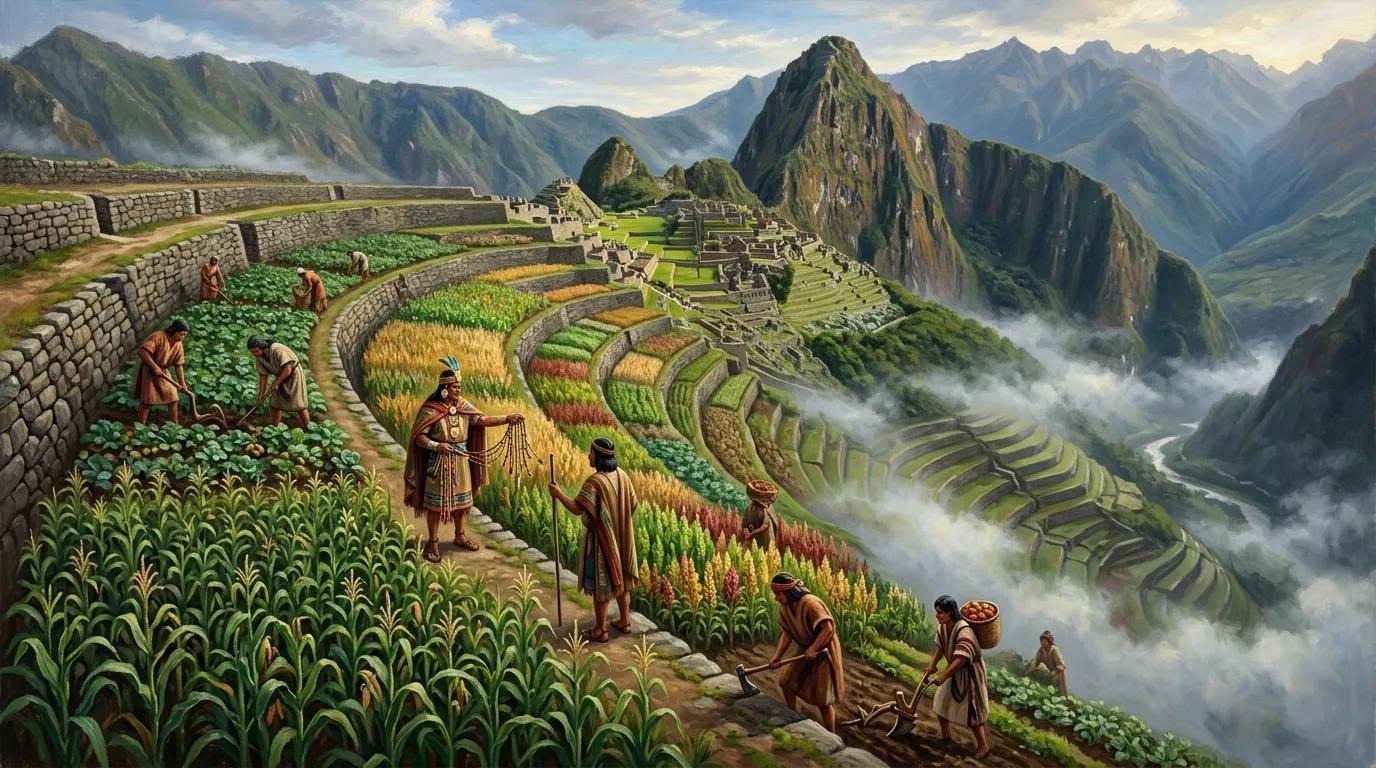
The Andes supported terraces, irrigation systems, raised fields, and other forms of agricultural modification.
Coastal regions included agricultural areas associated with river valleys and irrigation networks.
Amazonian landscapes contained evidence of human modification, including soil management, cultivation, and settlement organization.
Agriculture supported communities through the cultivation of crops such as maize, potatoes, quinoa, beans, and other regionally important plants.
The relationship between agriculture and urban settlement depended on access to water, land, labor, storage, transportation, and political organization.
Rooftop Cultivation as an Archaeological Question
Roof-top gardens would involve the use of elevated architectural surfaces for growing plants.
Such cultivation would require structures capable of supporting soil, water, plants, and the associated weight.
Researchers investigating rooftop agriculture would need to examine whether buildings had appropriate surfaces, drainage systems, access points, and evidence of repeated use.
Potential archaeological evidence might include:
Raised planting surfaces.
Soil deposits on roofs.
Drainage features.
Plant remains.
Containers.
Irrigation arrangements.
Architectural modifications.
Evidence of repeated maintenance.
However, roof surfaces may also accumulate debris, sediment, or vegetation naturally.
The presence of soil on an ancient roof does not automatically demonstrate intentional cultivation.
Architecture and Structural Limitations
Roof-top gardening requires suitable construction.
Flat or gently sloping roofs may provide more opportunities for cultivation than steep roofs, although architectural design varies considerably across pre-Columbian South America.
Researchers would need to examine building materials, roof construction, load-bearing walls, drainage, and the relationship between roof surfaces and surrounding structures.
The use of roofs for cultivation may also have depended on local resources and the availability of suitable soil.
A garden placed on a roof would require regular access to water, making water-management systems especially important.
Agricultural Crops and Botanical Evidence
Archaeobotanical research provides important information about ancient cultivation.
Plant remains recovered from archaeological deposits may include seeds, grains, tubers, fruit remains, and other materials.
Researchers may use flotation to recover small plant remains from sediment samples.
The identification of cultivated plants could help investigate agricultural activity in residential and urban contexts.
However, plant remains found inside a building do not necessarily indicate cultivation on its roof. They may represent food storage, processing, consumption, fuel, or other activities.
Evidence for rooftop gardening would need to demonstrate a direct relationship between plant remains and a cultivation surface.
Urban Food Production and Resource Management
Urban cultivation could potentially reduce the distance between food production and consumption.
Gardens located near residential spaces might provide herbs, vegetables, medicinal plants, or other resources.
Small-scale cultivation could supplement larger agricultural systems rather than replace them.
The relationship between urban gardens and surrounding farmland would depend on the settlement's population, agricultural productivity, transportation systems, and economic organization.
Urban agriculture may also contribute to household resilience during periods of reduced access to external resources.
Environmental and Social Significance
Cultivation on elevated surfaces may influence the environmental conditions of buildings.
Plants and soil can affect surface temperatures, moisture, shade, and drainage.
If rooftop cultivation were practiced in a particular pre-Columbian settlement, researchers could investigate whether it was associated with household activities, specialized production, ceremonial practices, or broader agricultural organization.
The distribution of gardens across different buildings might also reveal social differences in access to cultivation space.
Such interpretations would require careful archaeological evidence and should not be based solely on modern assumptions about rooftop gardening.
Conclusion
The study of urban rooftop gardens in pre-Columbian South America offers an interesting perspective on the relationship between architecture, agriculture, and urban sustainability.
Although specific rooftop cultivation systems remain unverified in the context of this title, archaeological research into elevated cultivation surfaces could contribute to understanding how ancient communities used architectural space, managed resources, and supplemented food production.





