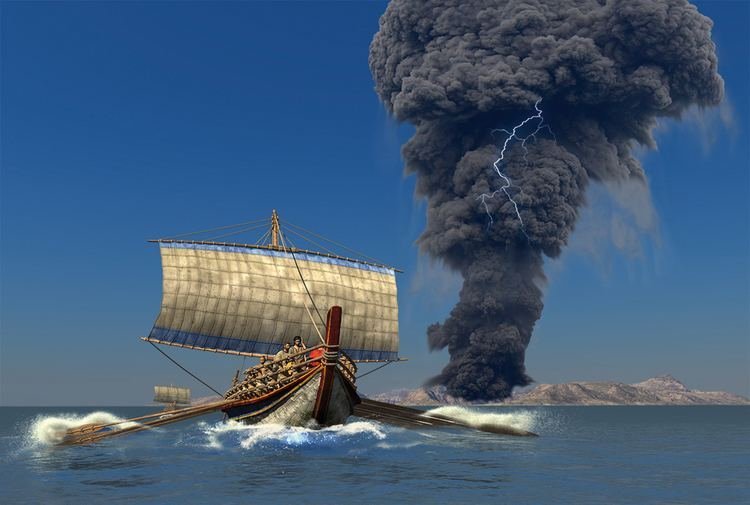
The researchers in this new study discovered that the amount of material blasted from Santorini on land and underwater was 26–41 cubic kilometers, much less than was previously believed (estimates from previous calculations were 86 cubic kilometers of ejected magma). Also, the amount of debris expelled provides information on the size of the magma chamber beneath the volcano.
Until now, estimations of the eruption volume were either based on estimates of the volume of the caldera collapse or on the imperfect record of the eruption products. This is the first time that such accurate quantities have been determined for all the different components. The explanatory power of either strategy by itself is constrained.
The researchers combined various techniques from many research missions for the new calculations.
For instance, they were able to identify the amount of ash produced by the Minoan eruption by tracing its ash deposition in 41 sediment cores taken during the Poseidon research expedition in 2017. They were able to classify the material that dropped into the volcano's crater thanks to the data they gathered.
"The great collaboration between Greek and foreign scientists who took part in past oceanographic missions around the undersea region of Santorini led to the creation of this article.” The most accurate estimation of the size of the Minoan eruption came from the combination of geological and geophysical data that had been gathered and analyzed, notes Ms. Nomikou.
The research team determined the true size of the Minoan eruption using the new scientific methodology and, as a result, established a more trustworthy benchmark for more accurate measurement and classification of other significant volcanic eruptions around the world.
"Eruptions can be deadly and can have an impact on the environment.” According to team leader Dr. Jens Carstens, "We are happy to have contributed with our research to a step towards a better understanding of these massive occurrences and, accordingly, to the enhancement of risk assessment.”
In December 2022 and January 2023, as part of the International Ocean Exploration Program's (IODP's) major oceanographic expedition, subsea research drilling will be conducted. After analyzing the seismic profiles and the topography of the undersea floor, the underwater drilling was done in the areas that the study team had identified as being particularly important, allowing the volume of volcanic debris from the Santorini Minoan eruption to be validated.