In 2009 a team of British Cavers discovered a cave deep within the jungle of central Vietnam. After exploring the cave passage for six kilometres, their way was barred by a formidable and gigantic rock face they named ‘The Great Wall of Vietnam. This year they have returned with the right climbing equipment and a team of scientists set on discovering if this is the World’s Biggest Cave, and what secrets it may hold?
Beautiful, 2,000-year-old sculptures of "true beauty" were discovered buried in Wales
Thousands of years old artifacts in outstanding preservation were discovered in a field. A metal detectorist discovered the Iron Age and Roman-era artifacts, which have been designated as treasure. When Jon Matthews was metal detecting near Llantrisant Fawr, Monmouthshire, in March 2019, he came across these. "True beauty" was his phrase to describe the items.

The ox head bowl handle that was excavated (Image: National Museum Wales)
Some of the Roman artifacts, according to experts, may point to the presence of a nearby settlement that has never been identified. Assistant coroner for Gwent, Rose Farmer, deemed four treasure findings, including an Iron Age vessel trove, a Roman coin hoard, and two silver artifacts from the 17th century, to be valuable finds.
He had no idea what he had discovered at first, but he suspected it might be significant. The artifacts, a Roman jug and a Celtic bucket mount, were carefully dug up and transferred to Amgueddfa Cymru after being reported to the neighborhood find liaison officer. Jon was able to work with the museum's excavation crew a few weeks later.

Bucket mounts found at Llantrisant Fawr (Image: National Museum Wales)
More artifacts were found here, including a bowl with an ox's face decoration that the crew first mistook for a brooch. In his 10 years as a metal detectorist, Jon described finding the bowl as a "surreal" experience and stated, "I've never seen anything like it. I didn't imagine our forefathers were capable of creating something so exquisite. I was rather surprised.
A total of two complete and six fragmentary vessels were found after an investigation by staff from the Portable Antiquities Scheme in Wales (PAS Cymru) and Amgueddfa Cymru. It has been possible to identify the remains of two wooden tankards, an Iron Age bucket with copper alloy fittings, an Iron Age bowl, cauldron, and strainer, as well as two Roman saucepans made of copper alloy. The vessels appear to have been interred collectively in the second half of the first century AD, around the time of the Roman conquest.

A Roman trulleus handle found at Llantrisant Fawr (Image: National Museum Wales)
Mr. Matthews remarked, "I feel honored to have discovered something so rare that is connected to Wales and our ancestors. We were able to learn a great deal from the artifacts thanks to the combined efforts of the archaeologists with whom I worked on the hoard excavation."
While metal detecting on a ploughed area in Caerwent between 2014 and 2022, Colin Price and Rhys Cadwallader also found a cache of Roman coins. The late third to late fourth centuries AD are when the copper alloy coins were made.

A Roman trulleus found at Llantrisant Fawr (Image: National Museum Wales)
Senior curator at Amgueddfa Cymru Alastair Willis stated: "It is thrilling and important to find two coin hoards in the same area and close to the Roman town of Caerwent. The findings of the geophysical survey conducted imply that the coin hoards were interred at a previously undiscovered village or religious site. This provides insight into rural life near the ancient Roman settlement of Venta Silurum. The findings are crucial for comprehending what was going on in south-east Wales at the end of the Roman era and the beginning of the fifth century AD.

Wooden bucket fittings found at Llantrisant Fawr (Image: National Museum Wales)
"The Portable Antiquities Scheme in Wales plays a critical role in safeguarding Welsh heritage," stated Dr. David Howell, PAS Cymru Engagement Officer. PAS Cymru offers a service where finders of archaeological materials can formally report their artefacts. This service is made possible by a network of committed Finds Liaison Officers throughout Wales and assistance from the Welsh Archaeological Trusts. Our knowledge of Welsh archaeology and history has been greatly improved as a result of PAS Cymru's efforts in recording information on thousands of archaeological artefacts. Without PAS Cymru, Wales's citizens would probably never learn about this information. The main PAS online database, https://finds.org.uk, provides access to information about artifacts reported under the scheme today.
A post-medieval silver chape and a post-medieval silver thimble were also declared treasure. Michael Evans found them in September 2021 while metal detecting in a field underneath pasture in Grosmont. Luke Phillips found the thimble in Mathern in November 2020 while metal detecting in a field beneath a tough pasture.
Summer Solstice Discovery at the Long Man of Wilmington
Archaeoastronomer Stuart Mason has revealed that the Long Man of Wilmington, a 231 feet tall chalk hill figure in Sussex, is a Summer solstice marker based upon its position in relationship to the sunrise and sunset on the longest day of the year. Mason also explains the mystery of why the figure is holding two staffs, possibly for surveying, what Leyhunters call the 'Dodman'. It is also located on a remarkable ley line connecting up ancient sites nearby. Introduced by Hugh Newman with exclusive aerial footage.
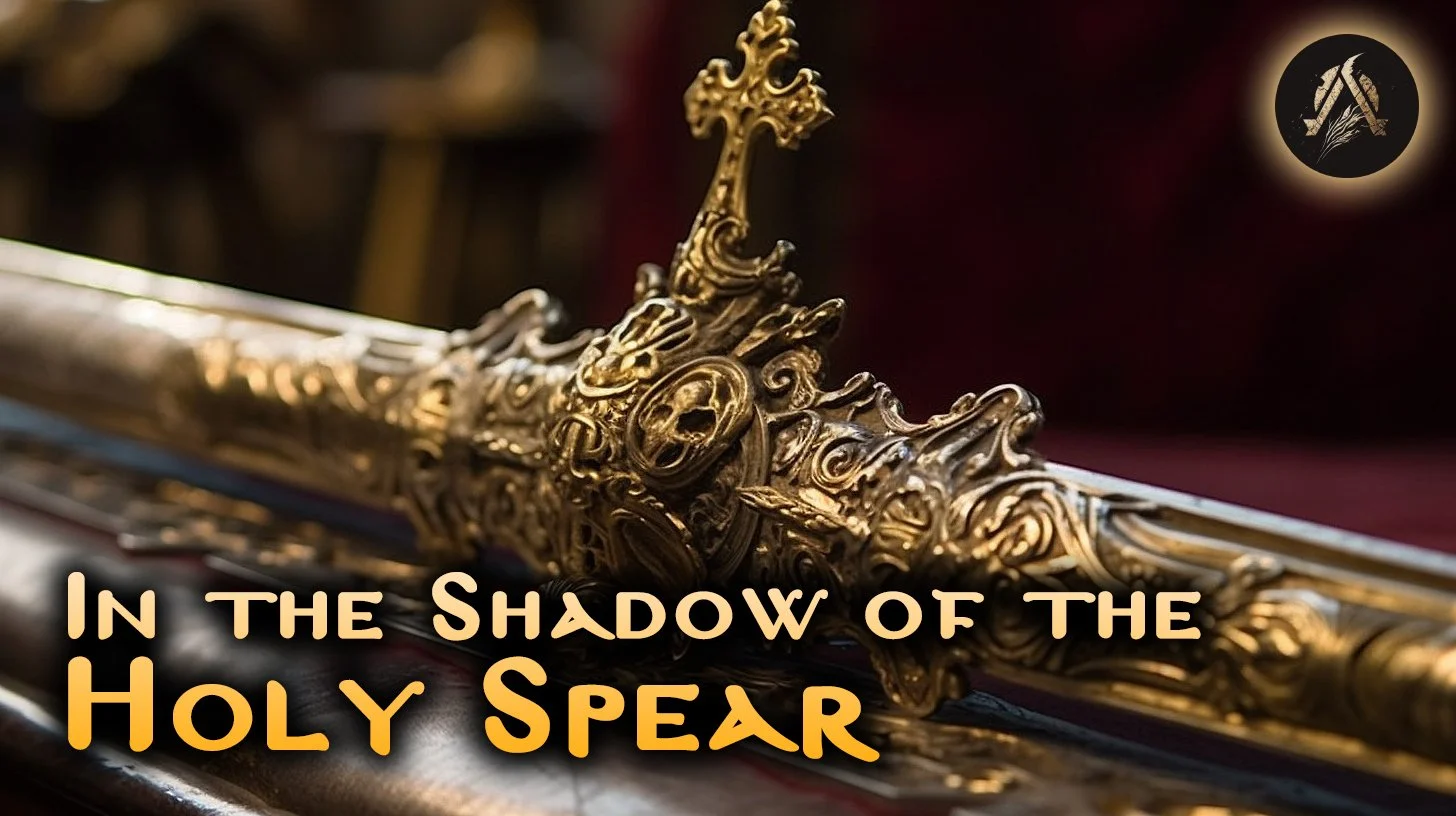
The Holy Spear of Destiny: Tracing Its Mystical Journey Through History
In this captivating exploration, we delve into the enigmatic history and enduring allure of the Holy Spear, also known as the Spear of Destiny or the Lance of Longinus. Revered in religious tradition and steeped in legend, the Holy Spear is said to be the lance that pierced Jesus's side during his crucifixion, making it a significant artifact within Christian culture.
We trace the Spear's journey over the centuries, from its Biblical origins to its role in the Holy Roman Empire, and its purported influence over world events and iconic figures like Napoleon Bonaparte. This legendary relic has had a profound impact on the imaginations and ambitions of leaders throughout history, stirring fascination and intrigue.
This film examines the various versions of the Holy Spear that exist in religious and historical locations worldwide, including Armenia, Austria, and Italy. We explore the debates about their authenticity, the archaeological and scientific examinations conducted, and their significance for devotees and historians alike. It explores the Spear's cultural and symbolic influence, its role in prophecies and folklore, and its continued fascination for both the faithful and scholars.
Whether you're intrigued by religious artifacts, historical mysteries, or cultural symbolism, "The Fascination with the Holy Spear Over the Centuries" promises to be an enthralling journey.
These Lao Tzu quotes are life-Changing | Most Inspirational Quotes
In this video we will be going through some Lao Tzu quotes that are life-Changing. Enjoy!
Unusual Things That the Ancient Egyptians Did
In the video below we will analyze unusual things that the Ancient Egyptians did. Watch the video to find out more!
12 Most Incredible Archaeological Finds
What does it take to make an archaeological find “incredible?” That’s a difficult question to answer. Almost every discovery is special in its own way, but some of them have that all-important X-factor that makes them stand out from the crowd. Each of the discoveries you’re about to see in this video has that X-factor, and has it in abundance!
Ancient Technologies That Science Cannot Explain
In the video below we will analyze ancient technologies that Science can’t really explain. Watch the video to find out more!
Arctic Sinkholes I Full Documentary
In the Arctic, enormous releases of methane, a potent greenhouse gas, threaten the climate.
Colossal explosions shake a remote corner of the Siberian tundra, leaving behind massive craters. In Alaska, a huge lake erupts with bubbles of inflammable gas. Scientists are discovering that these mystifying phenomena add up to a ticking time bomb, as long-frozen permafrost melts and releases vast amounts of methane, a potent greenhouse gas. What are the implications of these dramatic developments in the Arctic? Scientists and local communities alike are struggling to grasp the scale of the methane threat and what it means for our climate future.
Shocking Ancient Discovery at the Well of Abraham: Tradition vs Archaeology
Tradition clashes with archaeology at the Well of Abraham, where two sites claim to be the true location of the ancient well. But a shocking discovery was made after delving into archaeological papers and a 150-year-old book. The well depicted in the book stood in the middle of nowhere with no signs of civilization nearby, and it reveals something about Be'er Sheva that turns everything we thought we knew on its head. So get ready to uncover the truth behind this fascinating mystery.
Today we will delve into the mystery of the Well of Abraham and its secrets.
The Untold Story of The Most Evil Queen: Cleopatra
Cleopatra. One of the most famed rulers in all of history. The story of her life is the stuff of legend. Seductive affairs, shrewd politicking, war, murder, propaganda, the rise and fall of civilizations – it has it all. She entered the world at a time of civilizational upheaval. By the time she left it, nearly everyone she loved was dead, and the newly-minted Roman Empire had defeated a once-mighty Egypt, ushering in a new era of human history.
Today, we’re exploring the life and death of Cleopatra: The queen who stood between two empires.
The Comanche Attack that Terrified the Spanish
As the troops and missionaries of the Spanish Empire trek north, they stumble into the orbit of a new power on the North American continent: the Comanche. An attack on the Mission of San Saba in 1758 terrifies the Spanish colonies, provokes the Battle of the Twin Villages, and ushers in an era of increased Comanche war raids.
1.8 million years ago, the earliest signs of human activity were discovered
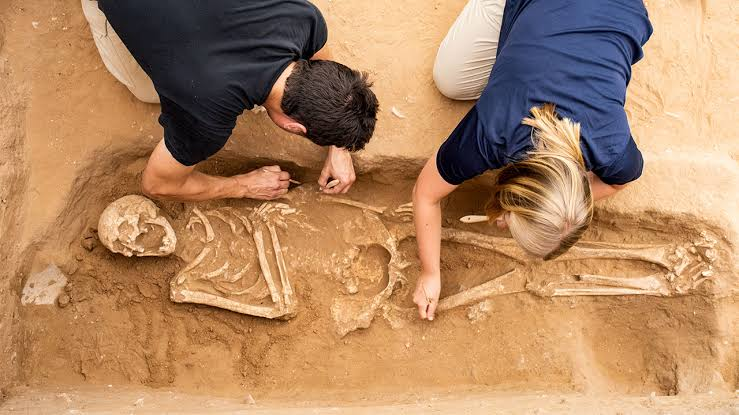
In a cave in South Africa, one of the earliest human activities was discovered. In the Wonderwerk Cave in the nation's Kalahari Desert, a group of geologists and archaeologists discovered proof that our predecessors were manufacturing tools and fire 1.8 million years ago.

Wonderwerk, which translates to "miracle" in Afrikaans, may contain the earliest proof of human activity ever found, according to a recent study from academics at the Hebrew University of Jerusalem and the University of Toronto.
Professor Ron Shaar of Hebrew University, the study's principal author, said, "We can now declare with confidence that our human ancestors were creating rudimentary Oldowan stone tools within the Wonderwerk Cave 1.8 million years ago.
The earliest tools, dating back to 2.6 million years ago, are Oldowan stone tools. Making a chopping tool for the Oldowan people involved chipping flakes off of one stone with another stone.
Wonderwerk is distinct from other ancient sites where tool shards have been discovered, according to Professor Shaar, because it is a cave as opposed to the open air, where sample origins are more difficult to identify and contamination is conceivable.

The researchers used the cave to date the transition from Oldowan tools to the earliest handaxes, which occurred more than a million years ago. The scientists discovered when exploring further into the cave that a purposeful usage of fire could be traced back one million years.
This is relevant because instances of early fire use frequently occur at outdoor locations where wildfires may have contributed to them. Burned bones, ash, and equipment left behind by previous fires in a cave give obvious hints as to their use.
The researchers used burial dating and paleomagnetism to assess magnetic signals from the remains buried beneath a sedimentary rock layer that was 2.5 meters thick in order to correctly date their discovery. The magnetic properties of prehistoric clay particles that accumulated on the cave floor can be used to determine the direction of the old earth's magnetic field. The scientists were able to reduce the dating range of the cave layers by using the dates of magnetic field reversals.

Another dating technique, developed by Professor Ari Matmon of Hebrew University, focused on quartz sand isotopes that "had a built-in geological clock that starts ticking when they enter a cave" and helped to support their findings. He explained that by measuring the concentrations of particular isotopes in those particles in their lab, the researchers were "able to assess the concentrations of those particles and extrapolate how long it had been since those grains of sand entered the cave."
A deeper knowledge of human evolution in Africa and the mode of life of our earliest ancestors may result from discovering the precise dates of human activity in the Wonderwerk Cave.
When The Last "Siberian Unicorn" Lived on Earth is Now Known Thanks to a Fossilized Skull
Scientists have long hypothesized that the Siberian unicorn, a long-extinct species of mammal that resembled a rhino instead of a horse, perished about 350,000 years ago.

But, a stunningly preserved skull discovered in Kazakhstan in 2016 has utterly disproved that notion. It turns out that these amazing creatures were still alive 29,000 years ago.
Sure, this proves that a unicorn existed in the actual world and walked the Earth tens of thousands of years ago, but it was quite different from the unicorn shown in your favorite children's book. (Sorry; we're also disappointed.)
The true unicorn, Elasmotherium sibiricum, was hairy, enormous, and resembled a contemporary rhino, with the exception that it wore the largest horn possible on its forehead.
The Siberian unicorn was first thought to be about 2 meters (6.6 feet) tall, 4.5 meters (14.7 feet) long, and weighed about 4 tonnes.

That resembles a woolly mammoth more than a horse. Despite its enormous size, the unicorn was presumably a grazer that largely consumed grass.
Thus, instead of picturing a short, stubby horn like those on modern rhinos, picture a fuzzy rhinoceros with one long, slender horn sticking out from its face.
The skull was discovered in Kazakhstan's Pavlodar region and was astonishingly well preserved. Using radiocarbon dating methods, researchers from Tomsk State University were able to determine that it was formed about 29,000 years ago.
They speculate that it was probably a very elderly male based on the size and condition of the skull, but the manner of death is still unknown.
How this unicorn survived so much longer than animals that went extinct hundreds of thousands of years earlier is the topic on researchers' minds.
According to one of the team members, Andrei Shpanski, "Most likely, the south of Western Siberia was a refugium, where this rhino endured the longest in relation to the rest of its range."

Another possibility is that it might go to the southern regions and stay there for a while.
Since it appears that some creatures may have survived far longer than previously thought by migrating across vast distances, the team thinks that the discovery will help researchers better understand how environmental conditions played a part in the creatures' extinction.
Given that we are in a very precarious position, knowing how the species endured for so long and perhaps what ultimately caused its extinction should help us make better decisions concerning the future of our own species.
12 Most Amazing Ancient Artifacts Finds
In archaeology, discoveries can broadly be classified into two types: the expected and the unexpected. The latter is the focus of this video, which presents finds that were as astonishing to their discoverers as they are to us as viewers! Whether they’re significant enigmas or little oddities, this video features a diverse range of unexpected yet fascinating discoveries.
The Nasty Hygiene In Ancient Egypt Will Shock You
It is clear from studies of ancient culture that the Egyptians were far ahead of their time. It is well known that hygiene wasn’t really an important part of their lives as well. How did the Egyptians take care of their hygiene? Did you know they already used Deodorant? Let's dive in.
Societies like ancient Egypt had to be inventive and innovative to live since they lacked sanitation and other contemporary luxuries. For the ancient Egyptians, social status was the main determinant of quality of life. The ancient Egyptians had a lot of hygiene quirks that made their culture distinct, whether they had a toilet or had to bathe in a crocodile-infested river.
Most dangerous cliff way to the village
In the following video we will be exploring the riskiest cliff route to a village. Watch the video to find out more!
The Gate To The Garden Of Eden Just Found In Jerusalem
Hold onto your seats, folks, because the discovery of a lifetime has just been made in Jerusalem! Archaeologists have made an incredible discovery that has left experts stunned and the world buzzing with excitement, It's the entrance to the fabled Garden of Eden - yes, you heard that right! But here's the thing: What secrets does this discovery hold? And what mysteries will be revealed once it's fully explored? Stay tuned to learn everything there is to know about it. So without further ado, let's get started.
The Garden of Eden is one of the most fascinating and mythological sites in human history. It is described in different holy scriptures, including the Bible and the Quran, and has captivated people's imaginations for millennia. But what precisely is the Garden of Eden?
Scientists Discover Two Mysterious Neanderthal Populations
In this video, we'll be discussing the theory that Neanderthals may have had different ethnicities and pigmentation like modern day humans.
This topic is sure to be of interest to many, so make sure to check it out! We'll be discussing the evidence for and against this theory, and whether or not it's plausible. So join us on this journey into the unknown, and find out whether or not Neanderthals had different ethnicities and pigmentation!
12 Most Amazing Objects You Wont Believe Are Real
Humans have been interested in sculpture ever since our first ancient cave-dwelling ancestor carved the first human-like shape out of rock. Many of us are no more skilled at the art of sculpture than those ancient humans are, but there are some who are blessed with phenomenal talents! We’re celebrating those artists in this video, which is full of sculptures so breathtaking you won’t believe that they’re real.