The finding of a plesiosaur skeleton dating back 100 million years "could hold the key" to prehistoric science

Researchers have welcomed the finding of a massive marine reptile's skeleton in Australia that is 100 million years old as a significant discovery that could reveal important information about prehistoric life.

This is the first time the skull, neck and body of a plesiosaur have been found in one piece in Australia.

Three amateur paleontologists discovered the remains of the 6-meter (19-foot) tall juvenile long-necked plesiosaur, commonly known as an elasmosaur, in August 2022 on a cattle station in the western Queensland outback.

Espen Knutsen, senior curator of palaeontology at the Queensland Museum, compared the find to the 1799 rediscovery of the Rosetta Stone, an ancient Egyptian granite block that assisted researchers in deciphering hieroglyphics.

"We have never found a body and a head together and this could hold the key to future research in this field," Knutsen said in a statement that confirmed the discovery on Wednesday. He added that it could give paleontologists more insight into the origins, evolution, and ecology of the cretaceous period in the area.

"Because these plesiosaurs were two-thirds neck, the head would often be separated from the body after death, which makes it very hard to find a fossil preserving both together," he said.

The skull of the 100 million-year-old plesiosaur found in Queensland, Australia.

The "Rock Chicks"—Cassandra Prince, Cynthia Prince, and colleague fossil hunter Sally, who only goes by her first name—are a group of amateur paleontologists who made the discovery.

Around 150 million years ago, the Eromanga Sea, which had waters that were 50 meters deep, covered a major portion of rural Australia and was home to elasmosaurs, which grew to a length of 8 to 10 meters.

When an elasmosaur died, according to Knutsen, its rotting body would expand with gas and rise to the water's surface. Additionally, the head would frequently break off when predators scavenged the cadaver, making full-body discoveries uncommon.

He continued by saying that the most recent discovery, a young specimen, will clarify how the body structure of elasmosaurs altered from infancy to adulthood.

We're going to look at the chemistry of its teeth, and that can tell us a lot about its ecology in terms of habitat, whether it was traveling throughout its life or whether it was sort of sticking in the same habitat, as well as its food, he said.

Plesiosaurs and ichthyosaurs, two extinct sea reptiles that lived in the same time period as dinosaurs, are not considered to be dinosaurs. Plesiosaurs descended from land-dwelling predecessors who were forced to occasionally rise for air since they lacked gills. How long they could submerge is still a mystery.

Amateur fossil hunter Cassandra Prince with Espen Knutsen from the Queensland Museum.

It's the most significant prehistoric discovery to have recently been made in Australia.

In June 2021, experts determined that the Queensland fossilized skeleton found in 2007 represented the largest dinosaur ever found in Australia. The dinosaur, known as "Cooper," was the length of a basketball court and stood about two floors tall.

Two months later, researchers learned that 105 million years ago, a species of flying "dragon" flew across Australia. Researchers referred to the pterosaur as a "fearsome beast" that dined on young dinosaurs.

Source: https://edition.cnn.com/2022/12/07/austral...

Archaeological Excavations at Hadrian's Wall Showcase Roman History

The biggest archaeological dig on a section of Hadrian’s Wall since the 1990s has begun, with experts hoping it will reveal more secrets of daily life on the Roman frontier.

It is expected that a "big picture" of frontier life will emerge from the archaeology of fort settlements with findings showcasing that settlement beyond the Roman fort of Birdoswald, on Hadrian's Wall, was carefully planned.

The work at the World Heritage Site is being carried out by Historic England and Newcastle University with areas east, west and north of the fort under excavation.

During building in Estonia, a medieval cargo ship was surprisingly discovered

The battered remnants of a 700-year-old ship were discovered by construction workers under the streets of Tallinn, the capital of Estonia.

A view of the medieval ship, from the bow, in the excavation pit. (Image credit: Priit Lätti)

The ship's remains, which are made of oak and about 78 feet (24 meters) long with a beam, the ship's widest point, measuring around 29 feet (9 meters), are buried about 5 feet (1.5 meters) below earth.

According to Priit Lätti, a researcher at the Estonian Maritime Museum, "the original length of the ship was bigger, since the stempost [the vertical timber at the bow] is missing and the bow of the ship is damaged." Dendrochronological investigation, which looks at the tree rings found in the ship's wooden remnants, revealed that "the ship was probably built at the beginning of the 14th century," he said. According to him, the ship appears to be extremely similar to other ships from the same era discovered in Europe.

The ship was discovered three weeks ago close to Tallinn's Old Harbor by archaeologist Mihkel Tammet, who had been studying a building site. Lätti asserts that an archaeologist must be present during excavations in places that are subject to heritage protection. The Estonian Maritime Museum was informed of the ship's discovery and asked to assist in collecting data and documenting the find.

Lätti revealed to Live Science that the ship was filled with sand and that it was not sunk very deeply. Given that several sand layers could be seen, he concluded that the sea most likely progressively filled the boat over the years.

Since the ship's discovery, rumors have circulated that it may be a Hanseatic cog, a freight ship employed in trade by the Hanseatic League. The league, a confederation of European trade guilds, ruled the seas between the 13th and the 15th century. Lätti asserted that it is still too early in the excavation procedure to be able to pinpoint the ship's origins.

The ship's sternpost (Image credit: Priit Lätti)

“It's most likely a cargo ship”, he said. “It is difficult to determine the origin of the vessel because we do not yet know the origin of the timbers (the dendrochronological tests are preliminary, therefore I do not want to reveal exact dates or early hypotheses about the origin of the timber).”

Additionally, scientists are attempting to ascertain whether any items discovered buried with the ship can be helpful in figuring out the boat's age.To provide more precise answers, Lätti said that additional analyses had been performed in addition to the artifacts that were discovered aboard. Currently, only the ship's bow is being excavated; the cargo hold was largely empty. The excavations are now moving to the ship's aft region, which might include more discoveries.

So far, the ship has also turned up a few wooden barrels, pottery, animal bones, a few leather items, and textiles. As the aft portion of the ship is excavated, further discoveries are anticipated in the upcoming days.

The fact that the ship was found in such good shape will aid historians and archaeologists in their quest to understand shipbuilding, trading, and life aboard these vessels during the Middle Ages.

Finding something like this, according to Lätti, an expert on harbors and shipwrecks, is "an archaeological jackpot" for Tallinn as an old trading port. "Maritime trade played a significant role in the growth of Tallinn, and while we know a lot about the traders and the goods they traded, we still know very little about the ships they used."

The ship's cargo hold in the excavation pit (Image credit: Priit Lätti)

Similar ships to this one have been found before. For instance, the Bremen cog was discovered in Germany in 1962, while the Estonian Maritime Museum today houses a medieval freight ship that was discovered in Tallinn in 2015.

After it has been unearthed, there is still debate about what will happen to this ship. However, the objective is to take it out of the building site where it was discovered, put it in a secure location, and preserve it. This is what Lätti called a "huge task."

"The methods of transporting, preserving, and conserving the ship are still being discussed," he said, "because it is a very complex operation, and we are dealing with a very valuable archaeological object."

Source: https://www.livescience.com/medieval-cargo...

These BIZARRE Aztecs Events Will Leave You Horrified

The Aztec Empire is one of the most infamous empires in history. From their capital of Tenochtitlan, they ruled over much of Mexico in the 15th and early 16th centuries until their conquest by the Spanish conquistadores, led by Hernan Cortes, in 1521. Today, we explore some of the stranger aspects and events in Aztec history.

German DNA History

In the following video we will go through the German DNA history. Watch the video to find out more!

57,000-year-old mummified wolf pup discovered in Canadian permafrost

A mummified baby grey wolf with a perfectly preserved head, tail, paws and fur has been found in Yukon, northern Canada.

The seven-week-old female wolf pup, christened Zhùr, had been locked in permafrost – ground that remains completely frozen – for 57,000 years.

Researchers think the 1.4-pound pup, who had traces of salmon in her gut, died quickly after her den collapsed, possibly when her mother was out hunting.

Zhùr was found by a gold miner who was blasting water at a wall of frozen mud in 2016, but is only now being described in a paper, published in Current Biology.

She measures 16.5 inches from snout to base of tail and is in an 'exceptional' state of preservation, from the papilla on her lips and to her skin and fur.

Zhùr will go on display at the Yukon Beringia Interpretive Centre in Whitehorse, the capital of northwest Canada’s Yukon territory.

'She's the most complete wolf mummy that's ever been found,' said study author Julie Meachen, an associate professor of anatomy at Des Moines University, Iowa, US.

'She's basically 100 per cent intact – all that's missing are her eyes.

'And the fact that she's so complete allowed us to do so many lines of inquiry on her to basically reconstruct her life.'

It takes a 'unique combination of circumstances' to produce a permafrost mummy, which means there's a degree of chance surrounding Zhùr's preservation.

However, the research team believe the helpless pup wasn't in too much pain at the time of her death.

'We think she was in her den and died instantaneously by den collapse,' said Professor Meachen.

'Our data showed that she didn't starve and was about seven weeks old when she died, so we feel a bit better knowing the poor little girl didn't suffer for too long.'

Animals that die slowly or are hunted by predators are less likely to be found in a far less pristine condition than young Zhùr.

'It's rare to find these mummies in the Yukon,' said Professor Meachen.

'The animal has to die in a permafrost location, where the ground is frozen all the time, and they have to get buried very quickly, like any other fossilisation process.

'If it lays out on the frozen tundra too long it'll decompose or get eaten.'

Isotopic analysis of Zhùr reveal her diet was heavily influenced by how close she lived to water.

'Normally when you think of wolves in the Ice Age, you think of them eating bison or musk oxen or other large animals on land,' said Professor Meachen.

'One thing that surprised us was that she was eating aquatic resources, particularly salmon.'

Analysing Zhùr's genome also confirmed that she is descended from ancient wolves from Russia, Siberia, and Alaska, who are the ancestors of modern wolves as well.

But there remain some outstanding questions about Zhùr's family.

'We've been asked why she was the only wolf found in the den, and what happened to her mum or siblings,' said Meachen.

'It could be that she was an only pup or the other wolves weren't in the den during the collapse. Unfortunately, we'll never know.'

The specimen holds special significance for the local Tr'ondëk Hwëch'in people, who have agreed to place Zhùr on display at the Yukon Beringia Interpretive Centre.

She is now cleaned and conserved so she will stay intact for years to come, allowing her to travel to other locations in Yukon.

The research team predicts there may be more and more permafrost mummies found in the coming years.

'One small upside of climate change is that we're going to find more of these mummies as permafrost melts,' said Meachen.

'That's a good way for science to reconstruct that time better, but it also shows us how much our planet is actually warming.

'We really need to be careful.'

Source: https://www.dailymail.co.uk/sciencetech/ar...

Has Cleopatra’s Tomb Been Found?

We all know various facts about queen Cleopatra. But what about how her tomb was found? Watch the video below to find out!

How Neanderthal are you? Tracing our genetic ancestry

Scientists examining the evolutionary history recorded within our DNA are uncovering the global human story in greater detail. Watch the film to discover what DNA analyses taught six well-known figures, Maggie Aderin-Pocock, Clive Anderson, Bill Bailey, Kevin Fong, Alice Roberts and Sian Williams about their genetic ancestry. Enjoy!

12 Most Mysterious Archaeological Artifacts Finds Scientists Still Can't Explain

Do scientists and historians understand everything there is about the history of the human race? The answer to that question is no; of course they don't. They're not even close! There are massive gaps in our collective memory, and those gaps are best illustrated by the ancient artefacts that we struggle to make sense of. You're going to see a lot of them in this video, so let's get things started!

Dayuan - The Greeks of Central Asia

In the ancient Ferghana Valley of Central Asia, there were thriving Greek settlements far away from their ancestors. How did these people come to be so far away from Asia Minor, and how did they end up being the kingmakers of the Silk Road?

Irish DNA History

In the video below we will be explaining the history of Irish DNA. Watch the video for more & enjoy!

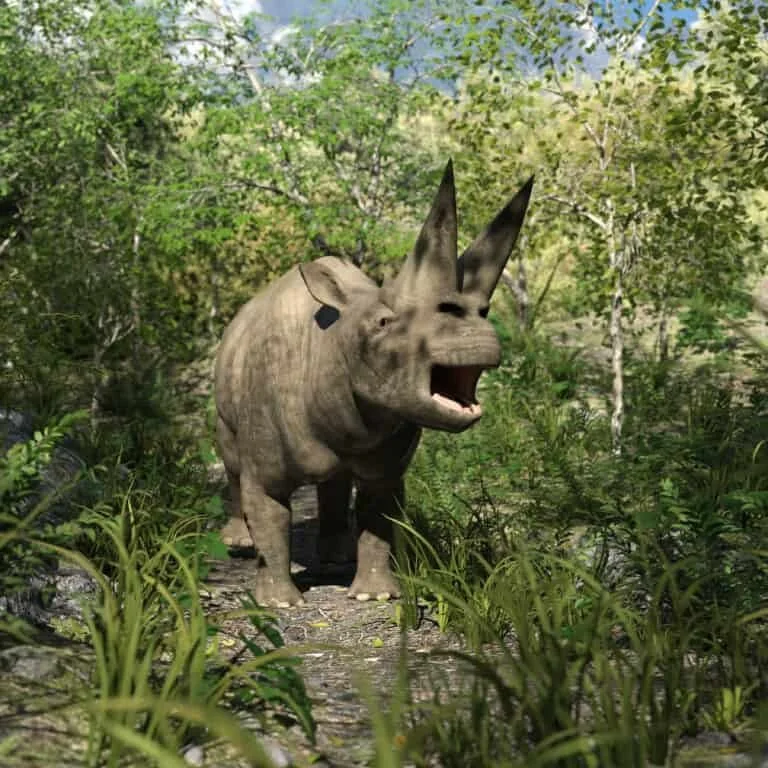
Arsinoitherium: Ancient Elephant Relatives But The Body Is A Giant Rhino With 2 Horns

The twin-horned Arsinoitherium was more closely linked to modern elephants than rhinos, despite having a similar appearance. Between the Late Eocene and Middle Oligocene eras (45 to 24 million years ago), this extinct genus made its home in Africa and the Arabian Peninsula. Along with existing animals like elephants, manatees, and hyraxes, Arsinoitherium is a genus of paenungulata mammals (nearly hoofed mammals).

Arsinoitherium’s horns were hollow.

Description & Size

A genus of extinct big animals known as Arsinoitherium was found in deposits from the Eocene Epoch, which lasted from 56 million to 34 million years ago. Members of the genus lived throughout the Oligocene Epoch, which occurred between 34 million and 23 million years ago, according to a more recent discovery in other areas.

After Queen Arsinoe I of Ancient Egypt, the species Arsinoitherium was named. She is commemorated by the Faiyum Oasis, the location of the earliest fossils of the genus. This fact is alluded to in the genus name. Arsinoitherium is a member of the extinct Embrithopoda order. Arsinoitherium zitteli and Arsinoitherium giganteus are two well-known species of the genus.

When it comes to appearance, Arsinoitherium is frequently compared to a whimsical rhinoceros. On the nasal bones, it had two huge horns, and on the frontal bones, it had a smaller pair of horns. This mammal's dimensions are similar to those of a huge white rhinoceros. Arsinoitheriums might grow as long as 3.5 meters (11 feet). At the shoulders, they were roughly 1.75 m (5.7 feet) tall.

Arsinoitherium's skeletal system is remarkably similar to that of elephants. They possessed skulls, feet, and hips that resembled elephants. Their twin horns, which could reach a length of up to 2.5 feet, were hollow and constructed of a bone substance similar to that of contemporary cows. The horns most likely possessed a keratin layer that prevented them from breaking. Although both sexes had horns, some scientists have hypothesized that the size of the horns varied according to gender.

3D illustration of a Arsinoitherium

Diet – What Did Arsinoitherium Eat?

Arsenoitherium was a herbivore that foraged. However, palaeontologists believe it had a specific diet based on the particular tooth structure and jaw muscles. It might have consumed the many bulky fruits and grasses that were present at the Egyptian site of Fayoum Oasis, where it was discovered.

Habitat – When and Where It lived

The Arsinoitherium genus included large, sluggish creatures. It is generally accepted that they, like modern hippos, resided in swamps and semi-aquatic environments. Instead of swinging forward, their forelimbs were designed to pull firmly backward. This trait is typical of animals that prefer to drag themselves across marshes, sticky soils, and other types of shallow water.

The majority of the fossils discovered thus far were found in sediments resembling warm, humid lowland forests with dense vegetation or coastal swamp settings. From the Late Eocene through the Middle Oligocene, the Arsinoitherium was among the largest mammals in Africa and the Arabian Peninsula.

Threats And Predators

Given their enormous size, these mammals had no significant predators that could feed on them. Arsinoitherium didn't need to run because it had no predators to flee from, according to scientists, who say that is why its limbs weren't built for rapid movement.

Discoveries and Fossils – Where It Was Found

The first Arsinoitherium fossils were discovered by paleontologists in the Jebel Qatrani strata of the Egyptian Fayum Oasis. In the Late Eocene to Early Oligocene sediments at this location, there were full bones of this mammal.

The fossil was found in 1901 by paleontologist H. L. Beadnell, who gave it the name Arsinoitherium zitteli a year or so later. The name of the genus, Arsinoitherium, refers to Egyptian Queen Arsinoe I and means "Arsinoe's Beast." The most well-known species in this genus is A. zitteli.

More recently, a larger and more recent species was identified. 2004 saw the discovery of fresh Arsinoitherium fossils by paleontologists researching in Ethiopia's Chilga region. The newly discovered species was around 25% larger than A. zitelli based on tooth comparisons. Arsinoitherium giganteus is the name given to it.

Along with these noteworthy discoveries, paleontologists have discovered a number of fossil fragments, mostly teeth, that belonged to an unidentified species within the genus. Arsinoitherium fossil fragments of an unidentified specie have been discovered in numerous locations throughout Africa and the Middle East.

Extinction – When Did Arsinoitherium Die Out?

About 27 million years ago, arsinoitheriums went extinct. Scientists believe that climate change was the primary factor in the extinction of these and the majority of the other great mammals that were around at the time.

During the Late Eocene, there were significant climatic changes that caused the habitat of Arsinoitherium to be disturbed. The hot, muggy weather changed to a considerably chilly one. Due to this, their moist forested environment was lost, and grasslands and savannahs, which are currently common throughout most of Africa, began to grow.

A few Arsinoitherium persisted for a while in a restricted area of woodland habitats. But as the temperature dropped, grasslands began to appear all over Northern Africa. The Arsinoitherium totally lost their habitat and food source by the Middle Oligocene, which resulted in their extinction.

Source: https://a-z-animals.com/animals/arsinoithe...

Exploring London's Hidden Medieval Metropolis

If you were asked to picture London during the Middle Ages, you might think of The White Tower, Westminster Abbey or Guildhall - some of the capital’s most famous landmarks. But scratch beneath the surface and you’ll find there are lots more clues to this medieval metropolis.

In this video London tour guide Katie Wignall seeks out the London of the Middle Ages - a city of narrow streets and soaring spires, almost completely destroyed by the Great Fire of 1666… and the Blitz during the Second World War. But despite the devastation and centuries of development, not all of that city is lost.

Katie start her tour at the London Charterhouse, which has been home to many significant moments in London's history since 1371. It has been a monastery, grand mansion, boys school and an almshouse, which it remains to this day. More recently, Charterhouse square was dug up as part of London's cross rail construction and a mass burial dating back to the Black Death in the 14th Century was discovered.

Next, Katie visits part of the Roman Wall which used to surround the old city. She then touches upon the history of London Bridge which has undergone reconstruction twice in the few centuries and looks very different from the heavily built upon medieval bridge - home to some of the wealthiest citizens at the time.

After passing several significant medieval palaces, rivers, churches, stones and clinks, Katie arrives at her final destination - St John's Priory. Headquarters of the Knights Hospitaller, the monks who lived there in the Middle Ages took vows of poverty, chastity, and obedience, and were expected to fight on crusade in the Holy Land if called upon.

How Caesar Won the Great Roman Civil War - Animated Documentary

In today’s video we will deal with the events that happened after the death of Pompey in Egypt, including the battles of Alexandria, Nile, Nicopolis, Zara, Thapsus, Hippo Regius, Munda, Lauro and others and the events after the Civil War, including Caesar's reforms and his assassination. Enjoy!