Norwegian couple found a Viking Age Grave And Sword in their garden

Sometimes, you don't have to go far to make an incredible archeological discovery, but few of us expect to find something of historical value in our homes. Yet, this rather unusual scenario does happen occasionally. A Norwegian couple was extending their home when they suddenly noticed something unusual sticking up from the earth. It looked like a sword, and that is exactly what it was.

Oddbjørn Holum Heiland and his wife Anne were digging behind the Setesdalshouse from 1740, which they wish to extend on June 30.

“I wasn’t going to dig a lot, just a little bit in the slope behind the house, to get some more space between the house and the land,” Heiland told to Science in Norway from Setesdal in Southern Norway.

When he removed the grass and the topsoil, he found an oblong stone. He didn’t think much of it, put it aside, and kept digging. When the digging bucket dug into the next layer, the moraine under the top soil, an iron thing all of a sudden popped up.

“I looked at it and thought that this looks a loot like a sword blade. And then when I released the contents of the digging bucket, the hilt of the sword fell out, ”Heiland told Science in Norway.

Battle of Ashdown, 871 - Alfred the Great takes on the Viking 'Great Heathen Army'

In January 871, Alfred the Great, then a prince of only 21, led an army in battle against the invading Vikings, commanded by Halfdan, one of Ragnar Lothbrok's sons. For his valiant defence of his kingdom against a stronger army and his reforms in the reconstruction of Wessex and beyond, he became known as 'the Great' - no other English king or queen earned that sobriquet.

The Vanishing Island - Bermeja's Mysterious Disappearance

Famously known as the Bermeja Island was once part of the Gulf of Mexico and it disappeared like it wasn’t there at all. People began to question its mystery and this raised alarming questions. In today’s video we will talk about the vanishing of Bermeja Island and expose some details about its mysterious disappearance. So make sure to watch till the end.

In today's video we look at The Vanishing Island: Bermeja's Mysterious Disappearance

Deep in the Gulf of Mexico, there exists a mystery that has baffled sailors, fishermen, and politicians for centuries. It is the enigmatic Bermeja, a phantom islet that seemingly vanished from the ocean around the turn of the 21st century. First documented in a Spanish compendium of all the islands of the world in 1539, Bermeja's existence was once undeniably evident, etched clearly on maps and charts dating back to the 16th century. But now, if you take a boat to the coordinates of 22°33’N, 91°22’W, you will find nothing but empty water and open skies.

Prepare to be intrigued as we delve into the world of mysterious islands. From remote, uncharted territories to legendary places steeped in folklore, we will unveil the secrets of the most enigmatic islands in the world. Get ready to discover breathtaking landscapes, strange phenomena, and ancient legends that continue to bewilder even the most seasoned explorers.

Our journey doesn't stop there. We will dive deep into the realm of mysterious discoveries and findings. Join us as we uncover astonishing artifacts, unearth hidden treasures, and unravel mind-boggling enigmas that challenge conventional understanding. Be prepared for jaw-dropping revelations and thought-provoking theories that will keep you captivated.

Ancient Predators: Short Faced Bear

In the video below we will be talking about one of the most terrifying animals to live alongside humans, The Short Faced Bear. Enjoy!

Inexplicable Mysteries: Unraveling Archaeology's Most Mind-Boggling Finds!

This thrilling video takes you on a roller coaster ride through the annals of history, uncovering some of the most bewildering discoveries made by archaeologists. We dive deep into a trove of finds so baffling that they defy explanation, shaking the very foundations of our understanding of human history. From mysteriously advanced ancient tech to strange relics hinting at forgotten civilizations, each artifact unveils a perplexing puzzle piece in the grand tapestry of our past. This video is a veritable feast for the curious mind, a treasure chest of enigmatic tales, expert insights, and striking visuals. Join us as we unmask the anomalies of our shared history and explore how these incredible discoveries challenge traditional narratives. Prepare for a voyage into the unknown as we decode the inexplicable and unfurl the marvels of archaeology. Hold on tight and get ready to be astounded!

12 Most Mysterious Finds In The Ocean

In today’s video we will explore hidden treasures, lost civilisations, and strange creatures as we unveil extraordinary discoveries from beneath the waves. From forgotten artefacts to unexplained phenomena, join us on a thrilling journey into the depths, where the secrets of the deep sea await. Come on in - the water's lovely!

How And When Did We Become The Greatest Hunters Ever?

The Evolution of Human Hunting: From Scavenging to Dominance

Hunting has long been a pivotal aspect of human evolution, serving as a catalyst for the development of various physical, cognitive, and social attributes that have distinguished us as a species. Our ancestors transitioned from passive scavenging to actively pursuing and hunting prey, marking a significant turning point in human history. The significance of hunting in shaping human evolution continues to be a compelling area of study, revealing how it may have influenced our physical traits, social behaviors, and cognitive abilities.

Early hominin ancestors underwent a remarkable transformation to become formidable predators on the savannah. Bipedal locomotion endows humans with an exceptional ability for long-distance running, allowing them to tirelessly pursue prey. The evolution of endurance running, combined with the capacity to regulate body heat through sweating, equipped our ancestors for persistence hunting, a strategy involving relentless pursuit until prey is exhausted.

Archeological evidence suggests that Homo erectus, an ancient ancestor, likely utilized spears for hunting. Research indicates that Homo erectus may have employed heavy or sharp objects thrown from a safe distance to take down prey. The production of stone spear points by Homo erectus reflects an advancement in hunting technology, providing insight into their sophisticated strategies for securing food sources.

Distinct anatomical traits also emerged in Homo erectus, possibly in response to hunting and defense needs. Changes in shoulder socket orientation roughly 2 million years ago may have facilitated the ability to throw stones at predators, while traits such as a longer waist and straighter upper arm bone may have initially served alternative purposes before being co-opted for hunting activities.

Debates on the timeline of early human hunting persist, as evidence of stone tools and cut-marked bones indicating butchery of animals dates back 2.6 million years. However, recent discoveries in East Africa have unveiled earlier indications of hunting practices, shedding light on the evolving nature of human hunting behaviors.

Evidence suggests that early humans may have selectively targeted and hunted specific animals, as found remains skew towards prime individuals, signifying a deliberate selection of desired prey. Furthermore, the use of wooden spears and potential engagement in ambush hunting tactics indicate the early development of strategic hunting methods.

The impact of hunting on early human development is profound, as evidenced by carcasses and bones found at archaeological sites, indicating the substantial consumption of meat as a main component of the hominin diet. This transition to a meat-rich diet is believed to have fueled the growth of the human brain, leading to the invention of technologies and social organizations and ultimately shaping human civilization.

Moreover, the shift towards meat consumption and the utilization of tools notably contributed to the development of self-control and emotional regulation in early humans. The advent of tools enabled humans to decouple aggressive emotions from hunting activities, marking a critical step in the evolution of our behavioral and cognitive faculties.

In conclusion, the evolution of human hunting from scavenging to dominance has left an indelible mark on our species, shaping our physical attributes, cognitive processes, and social complexities. By unraveling the intricacies of early human hunting practices, we gain valuable insights into the roots of our evolutionary journey and the profound impact that hunting has had on shaping the course of human history.

Foot Shape Ancestry You Shouldn't Ignore

Most of us think of ourselves as partial descendants of those mass invaders - the Romans, and then the Vikings - throughout Europe and North Africa. However, despite their reputation for ravishing, alongside the pillaging, both groups of imperialists left behind surprisingly little DNA residue in their colonized populations. If you are curious about your heritage, but not to the point of ordering an ancestry DNA test, there is one possible indicator which is surprisingly close to hand - or foot in this case - your foot shape.

These People Live in the Water and Nobody Knows How

We easily get so immersed in our immediate surroundings and society that we forget the world is a very broad and diverse place. There are many cultures and lifestyles that people follow around the world, but every now and then, a way of life becomes known to us that is unlike anything we have ever seen before. From people who are deathly allergic to the sun to supernatural sea gypsies who are able to withstand fatal levels of oxygen deprivation, here are 15 People Who Live a Strange Life.

‘Genetic fossil’: intact DNA from woman who lived 7,200 years ago discovered in Indonesia

Archaeologists have discovered ancient DNA in the remains of a woman who died 7,200 years ago in Indonesia, a find that challenges what was previously known about migration of early humans.

The remains, belonging to a teenager nicknamed Bessé, were discovered in the Leang Panninge cave on the Indonesian island of Sulawesi. Initial excavations were undertaken in 2015.

The discovery, published in the journal Nature, is believed to be the first time ancient human DNA has been discovered in Wallacea, the vast chain of islands and atolls in the ocean between mainland Asia and Australia.

The DNA was extracted from the petrous part of Bessé’s temporal bone, which houses the inner ear.

Griffith University’s Prof Adam Brumm, who co-led the research, said the intact DNA was a rare find.

“The humid tropics are very unforgiving on DNA preservation in ancient human bones and teeth,” Brumm said.

“There’s only one or two pre-neolithic skeletons that have yielded ancient DNA in all of mainland south-east Asia.

“Elsewhere in the world – in the northern latitudes of Europe, in America – ancient DNA analysis is completely revolutionising our understanding of the early human story: the genetic diversity of ancient humans, population movements, demographic history.”

The researchers describe Bessé as a “genetic fossil”. Genetic sequencing showed she had a unique ancestral history not shared by anyone living today, nor any known humans from the ancient past, Brumm said.

Around half of Bessé’s genetic makeup is similar to present-day Indigenous Australians and people from New Guinea and the Western Pacific islands.

“Her ancestors would have been a part of the initial wave of movement of early humans from mainland Asia through these Wallacean islands towards what we today call Sahul, which was the combined ice age landmass of Australia and New Guinea,” Brumm said.

Surprisingly, Bessé’s DNA also showed an ancient link to east Asia, which challenges what was previously known about the timeline of migration to Wallacea.

“It is thought that the first time people with predominantly Asian ancestry entered the Wallacean region was around about three or four thousand years ago, when the first prehistoric neolithic farmers entered the region from Taiwan,” Brumm said.

“If we’re finding this Asian ancestry in a hunter-gatherer person who lived thousands of years before the arrival of these neolithic people from Taiwan, then it suggests … earlier movement of some population from Asia into this region.”

Bessé is also the first known skeleton belonging to the Toalean culture, a group of hunter-gatherers who lived in South Sulawesi between 1,500 and 8,000 years ago.

She was around 17 to 18 years old at the time of burial. Prehistoric stone tools and red ochre were found alongside her remains. Her grave also contained bones of hunted wild animals.

Source: https://www.theguardian.com/science/2021/a...

Archaeologists find 'rare' 1,700 year old weapons after melting glaciers expose secrets

A new study by glacial archaeologists in Norway have uncovered ancient weapons, along with secret hideaways on a remote mountain where stealthy hunters waited for reindeer. While studying a part of the inland mountain peak Sandgrovskaret, a team of researchers discovered five arrows, three of which are up to 1,700 years old. The archaeologists also found 40 stone-built hunting blinds, which allow them to be camouflaged while hunting reindeer.

Lars Pilø, an archaeologist at the Department of Cultural Heritage, Innlandet County Council, Norway, co-director of the Glacier Archaeology Program and the editor of the Secrets of the Ice website said: "When the reindeer had approached to within 10-20 meters [33 to 66 feet], the hunter would get up and start shooting arrows."

Many key archaeological sites are being uncovered as glaciers gradually melt from global warming.

Mr Pilo and his team have explored the mountains in an effort to discover more hidden treasures uncovered by the melting ice.

While this site was first discovered in 2013, the researchers were not able to return to conduct a complete survey for new five years.

It was only in 2018 that they discovered the weapons and hunting blinds.

Mr Pilo said: "There is a lot of melting going on due to climate change, and we had to prioritize other sites in the short time window for glacial archaeological fieldwork.”

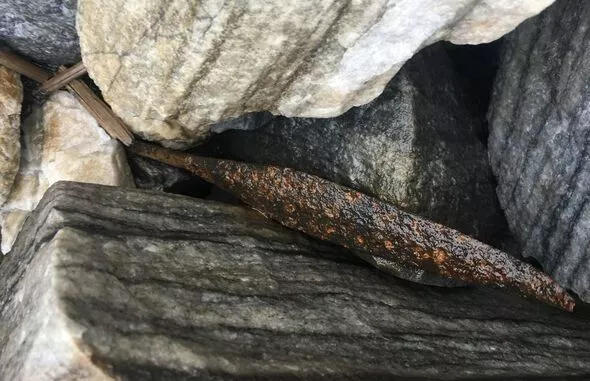
Of the five arrows they found at the site, three of them still had a preserved iron arrowhead.

Mr Pilo noted that based on an analysis of the arrowheads' shapes, these weapons likely date to between A.D. 300 and 600.

Speaking to Live Science, he said that one of the three iron arrowheads is "a rare type not found at the ice before and hardly in graves in the lowlands, either."

When Secrets of the Ice first announced the findings on social media in February, the objects became the centre of a debate.

According to Mr Pilo, they received "quite a lot of comments that it had to be a spearhead, but the arrow shaft was found beside it, so it is an arrow.”

Meanwhile, he believed that the other two arrows, those without iron arrowheads — likely date to the first millennium B.C.

The team mapped forty hunting blinds at Sandgrovskardet.

According to a Facebook post by Secrets of the Ice: “Hunting blinds are a regular feature on our reindeer hunting sites, both at the ice and further down the mountains.

“They are stone-built structures, erected as hiding places for the hunters.

“The reindeer are very wary of movement, so the hunters had to make themselves invisible to get within shooting distance.

“The bow-and-arrow shooting distance was probably no more than 10-20 m, so the hunters needed a good place to hide.”

If there wasn’t a decent place the hide, the hunters would build a shelter themselves.

Source: https://www.express.co.uk/news/science/158...

Terracotta Army - Real Faces

A first look into the world of ancient China, examining, recreating the soldier's faces in the Terracotta army, that was buried 2221 years ago to protect the first emperor of China, Qin Shi Huang in the afterlife. Done with digital painting and the help of several animation software. Enjoy!

India's 3,000-year-old martial art still practiced today

Kalaripayattu, also known simply as Kalari, is an Indian martial art that originated in modern-day Kerala, a state on the southwestern coast of India.

It is believed to be the oldest surviving martial art in the world, with a history spanning over 3,000 years. We explore its legendary origins, philosophy and step-by-step technique and practice.

Unseen Drone & Satellite Images of North Sentinel Island

These are some of the Unseen Photos and Images of the North Sentinel Island and the Lifestyle of Sentinelese Tribes. They are Untouched from last 60,000 Years. They are Living in this North Sentinel Island and totally unaware of the Other part of the World.

These Images are so rare that Hardly you will find in the Web. Indian Govt. Flies Drone above the North Sentinel Island time to time to Check whether these Tribes are okay. These Images are taken from those Operations and Exclusively bring for you.

Massive 1,100-pound bone of ‘world’s biggest dinosaur’ found

Now, this is one bone you don't want to pick with.

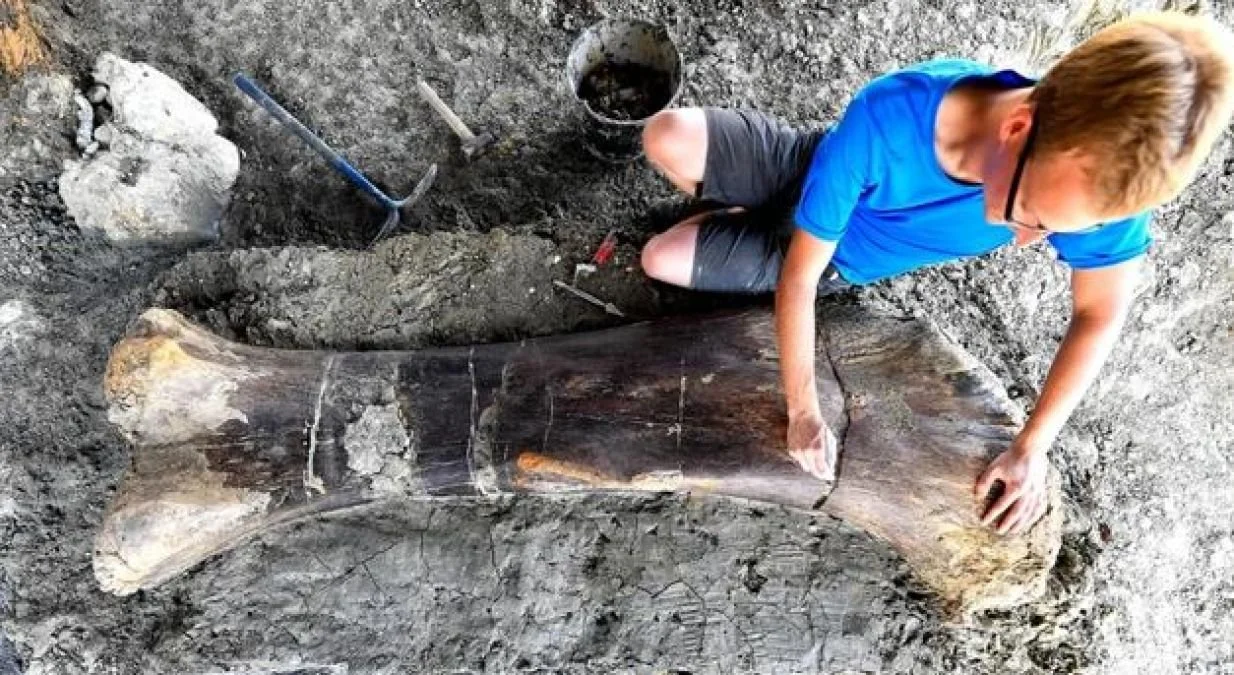
Paleontologists have unearthed a 140-million-year-old dinosaur bone, 6.5 feet in length, weighing 1,100 pounds in France. The thigh bone was discovered in Charente, an area that dates back 140 million years and has been a treasure trove for researchers in the past.

“This is a major discovery,” Ronan Allain, a paleontologist at the National History Museum of Paris said in an interview with Reuters. “I was especially amazed by the state of preservation of that femur.”

“These are animals that probably weighed 40 to 50 tons," Allain added.

More than 7,500 fossils have been found in Charente since 2010, including those from 40 different species. It's unclear exactly what sauropod the bone belongs to just yet, but the group includes brachiosaurus and brontosaurus, seen famously in "Jurassic Park."

"This femur is huge! And in an exceptional state of conservation," Angouleme Museum curator Jean-François Tournepiche told The Local.

Allain added that it is "very rare" to find fossils this size, as they usually collapse on themselves and break up into fragments.

The giant sauropod femur is not the only dinosaur discovery to make headlines this week. In the badlands of North Dakota, a California college student found the 65-million-year-old fossil of a partial Triceratops skull among plant fossils from the Cretaceous period.

USA Today reported that the skull was found in the Hell's Creek formation, which spans Montana, North Dakota, South Dakota and Wyoming.

Source: https://www.foxnews.com/science/1100-pound...