On the Danube, archaeologists learned how Roman legions chilled their wine

A new ancient refrigerator with additional cooling has been found at an excavation site close to the town of Svishtov (on the Danube), according to a report from Science in Poland, a science news outlet run by the Polish Press Agency. The discovery was made by lead archaeologist Piotr Dyczek, a professor at the Center for Research on Antiquities of Southeastern Europe at the University of Warsaw.

Near the city of Svishtov, in northern Bulgaria, on the Danube, is where you'll find the Novae camp. Probably somewhere in the middle of the first century AD, it was founded. This location is linked to the First Italian Legion, whose presence may be traced to the fifth century AD. The principalia, the camp's administrative center, was found to be the most significant of the camp's monumental structures. The legionary hospital (valetudinarium), as well as the baths (thermae legionis), are similarly magnificent. The camp is 17.99 hectares in size.

The camp had a necropolis on its southern and eastern sides, as well as a town (canabae) on its western side. The Novae defenses were bolstered in the late ancient era, and a new section (the so-called annex) was erected to the camp on the eastern side, occupying an area of about 8 hectares. Soldiers and civilians coexisted inside the walls at that time. The final centuries of the sixth century contain the earliest signs of Roman activity.

A Roman-constructed food storage container that served as a primitive refrigerator for traveling soldiers was recently discovered in Bulgaria. Photo: Piotr Dyczek

Researchers discovered a complex of wooden and earthen military barracks connected to the VIII Augustus Legion during this year's excavation campaign. This legion was the first to be stationed permanently at the Roman Empire's Danube border. Scientists measured the structure and found that it was sixty meters long and thirty-eight meters wide.

Here was found the earliest known well in Novae, which provided water for the legionaries. Additionally, a network of ceramic and lead-piped aqueducts was discovered.
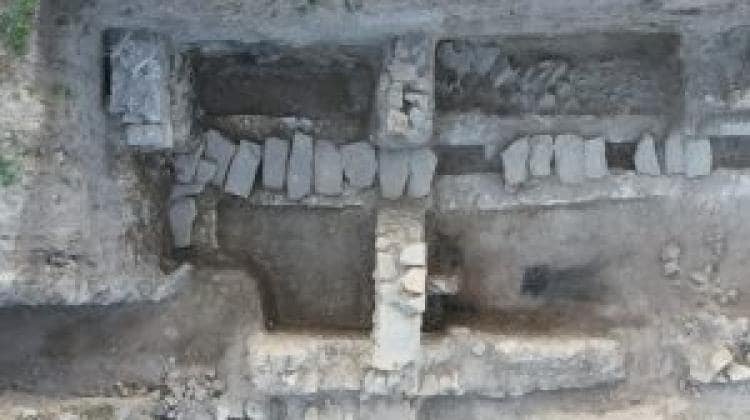
“At the lead water pipe, a container made of ceramic plates was placed in the ground – so that the pipe ran along its longer side. This is an antique refrigerator, another one that we discovered, but this time with additional cooling. Inside, there were fragments of vessels for drinking wine, bowls, and animal bones. This will allow us to recreate the last meal,” mentions Professor Dyczek.

A series of unusual pots, including a set for drinking wine, were found during the excavation of a ceramic furnace from the fourth century. A smooth and comb design is used to embellish rare black-surfaced vases. The dispute between the specialists on the dates and provenance of these unique watercraft on the Danube is expected to come to an end when Prof. Dyczek argues that the set can be properly dated.

A tiny pendant depicting a silver, painstakingly crafted mouse with every last detail perfected is also among the relics that have been discovered, along with almost two hundred other antique trinkets.

Source: https://arkeonews.net/archaeologists-disco...

Photos reveal the discovery of an ancient Roman "fridge" that contained wine and animal bones

Archaeologists discovered a unique—and familiar—find while excavating a Roman military camp in Bulgaria: a filled refrigerator.

Archaeologists excavating the ancient Roman military camp in Bulgaria unearthed a rare refrigerator with wine and animal bones inside, photos show. Photo from Krzysztof Narloch

According to a news release from the University of Warsaw on September 13, archaeologists discovered lead and ceramic water pipes while working on the Roman-era military fortification Novae's remains.

Lead archaeologist Piotr Dyczek stated in the press release that they discovered an old "fridge" next to the lead pipes that was built out of ceramic plates and used to store food. There was still food in the refrigerator, along with bowls for drinking wine and animal bones.

The fridge's and its contents' actual ages are yet unknown.

An aerial view shows some of the ruins at Novae. Photo from Krzysztof Narloch

In Novae, a comparable refrigerator was discovered in October, according to McClatchy News. There were still remnants of cooked meat, animal bones, and dishware within this chilling machine.

“The discovery of such ‘refrigerators’ are rare, because they rarely survive reconstructions of buildings,” Dyczek said previously.

A collection of wine pottery vessels found at Novae. Photo from Krzysztof Narloch

On the lower Danube River, Novae was constructed as a permanent outpost for Roman troops in the first century A.D. Up to the middle of the fifth century, the camp served as a home for Italian military recruits.

According to the press release, excavations at Novae also turned up the remains of a wooden barracks building connected to the camp's first permanently stationed Roman troops, the camp's earliest known well, and a fourth-century furnace.

A detailed mouse pendant found at Novae. Photo from Krzysztof Narloch

In addition, archaeologists discovered a unique set of black wine drinking jars with a little silver pendant in the form of an intricate mouse. Images present these artifacts.
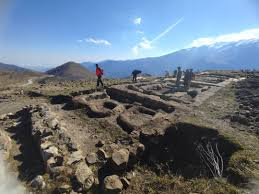
Along the border between Bulgaria and Romania, in the northern Bulgarian city of Svishtov, Novae is located. It is about 155 miles northeast of Sofia.
Source: https://www.kansascity.com/news/nation-wor...

Israel Discovers Mysterious 3,800-Year-Old Canaanite Arch and Stairway

In northern Israel, archaeologists have discovered a stunning—yet utterly perplexing—find: a 3,800-year-old Canaanite arch and stairway, perfectly preserved underground.

An aerial view of the dig site at Tel Shimron Eyecon

The construction, which was discovered at the Tel Shimron archaeological site, is unknown to researchers. Additionally, they don't understand why it was closed off soon after it was built.

In contrast, the preservation of the structure is "breathtaking, especially since the building material is unfired (!) mud brick—a material that only rarely survives a long time," writes excavation co-director Mario A.S. Martin of the University of Innsbruck in Austria in an email to Live Science's Sascha Pare.

Tel Shimron hasn't received much attention from archaeologists in the past. The site had never undergone a significant amount of excavation before the current dig started in 2017. The team recently came across an odd building that appeared to be man-made.

“We kept digging down further, and it was preserved at a depth of one meter, then two meters, then three meters, then four meters,” excavation co-director Daniel Master, an archaeologist at Wheaton College, tells the Times of Israel’s Melanie Lidman. “This structure was totally intact, and suddenly we realized we were dealing with the foundation of a building or a superstructure that had been constructed at the top of the site.”

According to Ariel David of Haaretz, the team discovered mud brick walls that were up to 13 feet (4 meters) thick. Strangely, none of them contained any rooms. Instead, there was a lengthy passage within, which led to the enigmatic arch. Researchers discovered a staircase leading further underground behind it.

According to Live Science, this arch is "corbelled," which means it was constructed by adding brick layers gradually inward. A "true arch" is created with bricks of a specific shape that fit together, whereas this style is occasionally referred to as a "false arch." According to The Times of Israel, the recently discovered arch is the country's first instance of corbelled construction.

These buildings were quickly filled with sediment after construction. According to Martin to Live Science, "Why the passage went out of use so soon is a matter of speculation." The fact, however, is that it was carried out voluntarily and not because there was a threat of impending collapse. Since it is the sole explanation for why the feature is still so exceptionally well preserved nearly 4,000 years later, the swift backfill is for us archaeologists the most fortunate part of the entire story.

The brick corbelled arch hangs over a corridor inside of the structure found at Tel Shimron. Eyecon

These buildings were built between 1800 and 1750 B.C.E., at a time when the area was home to a sizable Canaanite metropolis. In ancient Egyptian literature, the city was referred to as a significant commerce center.

The initial hypothesis of the scholars was that the walls might have been erected to defend the city from invader troops. In the end, though, the design of the site refuted that hypothesis.

They now believe the structure may have been used for cultic activities in light of a few hints. According to Haaretz, the crew discovered a Nahariya bowl, a style of seven-cupped clay dish used for ritual offerings. Thousands of animal bones that may have been used in sacrifice were also discovered in a nearby building.

The discovery has been exciting for the researchers, who are used to plodding, steady development, even though there are still many unanswered concerns. Master tells Haaretz, "I’m going to spend the next few years convincing my students that this is not archaeology." You simply don't come across large, complete, arched tunnels that you can just walk through.

The researchers hope to uncover more information about the enigmatic staircase in the future. When they eventually get there, they want to "dig down from the other side to try to reach whatever this passage leads to from above," Master continues. The location has been reburied in the interim to shield it from the weather.

Source: https://www.smithsonianmag.com/smart-news/...

Seven Elite 'Lords' Tombs from 3,000 Years Ago Have Been Found by Archaeologists

Seven ancient tombs belonging to a group of affluent people have been found by archaeologists in Peru.

A stock image shows an archaeologist excavating human remains. Researchers have discovered seven ancient tombs (not pictured) belonging to a group of elite individuals in Peru.

The graves were discovered at the Pallawcha Pampa archaeological site, which is located deep within the Peruvian Andes highlands in the province of Vilcas Huamán in the Ayacucho area, according to the Andina news agency. The tombs were discovered by a team from National University of San Cristóbal de Huamanga (UNSCH).

The tombs, which include human remains, are believed to be 2,900 years old and predate the Wari or Huari culture, according to researchers. Between around A.D. 500 and 1000, the Wari had a pre-Hispanic civilization that thrived in the south-central Andes and coastal regions of what is now Peru.

The most significant pre-Hispanic society in the area that now comprises the present Ayacucho region was this civilization, which predates the Inca Empire.

The leader of the UNSCH archaeological team, Edison Mendoza Martnez, said that the burials found at Pallawcha Pampa were those of notable individuals and referred to them as "the Lords of Vilcas Huamán."

At the site's surface level, archaeologists discovered three mounds that were encircled by terraces and held up by substantial stone walls. The researchers also found a significant number of broken pottery strewn about.

Due to the fact that it had the most archaeological relics, Central Two, one of the mounds, was of great note.

At this mound, excavations revealed a circular building and multiple holes that were later covered with slabs.

"When excavating the holes, secondary burials were found—in some cases they were not only of a single individual but of several. As an offering, associated elements were found such as vessels," Mendoza Martínez told the Andina Agency

The crew discovered several funeral objects at the site, including gold feathers, metal needles, and rings. According to the archaeologists, these artifacts show that the graves belonged to an aristocratic group.

Mendoza Martnez claimed that the crew also discovered proof of a later Wari occupation of the site, including intricate building.

The researchers' next step will be to conduct a DNA analysis to date the remains and discover whether the individuals interred there were blood relatives.

Archaeologists reported the discovery of a mummy in Peru earlier this month, which they believe to be roughly 1,000 years old. In the Peruvian capital of Lima, the remains were interred in a cemetery at the summit of a huge clay pyramid building.

Archaeologists also reported the finding of historic underground galleries at another location high in the Peruvian Andes in September.

Source: https://www.newsweek.com/archaeologists-di...

After discovering medieval artifacts, Kenilworth Pool intends to alter

A new swimming pool's plans need to be revised in light of the discovery of medieval ruins nearby.

Ceramics and buildings have been uncovered at the Kenilworth site

At Abbey Fields in Kenilworth, pottery and at least five structures, some dating to the 13th century, were found.

On September 27, a meeting will be conducted to give the public an update on the project.

Ian Davison, leader of the Warwick District Council, said the revelation will result in extra expenses and delays.

The new, multimillion-pound swimming center, which will have a second indoor pool, has been under construction since September.

The find was made by a company tearing down the old pool while it conducted site investigations with Archaeology Warwickshire.

Prior to St Mary's Abbey being disbanded in the 16th century, Abbey Fields was farmland that belonged to that institution.

The discovery will mean increased costs and delay in the pool's development, Warwick District Council said

The public meeting at St. Nicholas Church will provide an overview of the results and discuss the need to create specific, updated strategies to safeguard the discovered medieval ruins.

"The aim of this event is to bring the public fully up to date with the Abbey Fields Swimming Pool project," Mr Davison said:

"The significant, historic medieval remains necessitate substantial additional costs and time delays, so residents will be given an insight into the important decisions that the council will need to make in the coming months."

The council's project team has been working closely with Historic England since the findings were made, and they have authorized updated plans to elevate the level of the proposed new swimming pool structure so that it stands over the relics.

Source: https://www.bbc.com/news/uk-england-covent...

The site of 'Pingyang' in Shanxi is revealed through ancient tombs

The Shanxi Provincial Institute of Archaeology announced on September 18 the discovery of 215 tombs in Xiangfen County, Shanxi Province, dating from the Neolithic to the Ming (1368-1644) and Qing (1644-1911) periods.

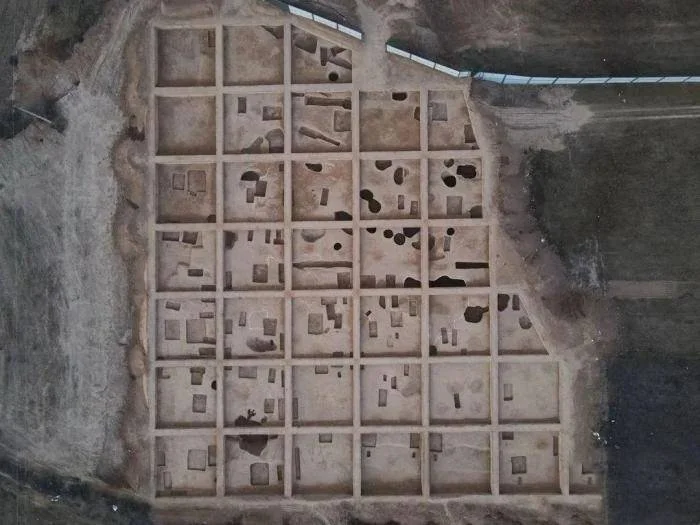
An aerial view of the tombs unearthed in Xiangfen County, Shanxi Province, China. /Photo provided by Shanxi Provincial Institute of Archaeology

They add credence to the hypothesis that the legendary civilisation established by Yao, one of the Five Emperors in Chinese mythology, was born in "Pingyang," the region beneath Xiangfen County that is today known as Yaodou District.

A combined archaeological team carried out the excavations from June 2020 to July 2022. The excavation area was split into two areas, east and west of the Fenhe River, where a total of 348 archaeological sites were cleared and 215 tombs were discovered.

Two settlements were included in the eastern area, and 145 graves were discovered there. 959 objects, including 222 bronze items, 21 iron items, and 528 pottery items, were included with the burial materials.

Three settlements in the western region, totaling 69 tombs and 437 ancillary burial artifacts, were found there. There were also 196 additional ash pits, a home site, six stoves, and two kiln sites discovered.

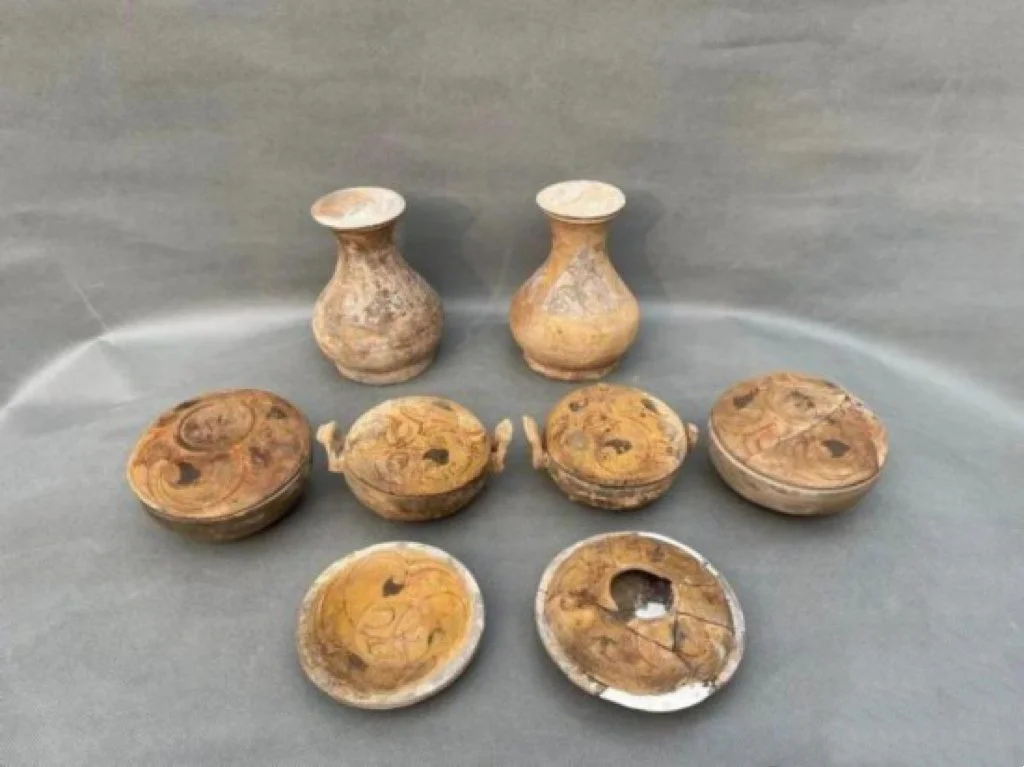
A photo shows some pottery items unearthed in Xiangfen County, Shanxi Province, China. /Photo provided by Shanxi Provincial Institute of Archaeology

The ancient city site of Guchengzhuang, a cultural heritage site in Xiangfen County, where pottery with the inscription "Pingshi" was unearthed, is located about 300 meters to the southeast of the excavation area. Pingyang County was established as the location of the ancient city during the late Warring States period (475-221 BC), when the area was conquered by Qin forces, after these pottery pieces were proven to have been produced under its direction. During the Western Han Dynasty (206 BC–25 AD), the county's name was later changed to Xiangling County.

This area, according to archaeologists, is home to a wide range of artifacts from various historical periods, and the Guchengzhuang City Site offers more proof that Pingyang actually served as the capital of the famous civilisation that Yao established.

Source: https://news.cgtn.com/news/2023-09-19/Anci...

Shoewear may be 148,000 years old, according to archaeologists who discovered an ancient "sandal" mold

Long-held assumptions regarding sandals have been completely disproved by a mysterious collection of footprints discovered in three different places throughout South Africa.

The ancient imprint appears to show a sandal mould (Image: Charles Heim)

The human footprints discovered on the Cape's coast are estimated to be 148,000 years old. And while it was widely believed that sandals were used in Jesus' day, it was not believed that they were worn in the Stone Age, which was many centuries earlier.

However, the newly discovered footprint reveals that people were wearing sandals with "rounded anterior ends, crisp margins, and possibly evidence of strap attachment parts." An international team of researchers lead by Charles Helm from Nelson Mandela University made the study public.

The fossils were found in South Africa (Image: Getty Images)

He wrote: “The purported tracks have dimensions that are broadly consistent with those of hominin tracks. “Track sizes appear to correspond to the tracks either of juvenile track-makers, or else small-adult hominin track-makers.

“While we do not consider the evidence conclusive, we interpret the three sites, as suggesting the presence of shod-hominin track-makers using hard-soled sandals. In the Middle Stone Age, a significant foot laceration might have been a death sentence.

Three separate sites were analysed by the experts (Image: Getty Images)

“Ichnological evidence from three palaeosurfaces on South Africa’s Cape coast, in conjunction with neoichnological study, suggests that humans may indeed have worn footwear while traversing dune surfaces during the Middle Stone Age. The hominin track record may be biased towards identification of tracks made by barefoot individuals, therefore the development of criteria for the identification of shod-hominin tracks should aid in future interpretation efforts.”

Years of professional notions that stone age people roamed around barefoot could be disproved by the data given. Museums all around the world are well renowned for their presentations of "early man," which depicts them without anything on their feet. However, they may now be compelled to change the displays.

Source: https://www.dailystar.co.uk/news/world-new...

Israel finds a stoneworkshop from the Second Temple in the West Bank

It was common practice to utilize stone tools during the Second Temple era, and in fact, stone tools have been found at practically all of the region's archaeological sites.

Second temple site for the production of stone tools, September 2023

According to a statement released on Monday by the Coordinator of Government Activities in the Territories (COGAT), construction on Route 437 in the West Bank revealed the remains of a Second Temple-era quarry and an early stone tool production facility.

The Staff Officer for Archaeology in the Civil Administration in Judea and Samaria, who works under the auspices of the Israel Antiquities Authority (IAA), oversaw the excavation.

The Second Temple period used stone tools.

Researchers came to the conclusion that the area operated as a center for mining and tool distribution for Jerusalem and the surrounding area after discovering a comparable tool production setup in the same location about thirty years ago.

Second temple site for the production of Stone tools, September 2023 (credit: COGAT SPOKESMAN)

Nearly all Second Temple-era sites in the area have been found to feature various types of stone implements, including cups, bowls, trays, and other objects.

The Staff Officer for Archaeology in the Civil Administration in Judea and Samaria, Benny Har-Evan said of the discovery: "The Civil Administration will continue to work day and night for the preservation of the archaeological sites and finds in Judea and Samaria, which are part of the treasures and culture of the region.

"It is a great privilege to carry out the excavations and discover an ancient and rich world under the soil of the area. We are all getting to know and glimpse a life full of culture and prestige that the area has known throughout the generations, thanks to these extraordinary discoveries."

Source: https://www.jpost.com/archaeology/article-...

This 300,000-year-old fossil could be a new branch in the human family tree

A 300,000-year-old fossilized jawbone has been found by scientists in a cave in eastern China; it might represent a new branch in the human evolutionary tree.

Digital reconstruction of the skull that was found in Hualongdong, China

It's interesting how the specimen combines elements from the past and the present.

It raises more questions about what kind of prehistoric humans lived there for about 800,000 years between the Middle and Late Pleistocene.

The mandible, like Homo sapiens, lacks a genuine chin

The mandible was unearthed in Hualongdong, an area in eastern China, and it was discovered to have both contemporary and ancient traits.

Early human species like Homo erectus shared a robust jawbone along with them.

In addition, it lacks the genuine chin that distinguishes Homo sapiens. The side of the mandible that connects to the upper jaw, however, resembles contemporary humans more and is thinner than that of early hominins.

Early Homo sapiens may have had a common progenitor with us

According to palaeoanthropologist Xiujie Wu, who was a member of the study, the Hualongdong people may represent an early Homo sapiens progenitor or near cousin that has never been identified.

The Hualongdong mandible has traits from both the past and the present, just like the remains discovered in the early 2000s in the Moroccan archaeological site of Jebel Irhoud.

One of the first members of the evolutionary lineage that contains Homo sapiens is assumed to be represented by the Jebel Irhoud bones.

Understanding the Pleistocene human ancestry of East Asia

"More fossils and studies are necessary to understand [the Hualongdong people's] precise position in the human family tree," mentioned Martinón-Torres, a team member.

She asserted that ancient proteins taken from bones could provide more information about the Hualongdong people's relationships with both more primitive species and modern humans.

Researchers found the bones of 16 people during cave excavations in China. Numerous of these remains were discovered to be those of a 12- to 13-year-old boy's cranium.

It is unclear how humans have occupied East Asia

Yameng Zhang of Shandong University claims that the image of human occupancy in East Asia throughout the Pleistocene is unclear. It is unknown which of the various archaic hominin species that lived in East Asia during the Middle Pleistocene could have been the ancestors of modern humans.

Source: https://www.newsbytesapp.com/news/science/...

Researchers discover "buried secrets" of a Spanish fleet that drowned in 1810 and claimed hundreds of lives

Spanish authorities stated Thursday, September 14, that an inquiry into a Spanish vessel that sank more than 200 years ago has uncovered "buried secrets" including well-preserved structural features.

A diver examines the Santa María Magdalena, a warship of the Spanish Navy that shipwrecked in 1810.

According to a press statement from the Spanish Federation of Underwater Activities, a "exciting investigation" is being conducted by the organization into the 1810 storm-sunk Spanish Navy vessel Santa Mara Magdalena. The mission originally meant to save the ship, which is still submerged, but it has "evolved into a saga of astonishing discoveries," the agency said. The ship was highlighted in a 2020 documentary exploring its history and is the only wreck of its era currently being investigated in Spain.

When the ship sailed in October 1810 as part of a Spanish-British alliance to seize a city that was ruled by the French during Spain's War of Independence, the tale of the ship's drowning began. According to the agency, the vessel possessed 34 cannons and a "rich history of service," but after losing its moorings, it was caught in a "sudden and violent storm" that caused it to capsize in November 1810. It was "one of the greatest maritime tragedies" in the nation's waterways at the time because it was thought to have 500 sailors and soldiers on board. Only eight men managed to survive the shipwreck and swim to land, according to wrecksite.eu, an online database that tracks shipwrecks. From their wounds, five of the men passed away.

Cleaning of the ship shows preserved wood under sand and sediment.

One significant finding, according to the EPA, was that around 86 square feet of the lining boards along the bilge of the frigate were "free of structural or biological damage." The bilge is the area where a ship's sides and bottom converge. According to the Spanish Federation of Underwater Activities, the ship is "truly unique" as a result of its preservation, and overall, it is in a "exceptional state of conservation."

The expedition's goal, according to the regional paper La Voz de Galicia, is to map the ship's structure and comprehend how it was constructed. Because of this, scientists must operate underwater to remove sand and debris from the ship.

Round projectiles found aboard the ship.

Lead investigator and underwater archaeologist Antón López told La Voz de Galicia that the ship had been found to have "ballasts and ammunition" and referred to it as a "real underwater museum."

These discoveries, according to the Spanish Federation of Underwater Activities, allow Spain's maritime heritage to be revealed.

"Each find is a tribute to the brave sailors and soldiers who braved the treacherous waters more than two centuries ago, and a tribute to their legacy that endures through time," the agency mentioned.

Source: https://www.cbsnews.com/news/shipwreck-san...

Has Mexico discovered the truth about the Ek' Balam Mayan Acropolis?

An image on a stone cover discovered at the archeological site of Ek' Balam in Mexico may shed light on the ancient Mayans.

A structure at Ek' Balam.

According to Mexico's Culture Ministry and National Institute of Anthropology and History (INAH), a mural painting on a stone block used by the prehistoric Mayans as a vault cover has been found in one of the constructions of the Ek' Balam Acropolis.

In the previous year, seven other painted vault covers with a similar style have been discovered in Yucatán, Mexico.

At a press conference led by Mexico's Interior Secretary Luisa Mara Alcalde Luján at the start of September, the discovery was made public.

The recently discovered vault lid was painted red instead of black, in contrast to earlier discoveries. The lid features a "U"-shaped sign that might stand in for a cave with water below as a probable allusion to the underworld, where a snake appears to be making its way in. There is a reptile's head and part of its body visible, which could be related to the serpentine god K'awiil.

Northward view of Ek-Balam. (credit: FLICKR)

Archaeological discoveries at the location, according to Diego Prieto Hernández, general director of INAH, have revealed significant information, including the names of some of the kings of Talol (Ek' Balam), as well as the dates on which the chambers of the royal palace or Acropolis were constructed.

The significance of Ek Balam

Leticia Vargas de la Pea and Victor Castillo Borges, the project's coordinators, claim that this discovery can reveal information about the architects behind the east elevated plaza of the Acropolis as well as the time period in which they were constructed.

Hernandez also emphasized that 27 sites in the southeast and on the Yucatan Peninsula have benefited from the Improvement Program in Archaeological Zones, which has led to significant discoveries.

Source: https://www.jpost.com/archaeology/article-...

A team of Oxford archaeologists makes important historical discoveries

Significant discoveries have been uncovered by an Oxford archaeology team working on a house development site.

Oxford Archaeology North staff at Little Asby Common (Image: Ed Nix)

The BBC was informed by the Oxford Archaeology North (OAN) team that the Lancashire site had evidence of both Roman and Iron Age habitation.

Speaking to the BBC, Paul Dunn from OAN said: “Unlike other Iron Age sites in Lancashire we have found ceramics and pottery in Bourne Hill.”

He continued by saying that while the dig at Thornton, near Blackpool, had revealed circular homes with their surrounding ditches, it stood out from other excavations due to the discovery of Iron Age bowls and Roman pottery.

He added: “Lancashire was wet with marshland and settlements tended to be on a hill.

"It is a significant site because there are signs of a long occupation from the Iron Age to Roman Britain."

Source: https://www.oxfordmail.co.uk/news/23793507...

The Prince Who Brought Down The Ottoman Empire

On September 11, 1697, the Ottoman army is annihilated in the battle of Zenta by the imperial army led by Prince Eugene of Savoy, thus ending the steady rise of the Ottoman Empire over the previous centuries. The dominance of the Habsburgs is well documented, but the Ottoman Empire was a civilization that was no less developed and whose culture we know only little about.

From Elizabeth II to Cleopatra, Real Royalty peels back the curtain to give a glimpse into the lives of some of the most influential families in the world, with new full length documentaries posted every week covering the monarchies of today and all throughout history.

Aurelian: Emperor Who Restored the World

In today’s video we will be talking about the emperor Aurelian, who became the leader of the Roman empire during the Crisis of The Third Century, during the fragmentation of the empire and the increase in the barbarian invasions. He managed to restore the empire and stem the tide, by defeating numerous Germanic invasions and the rump states of Tetricus and Zenobia - Gallic and Palmyrene Empires. Enjoy!

World’s First Map of Ancient African Will Shock You

The only thing more Bizarre than a Massive network of Lakes, Rivers and even a dense forest the size of Texas in the middle of the Sahara Desert - Along with numerous cities, settlements and even Castles blanketing virtually the entire region of the Sahara…Is the realization that these Lost 600 year-old maps literally annotate these geological features Several thousand years prior to their modern Scientific discovery. How could they have possibly known of the existence of the Green Sahara 5,000 years before us?