Zambia is home to the oldest wooden building in the world

According to archaeologists, the structure is 476,000 years old. It was purposefully crafted with wooden tools to produce stable joints, demonstrating the mental capacity of Homo sapiens' ancestors.

Archaeologists used luminescence dating to determine the age of the unearthed structure

The oldest wooden building in the world has allegedly been discovered by archaeologists digging close to Zambia's Kalambo Falls.

Scientists estimate that the structure, fashioned from the logs of a large-fruited willow tree, was purposely constructed some 476,000 years ago since it is embedded in clay and is further preserved by a high water table.

The well-preserved specimen was created before Homo sapiens appeared, which, according to scientists, indicates a much better level of cognitive ability than has hitherto been given to such early forebears.

Prior to the discovery in Zambia, the oldest wooden building that was known to exist was only 9,000 years old. A sliver of plank dating to 780,000 years ago was found in Israel and is the oldest wooden artifact ever found.

Find also proposes breaks in the wandering way of life

An archaeologist from the University of Liverpool in the UK named Larry Barham told the AFP news agency that the structure had been stumbled upon in 2019 and was situated above a 235-meter-high (770-foot) waterfall on the banks of Zambia's Kalambo River.

The discovery was described in a study by Barham that was published in the academic journal Nature.

"The framework could have supported a walkway or platform raised above the seasonally wet surroundings. A platform could have multiple purposes including storage of firewood, tools, food and as a foundation on which to place a hut," said Barham.

"Not only did the working of trees require considerable skill, the right tools and planning, the effort involved suggests that the makers were staying in the location for extended periods whereas we have always had a model of Stone Age people as nomadic," Barham added.

"Use of wood in this way suggests the cognitive ability to these early humans was greater than we have believed based on stone tools alone," according to Barham.

Though they claim no skeletal remains have been found, scientists say they have found numerous wooden implements from the same period at the site.

Scientists say dense clay and a high water table helped preserve the structure for nearly half a million years

Smarter than he appeared: Homo heidelbergensis

The Homo heidelbergensis species, which lived between 700,000 and 200,000 years ago, is thought to have built the construction, which "involves the intentional shaping of two trees to create a framework of two interlocking supports," according to scientist Barham.

In comparison to earlier human species, this species had a broader brow, a larger braincase, and a flatter face.

Fossils of Homo heidelbergensis have been discovered in the area, according to Barham, who spoke to AFP.

The oldest fossilized remains of Homo sapiens, estimated to be about 300,000 years old, were discovered in Morocco.

Sunlight last penetrated wood half a million years ago

Although wooden artifacts were first discovered at the site in the 1950s and 1960s, scientists were unable to determine their exact age at the time.

In order to determine the age of the contemporary specimens, archaeologists utilized luminescence dating, a brand-new method that counts the number of times minerals have been exposed to sunshine.

The discovery said Barham: "changed how I thought about these people. They transformed their surroundings to make life easier, even if it was only by making a platform to sit on by the river to do their daily chores," he said.

"They used their intelligence, imagination and skills to create something they'd never seen before, something that had never previously existed."

Source: https://www.dw.com/en/worlds-oldest-wooden...

Eight locations that reveal Rome's secret history beyond the Colosseum

The startling idea that many men think about the Roman Empire frequently is currently popular, which points to the enduring attractiveness of an empire that ruled over a region nearly 2,000 years ago. Rome, the capital of the Roman Empire, is one of the best cities in the world for studying its legacy.

The city's most popular historical attractions will draw the majority of visitors, but Rome is much more than just the Colosseum and the Pantheon. The nation's capital is also rife with undiscovered treasures, many of which are just as fascinating as the city's attractions of rigueur, if not more so.

Beyond the Roman Empire, these buildings might show other fascinating facets of its past. For instance, consider the Middle Ages, when conflicts between Italian city-states were so frequent that it considered appropriate to fortify even churches. back to the Fascist era, when Mussolini envisioned building a complete neighborhood to serve as a showcase for his "new" Italian empire to be displayed to the rest of the world.

Here are my top eight recommendations for discovering Rome's undiscovered history.

1. Domus Aurea is the best place for luxury and history

The archaeological site of Domus Aurea, often known as the "Golden House of Nero," doesn't receive the same kind of attention from tourists as, say, the Colosseum, Forum, or Pantheon. But it ought to.

The Domus Aurea is only available to visitors on pre-booked, archaeologist-led guided tours (Credit: Amanda Ruggeri)

Emperor Nero—the same emperor who is famous for "fiddling while Rome burned"—built the historic palace, which once covered up to 300 acres of territory. We do know that he benefited from the great fire of 64 CE by using the freed land to construct the palace of his dreams, even though it seems unlikely that is the case. The palace, according to the ancient writer Suetonius, was decorated with gold, diamonds, and shells. It also boasted a rotating circular banquet hall to entertain its visitors. While many of these sumptuous elements have vanished, a surprising number still exist, including the vibrant frescoes and stuccoed ceilings. To further enhance its splendor, the site now offers virtual reality experiences and light projections to visitors.

The Domus Aurea is only accessible to tourists on pre-booked, archaeologist-led guided tours due to the site's fragility. The Domus Aurea has been closed numerous times due to flooding and drainage problems, even losing a 645 sq ft portion of its roof following severe rains in 2010. These can be reserved on the Domus Aurea website and are offered in Italian or English.

2. Quartiere Coppedè is the best for whimsical architecture

The architect Gino Coppedè was to Rome what Gaud was to Barcelona, despite the fact that today few tourists to the Italian city are familiar with Coppedè. That might be the case because you have to travel to a small neighborhood just north of Rome's ancient center to see his artwork. It is only a 1-kilometer walk or 15-minute bus ride from the Borghese Gallery or a 2-kilometer drive from the Termini train and bus station, but it is well worth the short excursion.

Quartiere Coppede is a mix of Baroque, Mannerist, Medieval and even Ancient Greek styles (Credit: Amanda Ruggeri)

The Quartiere Coppedè, totally created by Coppedè between 1915 and 1927, is unlike any other area of Rome. Although Coppedè's imaginative ideas of Baroque, Mannerist, Medieval, and even Ancient Greek styles combine to create a charming, whimsical hodgepodge, it is more correctly classified as Art Nouveau. Imagine an area that is less than half a square kilometer in size with villas in the Venetian style, towers in the medieval style, and even an arch that evokes the Roman Empire.

3. Catacombs of Santa Priscilla are the best for early Christian art

Rome's well-known catacombs along the Appian Way are where most tourists go when they arrive. The Catacombs of Santa Priscilla are much less well-known but just as fascinating, if not more so. They are close to the Quartiere Coppedè and are situated just to the north of the old center on the Via Salaria.

Catacombs of Santa Priscilla's underground tunnels and vaults remain decorated with Early Christian art and iconography (Credit: The Picture Art Collection/Alamy)

The catacombs, which were used for burials from the third to the sixth centuries and are one of the most revered pilgrimage sites in Rome, are the final resting places of many martyrs and no less than seven popes. They were previously referred to as the "Queen of the Catacombs" due to their importance.

Stunning Early Christian art and iconography may still be seen in the underground tunnels and vaults today, including what is frequently considered to be the earliest depiction of the Virgin Mary ever discovered, dating to the third century. Even more intriguing is how frequently discussion on women's early engagement in the Church has been triggered by these frescoes. One, for instance, appears to show a woman presiding over a banquet, showing that women were more active in the Early Christian Church than is often believed.

4. Mattatoio is the best for contemporary art

The Mattatoio (formerly the MACRO Testaccio) is unlike other museums of modern art. One of the reasons is because it's situated in a slaughterhouse, an unexpectedly appropriate setting for the formerly meatpacking district. In addition to being a venue for exhibitions, it has recently undergone renovations that have made it a hub for creative and cultural study, including serving as the campus for the University of Roma Tre's Faculty of Architecture.

The Mattatoio (formerly the MACRO Testaccio) is located in a former slaughterhouse (Credit: Julian Castle/Alamy)

Massive pavilions that were once used for things like butchering pigs are now used as galleries for contemporary art of all kinds. Consider kid-friendly workshops that combine movement, music, and painting; DJ sets that tell Mediterranean tales while using text and picture projections; and even plays that are directed by students of the Silvio dAmico National Academy of Dramatic Art.

As you plan your trip to Rome, keep an eye on the museum's online calendar of events to learn about any interesting exhibits or performances that could be scheduled.

5. Palazzo Massimo alle Terme is the best place to see old art and sculpture

This museum is frequently referred to as Rome's primary "archaeological museum" because of its convenient location close to Rome's Termini station. However, this is a misnomer that can deter tourists who have seen enough ancient sites, which is why it is frequently so empty. The Palazzo Massimo alle Terme is better thought of as an antique museum of art and architecture, complete with exquisite bronze and marble statues, wonderfully preserved frescoes, and intricately carved sarcophagi.

The Palazzo Massimo alle Terme is a museum of ancient art and architecture (Credit: Amanda Ruggeri)

Some of the pieces on display here, such as the 1st-Century BCE Boxer or the ancient Roman replicas of the 5th-Century BCE Discobolus, will be familiar to everyone who has ever taken an art history class. The parts of the museum where entire frescoed walls and ceilings from unearthed old villas have been recreated are the most exciting since you can stroll through the rooms much like, instance, Livia, Emperor Augustus' wife, would have. (Don't skip a visit to the Painted Garden area, which features intricate, peaceful paintings of plants and birds that Livia is rumored to have oversaw the creation of herself.)

It can be challenging to imagine how ancient art and sculpture might have appeared at locations like the Forum or even the Baths of Caracalla when seeing ancient Rome. More than any other museum, it is this one that completes the picture.

6. EUR is ideal for considering the past

Looking for a change of scenery from Renaissance palaces and cobblestoned streets? Consider EUR a palate cleanser and a unique (and eerie) view into a time period that is frequently overlooked in museums devoted to Rome's magnificent past.

EUR was designed and built under Benito Mussolini to host the World Expo Fair of 1942 (Credit: dam Eastland/Alamy)

Under Benito Mussolini's supervision, a planned community called EUR (Esposizione Universale Roma, or Universal Exposition Rome) was created to the south of the city to house the 1942 World's Fair.

Of course, this World Expo Fair never took place. But after World War Two, construction resumed in the hopes of transforming the area into a business zone. The neighborhood was transformed by the 1960s into the mixture of Fascist and more modern buildings that you can still see today.

It gives an unsettling impression of what many of Italy's cities might look like today if history had turned out differently because it is a planned district with towering, stark buildings modeled after imperial Roman architecture, such as the Colosseo Quadrato (Square Colosseum), a towering modern obelisk, and even an artificial lake.

7. Palazzo Farnese is known for stunning ceiling frescoes

One of Rome's most beautiful palaces is located in the center of the city on one of its most charming piazzas. It was built for a pope, was designed by Renaissance greats like Michelangelo and Giacomo della Porta, had frescoes painted by some of the best painters of the early 16th Century, and is still used as a significant political center today. Not the Vatican, I assure you. The French Embassy now resides in the Palazzo Farnese. It is one of the best kept secrets in the city center, in part because booking a tour (in English, Italian, or French) at least a month in advance is necessary.

The Palazzo Farnese requires pre-booking a tour at least a month in advance (Credit: Amanda Ruggeri)

But the extra work is worthwhile. You not only have the opportunity to see behind the scenes in a palace that formerly belonged to the Farneses, one of the most illustrious families of the Renaissance (Alessandro, the cardinal who ordered the house, later rose to become Pope Paul III). You will, however, be one of the select few tourists to see the ceiling frescoes, which are regarded as the best in Rome save those in the Sistine Chapel. Frescoes from the turn of the 16th century that are incredibly stunning, expertly painted, and have just undergone restoration bring mythological stories like the story of Bacchus and Ariadne to life.

8. The Basilica of Santi Quattro Coronati is the best for medieval art

Signs of the medieval past can be difficult to uncover in a city that didn't attain its splendor until the late Renaissance and Baroque periods—unless you know where to look.

The Basilica of Santi Quattro Coronati has a working convent and a graceful Romanesque cloister (Credit: Amanda Ruggeri)

The Basilica of Santi Quattro Coronati, which is within a half-kilometer from the Colosseum, is one such location. It resembles a medieval fortress more than anything else from the outside. This is due to the fact that, despite being built in the fourth century, the church was destroyed in the 1084 fall of Rome and had to be rebuilt, this time with defenses.

The church still houses a functioning convent and a beautiful Romanesque cloister, but more than only the building's aesthetics and spiritual atmosphere transport you back in time. One of Rome's finest specimens of medieval art may be seen in the chapel dedicated to St. Sylvester. These murals, which commemorate the life of St. Sylvester and date to the 13th century, are extraordinarily colorful and well-preserved and appear to have been created just yesterday.

Source: https://www.bbc.com/travel/article/2023092...

Nationally significant Iron Age finds were discovered at the Nesscliffe Hill dig

During the excavation of a hillfort, significant evidence of Iron Age furnaces and tools was found.

The finds were uncovered during a dig at Nesscliffe Hill

They were discovered during an excavation at Nesscliffe Hill in Shropshire, close to Shrewsbury.

These discoveries include proof of ironworking, inner walls that reveal the fort's construction, and guard chambers.

Additionally discovered are charcoal and slag, both of which are byproducts of furnaces.

An Iron Age hillfort that was afterwards inhabited by the Romans can be found in the Shropshire Council-managed Nesscliffe Hills.

The location contains traces of human habitation dating back 3,000 years, including a network of quarries that provided stone for the local churches and castles.

Interior walls and evidence of iron workings were found

Additionally, there is a cave that is thought to have served as Humphrey Kynaston's refuge throughout the Middle Ages.

According to the council, carbon dating will be performed to determine if the workings date from the early or middle Iron Age and what kind of implements were being built.

The findings were made during a summer excavation by Gary Lock, an emeritus professor of archaeology at the University of Oxford, and Paul Reilly, a visiting scholar in archaeology at the University of Southampton.

"Very, very unusual" evidence of the interior of ramparts had been revealed, said Professor Lock.

He referred to the guard cells at the fort entrance as "some of the best preserved in Britain" after previous excavations there.

If money is obtained, the crew will come back one last time the following summer to look into potential roundhouse locations.

Source: https://www.bbc.com/news/uk-england-shrops...

In Turkey, a new Indo-European language was uncovered during excavation

An undiscovered Indo-European language has been discovered thanks to an excavation in Turkey. Professor Daniel Schwemer, a specialist in the ancient Near East, is looking into the find.

At this excavation site at the foot of Ambarlikaya in Boğazköy-Hattusha in Turkey, a cuneiform tablet with a previously unknown Indo-European language was discovered. Credit: Andreas Schachner / Deutsches Archäologisches Institut

The UNESCO World Heritage Site Boğazköy-Hattusha in north-central Turkey is where the new language was found. The Hittite Empire, one of the major players in Western Asia during the Late Bronze Age (1650–1200 BC), originally had its capital here.

The German Archaeological Institute has been leading excavations in Boğazköy-Hattusha for more over a century. Since 1986, the location has been recognized by UNESCO as a World Heritage Site. To date, about 30,000 clay tablets containing cuneiform writing have been discovered there. These tablets, which were recognized as part of the UNESCO World Documentary Heritage in 2001, offer extensive details about the Hittites and their neighbors' history, society, economy, and religious practices.

The German Archaeological Institute's Istanbul Department's yearly archaeological expeditions are led by Professor Andreas Schachner, who is currently the site's director, and they continue to uncover more cuneiform artifacts. Hittite, the first known Indo-European language, is the language that predominates at the site and is used in the majority of the manuscripts. But this year's excavations turned up something unexpected: A recitation in a hitherto undiscovered tongue is concealed in a Hittite ritual document for a cult.

Foreign languages piqued the interest of the Hittites

The cuneiform artifacts from the excavation are being studied by Professor Schwemer, the director of the Chair of Ancient Near Eastern Studies at Julius-Maximilians-Universität (JMU) Würzburg in Germany. He claims that the new idiom is referred to in the Hittite ritual text as the language of the Kalašma-speaking region. This is a region that is thought to be around Bolu or Gerede in modern-day Turkey, on the northern fringe of the Hittite heartland.

The discovery of another language in the Boğazköy-Hattusha archives is not entirely unexpected, as Prof. Schwemer explains: "The Hittites were uniquely interested in recording rituals in foreign languages."

These ceremonial texts were created by scribes for the Hittite ruler and reflect a variety of Mesopotamian, Syrian, and Anatolian cultural traditions. The ceremonies offer insightful glimpses into the little-known Late Bronze Age linguistic environments of Anatolia, where languages other than Hittite were also spoken. Thus, sections in Luwian and Palaic, two other Anatolian-Indo-European languages closely related to Hittite, as well as Hattic, a non-Indo-European language, may be found in cuneiform documents at Boğazköy-Hattusha. Now, Kalasma language can be added to these.

The new language is being classified more precisely

The Kalasmaic manuscript is currently completely unreadable because it was written in a recently discovered language. The idiom is a member of the family of Anatolian-Indo-European languages, according to Professor Elisabeth Rieken (Marburg University), an expert in ancient Anatolian languages and a colleague of Prof. Schwemer's.

Rieken claims that despite being geographically close to the region where Palaic was spoken, the text appears to have more characteristics with Luwian. Further research will be done to determine how closely linked Kalasma's language is to the other Luwian dialects of Late Bronze Age Anatolia.

Source: https://phys.org/news/2023-09-indo-europea...

2,900-year-old steel tools discovered in Portugal have archaeologists in awe

A recent study refutes the conventional wisdom that the use of steel instruments in Europe began only during the Roman Empire. According to the findings, steel implements were already in use in Europe during the Final Bronze Age 2,900 years ago.

Photos: Rafael Ferreiro Mählmann (A), Bastian Asmus (B), Ralph Araque Gonzalez (C-E)

A multidisciplinary and international team led by Dr. Ralph Araque Gonzalez of the University of Freiburg's Faculty of Humanities carried out the study. Ancient Iberian stelae, upright monuments often inscribed with information in the form of text, images, or a combination of the two, were determined to be formed of silicated quartz sandstone after the researchers conducted geochemical analysis on them.

The ramifications were audible right away.

“Just like quartzite, this is an extremely hard rock that cannot be worked with bronze or stone tools, but only with tempered steel,” says Araque Gonzalez.

Prior to the Romans: Steel

The researchers examined an iron chisel from the Final Bronze Age that was also discovered in Rocha do Vigio, Portugal, to validate their suspicion that these monuments were engraved with steel instruments. To work with the tough silicated quartz sandstone, they learned that the chisel was composed of heterogeneous but remarkably carbon-rich steel.

The researchers also tried working the rock that the stelae were constructed of using chisels made of various materials in an experiment with a professional stonemason, a blacksmith, and a bronze caster. The stone could only be engraved with the tempered steel chisel.

One of the stelae analyzed by the researchers has a human figure as the central motif. Strangely, the depicted face shows a happy expression when illuminated from above (left) and an unhappy expression when the light comes from below (right). Credit: Albert-Ludwigs-Universität Freiburg.

The discovery has significant ramifications for how quartzite sculptures and iron metallurgy are evaluated archaeologically in other parts of the world. Up until today, it was thought that neither the Early Iron Age nor the Final Bronze Age could have produced steel of a satisfactory quality.

Pieces of ironware unearthed from the Anatolian archaeological site of Kaman-Kalehöyük, dating from 1800 BC, are nearly 4,000 years old and represent the earliest known manufacturing of steel. However, it wasn't until the majority of Bronze Age civilizations fell into disrepair around 500 BC—which opened the door for the vast empires of Rome and Han China—that iron and steel started to become a plentiful resource.

The Rocha do Vigio chisel's discovery and the context in which it was discovered lead researchers to believe that iron metallurgy, including the production and tempering of steel, was likely an indigenous development of decentralized small communities in Iberia rather than the result of later colonization processes. Why steelmaking did not spread from this part of Iberia to other continents is unknown.

In many areas of the Iberian Peninsula, the Late Bronze Age archaeological record is patchy, with few settlement remnants and almost no discernible burials. However, the western Iberian stelae, with their depictions of anthropomorphic figures, animals, and particular objects, are of particular significance for the study of this period.

The finding of steel tool use during this time reveals new information on the technological development of ancient communities and their capacity to work with difficult materials.

Source: https://www.zmescience.com/science/archaeo...

Calm down, scientists didn’t discover a 512-year-old shark. (It’s probably like 400, tops.)

Mother Nature is capable of some incredible things, but we have to credit humanity with the dubious feat of aging a shark 240 years in just 16 months.

“272-Year-Old Shark Is Longest-Lived Vertebrate on Earth” was National Geographic's headline in August 2016, after researchers estimated the age of a particularly long-in-the-tooth Greenland shark.

But for some reason, the shark's North Atlantic cousins, the British tabloids, dug up the same study this week and advanced the shark's age to 512 years — “meaning it was born before SHAKESPEARE,” as the Sun explained.

Before long, Newsweek was getting in on the ancient shark frenzy, and Live Science was patiently trying to explain that, no, no known shark has been swimming around for half a millennium.

Probably.

Probably, that shark isn't much older than the Taj Mahal.

We don't know a whole lot about the Greenland shark, which spends its days in deep, icy waters, eating fish and seals and occasionally a polar bear.

Inuit people named the shark “skalugsuak,” Discover magazine once reported — a mythical beast that was said to live for centuries and destroy human flesh with its skin.

Which actually isn't far from the truth, as a team of researchers laid out in a paper published in Science last year.

The shark's meat is toxic if eaten, as fishermen have discovered when they tried to make the best of a skalugsuak tangled up in their net.

And while exact ages are hard to pin down, the shark does appear to grow very, very old.

The scientists had to use creative methods to estimate the ages of 28 Greenland sharks they'd captured.

They used radiocarbon dating to determine that most of the specimens predated nuclear bomb tests, which began in the 1950s. Then they extrapolated from the shark's extremely slow growth rate that the largest was likely just shy of four centuries old.

But given the margins of error, the shark could have been as young as 272 or as old as 512 — thus, the Daily Star's screaming headline about “Ancient LIVING shark born in 1500s.”

It's still unclear why the newspapers started recycling the study this week, although of course we're now guilty of the same thing, as The Washington Post was among the outlets that covered the paper when it came out last year.

The Post even talked to a marine researcher not involved in the study, who was a little skeptical of age estimates but convinced that the shark was incredibly old regardless.

“The business of whether it’s got another 100 years here or there,” he told us, “is almost irrelevant.”

But not to the headlines.

Source: https://www.washingtonpost.com/news/speaki...

The History of Peru Explained in 10 Minutes

Tracing the Storied Historical Journey of Peru

Peru, a South American gem with a population of 33 million, is steeped in a history that dates back several millennia. This country shares borders with Ecuador, Colombia, Brazil, Bolivia, and Chile and is home to the oldest known city in the Americas, Huaricanga.

At the dawn of history, Peru was a cradle of civilization. The Norte Chico civilization, noted for its development of cities and monuments without the benefit of pottery, thrived here. Unfortunately, the advancement in irrigation technologies might have precipitated their downfall. The innovative Kotosh period saw the inception of pottery for the first time as smaller settlements burgeoned into larger metropolises during the Chavin culture. This era was characterized by advances in metallurgy and agricultural technology, with the cultivation of potatoes, quinoa, and corn leading to a population explosion.

Remarkably, three centers of power—Lima, Moche, and Nazca—emerged to challenge the status quo. The city-state of Wari dominated the Peruvian coast, while Tiwanaku united the estranged city-states of the highland lakes. However, both empires declined swiftly around the year 1000.

Then came the era of the Inca. The city-state of Cuzco, founded by the Inca people, gradually expanded its territory while the city prospered. The Chanka, a neighboring tribe challenging Cuzco, was decisively defeated by Pachacuti, who subsequently ascended as the ninth Sapa Inca. His rule triggered a series of conquests transforming the kingdom into an empire, a vision diligently pursued by his successors, Túpac and Wayna Qhapaq.

The prosperous Inca empire was, however, battered by a strange disease brought by the Spanish conquistadors. The efficient Inca road system facilitated the rapid spread of diseases like smallpox, measles, typhus, influenza, and diphtheria. This biological blow was followed by the Ginástera civil war, lasting three years and further crippling the empire. The Spanish invader, Francisco Pizarro González, was the final nail in the coffin of the Inca empire.

The Spanish, thereafter, assumed control over the vast Inca territories. Despite a hefty ransom – a room full of gold and silver – paid in exchange for Atahualpa, the last Inca emperor, he was ruthlessly executed by Pizarro. The conquest took nearly forty years but once complete, it brought devastating consequences, with an estimated 95% of the Inca population perishing within a decade and a half due to armed conflicts and diseases. In their stead, the Spaniards established the Viceroyalty of Peru in 1542, with its capital in Lima. The discovery of silver in the mountain of Potosí was a financial boon for the Spanish Empire, as the city contributed over 60% of the world's silver production for over a century.

The history of Peru includes periods of rapid urban growth, rebellions, independence movements, wars, and internal conflicts. Following the decline of silver production, Peru’s prosperity dwindled. It was only after a war of independence, and a short-lived united state with Bolivia, that Peru emerged as an independent entity. Peru was embroiled in several wars and border conflicts during the 19th and 20th centuries and was even governed by a military junta during the Cold War era.

In recent years, however, Peru has seen a marked reduction in conflict, an improved economy, and enhanced living standards. Stability has also allowed for the growth of archaeology, giving us a richer understanding of pre-Inca civilizations. Modern Peru is taking steps to acknowledge its storied past, as evidenced by the documentary 'Lord of Sipan', which vividly portrays life in the Moche civilization.

The evolution of Peru's history makes it a rich tapestry of human civilization, and the country's journey from ancient states to vibrant modernity is a testament to the resilience of the Peruvian people. From the forward-thinking Norte Chico to the powerful Inca, and through the colonial Spanish era to its present independent status, the historical journey of Peru continues to captivate us all.

Gospel of Thomas: Why Is It Not In the Bible?

An Exploration of the Gospel of Thomas and Early Christianity

The Gospel of Thomas, often categorized as a non-canonical gospel, has spurred intense debate amongst religious scholars about its significance and origins. The gospel, which is not included in the New Testament, consists of 114 sayings, potentially attributed to Jesus, and is preserved in a fourth-century Coptic text, possibly a transcription of an earlier Greek version.

Scholars face difficulties in dating The Gospel of Thomas precisely; however, the majority believe that it underwent multiple layers of composition, possibly beginning as a kernel of Aramaic sayings. The widely accepted theory proposes that the version we possess today was composed in Greek and came into existence between 135 CE and 200 CE. Despite some disagreements over this theory, acceptance of it simplifies the age-old debate.

The Gospel of Thomas serves as an independent source for Jesus's sayings. Parallelism exists between The Gospel of Thomas's versions of sayings and those of the New Testament gospels, but each occurrence is marked by slight variations. For example, Thomas verse 96 and Matthew 13:33 both address the kingdom of heaven but use slightly different words.

An interesting proposition made by scholars is that the Gospel of Thomas might contain older versions of Jesus's sayings compared to the canonical gospels, possibly lending more simplicity to them. Nevertheless, detractors argue that The Gospel of Thomas reveals influences from the Synoptic Gospels of Matthew and Luke. Even though the Gospel is of a second-century origin, due to a glaring lack of specific details about first-century Palestine, it fails to provide accurate insights about Jesus's life.

For the purpose of reconstructing a historical picture of Jesus, The Gospel of Thomas is rarely considered useful. The primary available sources do not support the use of Thomas's Gospel in understanding Jesus. Although the ancient sayings contained within the Gospel of Thomas may be of significant age, their origin cannot be conclusively determined.

The issue of including the Gospel of Thomas in the New Testament is complex, with early church authorities resisting the inclusion of more than the existing four gospels in the canon. The Gospel of Thomas was often branded a forgery created by heretics by Church authorities such as Hippolytus, Eusebius, Cyril, Didymus, Jerome, and Ambrose.

The primary reason why the Gospel of Thomas did not find a place in the Bible is its comparative lack of popularity to the other gospels. The canonization of the New Testament came about as an organic process, with certain books gaining substantial traction, while others did not circulate widely. The traditional four-gospel framework was early established and popular, leading the Church authorities to reject other non-canonical texts like the Gospel of Thomas.

Considering early Christianity through the lens of the Gospel of Thomas allows us to see Christianity as a complex network of competing and overlapping Christian communities. To truly delve into the multifaceted nature of early Christianity, one should look beyond the traditional gospels and explore these often ignored or dismissed texts. Even if the Gospel of Thomas is not deemed accurate or critically valid, it remains a fascinating chapter in the early development of Christian thought.

Hermes: The Multifaceted Deity and his Rich Mythological Tapestry

Hermes, with his winged sandals and clever demeanor, is a deity who has played multiple roles in Greek mythology. While he was known to the Romans as Mercury, the Greeks revered him not just as the messenger of the gods but also as the god of boundaries, travel, commerce, and more. Delving into the intricate tapestry of Hermes' mythological stories, we uncover the multifaceted nature of this deity.

The Venerable History of Hermes

Originating from ancient Greece, Hermes' influence spread wide and far, being equated with several gods across time and cultures. While Mercury is his Roman counterpart, the Greeks have tales going back to 1300 BC mentioning him, as attested in Mycenaean Linear B script. What's more intriguing is the dedication he commanded, with vast numbers of temples established in his honor, surpassing even other renowned gods.

The Tapestry of Myths Surrounding Hermes

In the fertile lands of Arcadia lies a tale of Lycaen, an ancestor of the Arcadians, transformed into a wolf by Zeus and revered as the founder of Arcadia. This land holds special importance to Hermes, with its lush forests and mystical aura. Interestingly, even as ancient cities faced their downfall, the worship of gods like Hermes persevered, albeit evolving in nature and mythological status. The Pleiades star cluster, associated with seasonal transitions, and Atlas, the titan bearing the heavens and the earth, intertwine with Hermes' stories, emphasizing his cosmic significance.

But perhaps the most intriguing tales surrounding Hermes involve his penchant for trickery and thievery and his associations with animals. He's often portrayed as a sly thief, yet his mischiefs often have larger purposes. Whether stealing cattle at sunset or rescuing cities from plagues, Hermes moves through myths with purpose and dexterity. His associations with lions, a symbol of Mycenaean power, and other animals like wolves and bears further highlight his multifaceted nature.

The Link with Humans and Their Lives

Hermes wasn't just a distant god weaving tales in the heavens. His association with daily life was profound. He represented everything from combat sports like wrestling and boxing to being a patron god, bringing blessings to mankind. The intricate myths around Hermes highlight his role in various aspects of life, from the mundane to the ethereal. In some tales, he guides and aids renowned figures like Odysseus in their journeys, showcasing his deep involvement in human destinies.

Moreover, his role as the god of pathways, bonds, and boundaries is a testament to his intrinsic nature of connecting various facets of existence. As the herald between man and gods, Hermes stands as a conduit, ensuring a flow of messages, blessings, and sometimes retribution.

Confluence with Other Deities

Hermes’ vast repertoire of tales doesn't exist in isolation. Throughout mythologies, he's been equated with or associated with other gods and figures, reflecting commonalities across cultures and beliefs. The confluence with Pan, an entity sharing many of Hermes' attributes, and connections with Indo-Iranian gods like Pushan provide fascinating insights into the shared human psyche and the universality of certain symbols and deities.

The Everlasting Allure of Hermes

Hermes' allure isn't just due to his varied roles or his intricate tales. It is his very nature that resonates deeply with human instincts and desires. As a god who bridges gaps, who defies boundaries, and who moves fluidly between realms, he mirrors our innate desire to explore, understand, and transcend. Whether he’s guiding souls, delivering messages from the divine, or playing tricks that bear larger meanings, Hermes remains an eternal symbol of the multifaceted nature of existence and the myriad paths that life offers.

In essence, the tales and myths surrounding Hermes are not just stories from a bygone era. They are reflective mirrors, providing insights into human nature, our desires, fears, and aspirations. And as we delve into these tales, we not only uncover the rich tapestry of Greek mythology but also find fragments of ourselves, our societies, and our shared human journey.

Where is the Body of Akhenaten? | Lost Pharaoh of Egypt's 18th Dynasty

The Enigmatic Resting Place of Akhenaten: The Monotheistic Pharaoh

In the intricate tapestry of ancient Egyptian history, few figures are as enigmatic as Akhenaten, once known as Amenhotep IV. A Pharaoh who reigned in the 14th century BCE, Akhenaten's legacy is marred with political upheaval, religious revolution, and a mystery that has spanned millennia: where lies his final resting place?

At the heart of Akhenaten's notoriety was his audacious move to shift the spiritual fabric of Egypt. Veering from centuries of polytheistic worship, he elevated the Aten, represented as a sun disc, to the position of the sole deity. This reform was not merely theological; it echoed through the political corridors of the time. He relocated the religious capital from the power center of Thebes to a new city, Amarna. In doing so, he challenged the might of the influential priests of Amun, stripping them of their longstanding power and consolidating it under his rule.

However, such radicalism came at a cost. Whether it was his disruptive policies or the enemies he made along the way, Akhenaten's death is a subject shrouded in ambiguity. And with his death arose the puzzle that has kept historians and archaeologists intrigued: the whereabouts of his tomb.

Many scholars argue that his initial burial site was the Royal Tomb at Amarna. This theory is supported by the tomb's design, which is distinctively aligned with Akhenaten's religious ideology, with an emphasis on solar symbols. A visit to this tomb reveals an unfinished and seemingly abandoned site, leading to further questions. Was he indeed buried here and later moved? Or was this grand design never utilized?

A counter-narrative suggests that tomb KV55 in the Valley of the Kings, the traditional burial grounds for pharaohs, might hold Akhenaten's remains. This speculation arises from the discovery of a mummy surrounded by funerary items bearing Akhenaten's inscriptions. While some, like the renowned Egyptologist Zahi Hawass, firmly believe that this is Akhenaten, others, based on forensic and genetic analyses, argue it might be another royal, possibly Smenkhkare.

To further deepen the mystery, alternative theories have sprung up. Some believe Akhenaten's remains lie in the western branch of the Valley of the Kings, while others feel he might be interred in another tomb in Amarna or Saqqara. A more grim conjecture postulates that his body was obliterated due to his status as a heretic.

In the midst of this whirlpool of hypotheses, one question remains unanswered: Where are you, Akhenaten? As researchers continue to peel back the layers of this mystery, only time will tell if we will ever truly uncover the resting place of Egypt's monotheistic pharaoh.

Roman road's hidden history unearthed under Birmingham

Birmingham is now a busy city of roads, with flyovers, roundabouts, and dual carriageways crisscrossing the city in all directions. Some of the busiest roads in Europe may be found in our city, including the well-known Spaghetti Junction.

The path of the old Icknield Street through Stirchley (Image: Google Earth)

But where asphalt, brick structures, and steel factories are now, Birmingham's center was previously cut through by a long, straight path when it was heathland and forest. We would have seen chariots and carriages driven by horses bouncing up and down over the pebbled surface instead of lorries, Ubers, and Mercedes.

Icknield Street, also known as Rykneld Street, was constructed by the Romans 2,000 years ago and is the street about which we are speaking. It extended from Bourton-on-the-Water in Gloucestershire along the Fosse Way, another Roman route, for 112 miles up to Templeborough in Yorkshire, passing through Birmingham.

The route of Roman roads through Birmingham, highlighted by the thicker yellow-orange lines in the centre of the map, running from south to north (Image: HeritageDaily)

The only traces of Icknield Street in Birmingham that remain today are on a road sign in Hockley, where a different Icknield Street was named in honor of the original, or in the ruins at Sutton Park. The Roman route entered the city at what is now Kings Norton, traveled through Stirchley, Edgbaston, Handsworth, and Kingstanding, and then ended at Sutton Park.

The archaeological website HeritageDaily created a map to show how the ancient path followed several of our modern highways, such as Stirchley's Hazelwell Street and Pershore Road. Although Birmingham was not a significant city during the Roman era, they did construct Metchley Fort in Edgbaston, at the location that is today occupied by Queen Elizabeth Hospital.

According to some historians, Icknield Street traveled past Metchley Fort on its way to the Staffordshire town of Wall, where there was another Roman fort called Letocetum, close to Lichfield. However, historians have disagreed over the route it would have taken through Birmingham.

Birmingham historian Professor Carl Chinn MBE, writing in his book The Streets of Brum - Part Three, said: "For our purposes, however, Icknield Street came through Alcester, well known for its Roman connections, and headed north to Wall, near to Lichfield. On its way it came through Beoley and Kings Norton.

Another map showing the route of Icknield Street, running along Hazelwell Street in Stirchley (Image: HeritageDaily)

"Some historians state that it then crossed the River Rea at Lifford to follow the modern Lifford Lane and Pershore Road, Stirchley. From there it went via Selly Park and turned so as to go close by Edgbaston Parish Church and thence along what are now Great Hampton Row, Wheeler Street and Wellhead Lane, which originally was in Handsworth. Thence the road crossed the River Tame at Holford, stretching upwards to Kingstanding and Sutton Park..."

He added: "Other historians argue that Icknield Street took a different route from the Pershore Road, going by way of part of Metchley Lane, Harborne Road, Monument Road and Icknield Street and then crossing the Tame to the west of Holford. This direction is strengthened by the presence of a Roman fort at Metchley."

Icknield Street continues for 1.5 miles through Sutton Park, entering via Banners Gate and traveling through bogs, heathlands, and golf courses. The Royal Oak Gate off Chester Road North is where you can see the road the best.

Like many Roman roads, it is composed of gravel and pebbles and is bordered by ditches. Estimates of its width range from 26 feet to 60 feet. The name Streetly, which translates to "the clearing by the Roman road," was also given by the road; it is a nearby suburb that is just over in Walsall.

Icknield Street in Hockley, named after the old Roman road, although this location doesn't follow the old route (Image: Google Street View)

There has never been any proof of the existence of Bremenium, a Roman station that one historian named William Hutton claimed existed in Birmingham and was located close to Warstone Lane. Hutton lived between 1723 and 1815. In his book, Professor Chinn stated: "One of his greatest wishes was to claim a prominence for Birmingham in the Roman age.

"He asserted that the town was 'a place of note in the time of Caesar', basing this bold statement on his belief that an important Roman road called 'Ikenield-Street' had run through Birmingham and that there had been a Roman station called Bremenium close to Warstone Lane. Hutton’s certainty about the course of the road led to the naming of Icknield Street on the borders of Hockley and Brookfields, although until 1878, when Icknield Street West became Monument Road, it was known as Icknield Street East.

"Still despite Hutton’s determined efforts to make facts of conjecture, there is no evidence for a Roman settlement called Bremenium and because of this generations of later historians have dismissed his other claims as flights of fancy. Yet now, archaeological evidence is affirming that the Romans did have a base within the bounds of modern Birmingham, and that two or more Roman road did run through our city."

Source: https://www.birminghammail.co.uk/black-cou...

In a Roman necropolis in Gaza, four graves were found

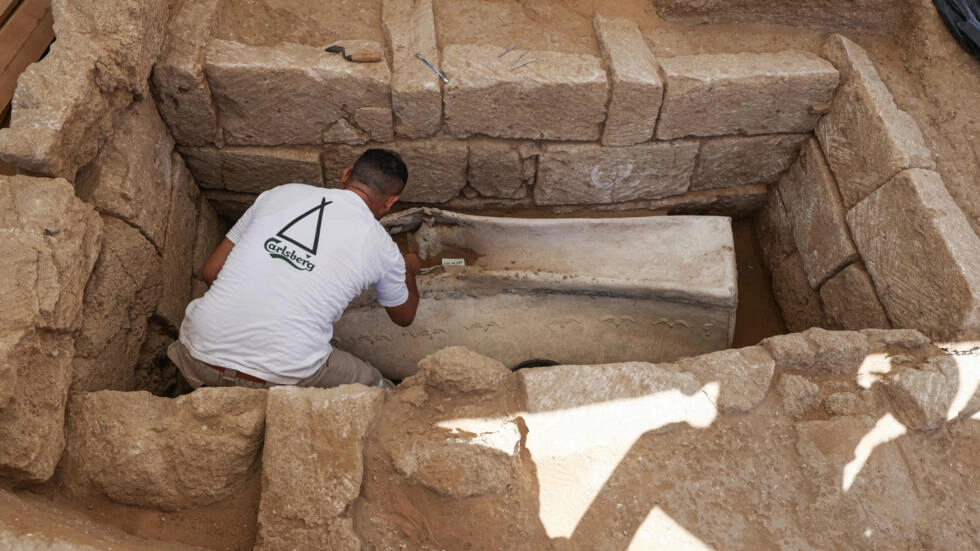
A Palestinian archaeologist announced on Saturday 23rd of September that excavations in the besieged zone had been hampered by a lack of resources by the discovery of four Roman tombs dating back 2,000 years.

The discovery marks the first complete Roman necropolis, or cemetery, fully unearthed in Gaza © MAHMUD HAMS / AFP

"With the discovery of these four tombs, the total number of tombs in this Roman cemetery, dating from the period between the first century BC and the second century AD, now stands at 134 tombs," said archaeologist Fadel Al-Otol.

According to him, the find is the first entirely uncovered Roman necropolis, or cemetery, in Gaza.

"Fragments of pottery and metal pieces used in funeral rituals" have been found in the resting places, added Otol.

The cemetery is distinguished by the pyramid-shaped burials there. A group of technicians working under Otol's leadership inside of them use crude tools to perform restoration work.

"Two lead coffins, one adorned with clusters of grapes and the other with dolphins swimming in water, were recently discovered on the site," noted the Palestinian archaeologist, who lamented a lack of financial resources.

The British Council's Fund for the Protection of Culture provided the funds for the excavation and restoration work.

Impoverished With the exception of Rafah, which is under Egyptian authority, Israel's defense ministry controls all crossings into Gaza, which is home to some 2.3 million Palestinians.

Since 2007, the Palestinian islamist organization Hamas has been in charge of the region.

Source: https://www.france24.com/en/live-news/2023...

Explanation of The Mark's Gospel's Strange Ending

The four gospels in the New Testament of the Christian Bible essentially convey the same story, which only serves to highlight how different they are from one another. The account ends before Jesus ascends to heaven, which seems like a rather dramatic omission. The Gospel of Mark is known for being particularly condensed.

Mary Magdalene and the other grieving ladies simply approach Jesus' tomb and find the stone has been removed. They are startled to hear that Jesus has resurrected when a man in white approaches them. Scene comes to a close. In contrast, Luke's Gospel finishes in chapter 24: 50–53 with the following statement: "When he had brought them out to the area around Bethany, he held up his hands and blessed them. He gave them a benediction and then left them to ascend into paradise. They then adored him and joyfully departed towards Jerusalem. And they remained at the temple constantly, praising God.

You might not have noticed this difference depending on the Bible edition you read because certain translations, like the King James edition, feature an additional section to close the gap. The text of Mark 16 has existed in many forms since antiquity and has four alternative endings, but the earliest manuscripts omit verses 9 through 20. The endings were allegedly added afterwards to compensate for the text's abruptness, which is now universally accepted. Why, therefore, is Mark's tale so brief?

A chance conclusion?

Some academics contend that the abrupt conclusion of the Gospel of Mark suffices to demonstrate that the narrative was not intended to end there. It's likely that the author simply never finished the work for whatever reason. The message was not refined for future generations because he may have passed away or was simply interrupted. Alternately, the original paper might have been harmed by someone who was not careful. It was possible that the frail papyrus' final page would have been torn and thrown away, leaving later scribes scrambling to come up with a credible summary of whatever he had originally spoken.

Those who support it frequently point out that the final word of the Greek text, (gar), which means "for" or "because" in the original language, is included in Robert Oliver Kevin's article on this topic in the Journal of Biblical Literature. It has the effect of making the final paragraph read, "They were afraid for —," as if the author had stopped mid-sentence. However, while it may not be the best Greek, academic Robert H. Stein notes in the Bulletin for Biblical Research that other historians have shown that other ancient writers frequently finished their sentences in the same manner, including the author of the Gospel of John.

... or a conscious decision?

The story in Mark was purposefully shortened, according to a different, more straightforward reasoning. If so, it might have been a theological or stylistic decision. The Biblical Archaeology Society has pointed out that Mark's gospel, which is likely the oldest of the four versions, omits the virgin birth. Today, we are unable to determine the author's genuine beliefs towards Jesus Christ or Christianity in general. It's probable that during this time, Christians did not firmly believe that Jesus had met with his followers following his ascension. Along with tales of the virgin birth, those tales might have appeared later.

Alternatively, Mark's abrupt conclusion could have been done for dramatic effect only. Today, a lot of academics agree that Mark was affected by the tenets of classical literature. The epic poet Homer has been cited as a source of inspiration for Mark, while others have pointed out that the gospel's structure bears striking similarities to Greek tragedy. Rather than neatly wrapping up the story with a nice ending, the slightly unclear finish is dramatic and gives the reader space to consider the story's lesson. From a literary perspective, this conclusion is in some ways more rewarding and causes us to ponder the mystique surrounding Jesus' life.

Source: https://www.grunge.com/1397917/bizarre-end...

Lapis Niger: The Mysterious Sanctuary Beneath Ancient Rome

Giacomo Boni, a Venetian archaeologist, was named director of the Roman Forum excavations in the Italian capital in 1898. He kept this position until his passing in 1925. An Iron Age necropolis, the Regia (originally a barracks and later the seat of Rome's greatest pope), the temple of Vesta, and other structures are among the findings he made during that time.

Diagram of the Lapis Niger in 1906/ photo public domain on Wikimedia Commons

The Lapis Niger (black stone), an ancient sanctuary where one of the first known Latin inscriptions was discovered and dated between 570 and 550 BC, is one of its most notable findings in the Forum. Even the Romans themselves could not fully understand this sanctuary, despite it being regarded as a hallowed area, until the time of Julius Caesar. It was a component of the historic Comitium, the Forum's northwest-facing public gathering space for the curiate assembly.

It is thought that this sanctuary was reformed at precisely the time of Julius Caesar (or earlier, according to other experts, during the reign of Sulla, who ruled between 81 and 80 BC). A new structure with black marble flooring is thought to have been built at that time. What made it so intriguing was what it covered; at a depth of 1.5 meters, Boni discovered the indicated inscription and an ancient tomb, whose owner the Romans had long since forgotten by the time of Caesar.

Generation after generation, they revered and preserved the site because they were certain that it was significant and hence sacred. Since they didn't know who was interred there, a number of rumors started to circulate and eventually became into tales. One of them said that it would be the grave of Romulus, the founding figure and first ruler of Rome, who was assassinated in the Vulcan temple that was next to the Lapis Niger.

whereas Romulus, when he vanished, left neither the least part of his body, nor any remnant of his clothes to be seen. So that some fancied, the senators, having fallen upon him in the temple of Vulcan, cut his body into pieces, and took each a part away in his bosom; others think his disappearance was neither in the temple of Vulcan, nor with the senators only by

Plutarch, Vidas Paralelas, Life of Romulus 1, 27-6

The pillar with the inscription in Lapis Niger / photo Giovanni Dore on Wikimedia Commons

According to other legends, it could be the resting place of Faustulus, the shepherd who discovered and raised Romulus and Remus, or it could be the grave of Hostus Hostilius, the grandfather of King Tullus Hostilius (third king of Rome between 673 and 642 B.C. ), who was one of the Celeres, Romulus' personal bodyguard.

As you can see, Romulus is the subject of all of these hypotheses. The issue is that there is no evidence for this link inside the Lapis Niger. In fact, the earliest texts that make reference to it already cast doubt on the tales and lean toward concluding that it was most likely the location from which the kings addressed the populace and senate.

Interpretation of the inscription / photo ImperioRomano.com

In addition to the pillar with the inscription, the Boni excavations discovered countless ceramic fragments, votive statuettes, and proof of ritual animal sacrifices, all of which were hidden behind a layer of gravel that had been added on purpose. All of these remains have been dated to the 5th to 7th centuries BC. That is, at the earliest, at the time of Romulus' passing and the start of the rule of Numa Pompilius (716–674 BC), who succeeded him and was also Romulus' brother-in-law.

The site underwent numerous changes throughout the years, including fires and partial destruction as a result of wars and invasions, until it was rebuilt in the first century BC when a more modest altar with a floor made of black marble was built over it.

As for the inscription, it is, as we have stated, the oldest Latin text yet discovered. But it has a few unique features. First of all, the alphabet used to write it is closer to that of Greek than Latin, placing it historically at the beginnings of the latter. The text is then written using the bustrophedon style, an ancient writing method that involves writing one line from left to right and the next from right to left or vice versa.

Pillar replica / photo sailko on Wikimedia Commons

Finally, because the inscription's beginning and end are gone and only half of each line remains, the interpretation of what it means is constrained. However, what can be read appears to suggest that the site was honoring a king (rex). The four pillar faces would be written as follows:

QVOI·HOI·SAKROS·ES·ED·SORD

OKAFHAS·RECEI·IO·EVAM·QVOSRE

M·KALATO·REM·HAB·TOD·IOUXMEN·TA·KAPIA·DOTAV

M·I·TERPE·M·QVOI·HA·VELOD·NEQV·IOD·IOVESTOD

Likewise, the widely accepted translation:

Whosoever (will violate) this (grove), let him be cursed. (Let no one dump) refuse (nor throw a body …). Let it be lawful for the king (to sacrifice a cow in atonement). (Let him fine) one (fine) for each (offence). Whom the king (will fine, let him give cows). (Let the king have a —) herald. (Let him yoke) a team, two heads, sterile … Along the route … (Him) who (will) not (sacrifice) with a young animal … in … lawful assembly in grove ..

The significance of this inscription rests in the fact that it provided the first epigraphic proof that kings previously reigned in ancient Rome. something that was mentioned in classical writings but was never confirmed.

We'll probably never know whether Romulus or one of those rulers was interred beneath the altar. The Lapis Niger must have been a founding monument of the city of Rome, around which the Roman people's meetings were conducted since very ancient times, practically all specialists agree.

Source: https://www.labrujulaverde.com/en/2020/05/...

2,000-year-old burial ground excavated, making it the "largest ancient cemetery ever discovered"

Palestinian laborers in the Gaza Strip have stumbled upon a sizable Roman-era cemetery with dozens of graves. Archaeologists have determined that the largest find of its sort in Gaza contains treasures that are roughly 2,000 years old, including two lead sarcophagi.

A 2,000 year old cemetery has been discovered in the Gaza Strip (Image: AFP via Getty Images)

The site was first discovered by the employees last year while they were working on a housing project in the northern part of the Strip that was funded by Egypt. Since then, teams have worked under the direction of French experts to excavate a 2,700 square meter area. What was once a plain-looking construction site has now been transformed into a treasure trove for historians trying to learn more about the area.

Due to its location on historic trade routes between Egypt and the Levant, Gaza has a lengthy history. However, a number of recent events, including the occupation by Israel, Hamas' takeover, and growing urbanization, have put the history of the besieged region in peril. A total of 75 additional graves have been located since the initial finding of 60 in January, several of which have undergone investigation.

The dig's director, a French archaeologist named Rene Elter, stated: “All of these tombs have almost already been excavated and have revealed a huge amount of information about the cultural material and also about the state of health of the population and the pathologies from which this population may have suffered.”

135 graves have been located at the site so far including two lead coffins ( Image: Majdi Fathi/NurPhoto/REX/Shutterstock)

“The discovery of lead sarcophagi here is a first for Gaza” Mr. Elter, the head of archaeology for Intiqal, a program run by nonprofit Premiere Urgence Internationale, exclaimed with excitement.

Due to the rarity of the lead tombs, Palestinian archaeologists including Fadel Al-Otul think social elites were interred at the location. In keeping with the Roman propensity to build cemeteries close to urban centers, Mr. Al-Otul indicated that the cemetery likely used to be situated inside of a city. Along with the sarcophagi, Mr. Elter's team is reconstructing skeletons and putting broken pieces of clay jars back together.

The remains will be returned to the Hamas-led Ministry of Antiquities and Tourism, according to Mr. Al-Otul, once the skeletons have undergone further analysis. "The Gazans deserve to tell their stories. Gaza boasts a plethora of potential archaeological sites, but monitoring each one, given the rapid pace of development, is no small feat."

Source: https://www.mirror.co.uk/news/world-news/l...

Floods in Libya Uncover a New Building in an Ancient Greek City

The ancient Greek city of Cyrene is the only UNESCO-listed site in the area, and floods that killed hundreds of people in Libya also submerged parts of it, archaeologists say. This puts the structures in danger of collapsing.

The ancient Greek Temple of Zeus at Cyrene, Libya. Credit: David Stanley, CC BY 2.0/Wikipedia Commons

But at the same time, additional constructions were exposed by the floodwaters. Authorities from Libya who were sent to examine the ancient city and conserve what they could surprisingly discovered archaeological sites that had suddenly arisen after the floods.

A national council made up of professionals should be established, according to Dr. Ahmed Issa from the Department of Archeology at Omar Al-Mukhtar University, to classify new archaeological monuments and create a restoration strategy for the region.

The Temple of Zeus from the second century AD, which was larger than the Parthenon in Athens, sustained relatively minor immediate damage, but the water circling around their foundations poses a threat for further collapses, according to Vincent Michel, the head of the French archaeological mission in Libya.

“Since the stone in the region is of poor quality, the monuments risk falling apart due to lack of good foundations,” he added.

Speaking to AFP, he continued that "hundreds of cubic meters of water" had flooded the nearby necropolis, shifting and submerging some of the tombs.

About 60 kilometers (37 miles) west of the flood-stricken Derna sits the ancient Greco-Roman city of Cyrene (Shahhat).

The ancient Greek city of Cyrene in Libya is under danger of flooding

A large portion of the area is still flooded days after the massive rains brought on by Storm Daniel on September 10–11, according to Claudia Gazzini, a Libya expert with the International Crisis Group think tank, who recently visited the location.

The enormous site, which also has a necropolis outside its walls that is as large as the city itself, has some ancient walls that have collapsed, obstructing the water courses that would typically drain the area.

“There’s a street lined by ancient walls that connects the upper and lower levels down which rainwater would normally escape but large boulders have fallen in, blocking the flow,”, Gazzini told AFP.

“On the lower level, there’s also dirty water continuously bubbling out of the ground in the middle of the ruins,” she added, adding that neither locals from the nearby village of Shahat nor a representative from the local antiquities division, whom she met there, could explain where it was coming from.

“If water continues to flow in and remains trapped in the site, the retaining wall could collapse, taking with it a large chunk of the ruins,” she said.

Libya's ancient Greek city of Cyrene

The oldest and most significant of the five Greek cities in the area was Cyrene, an ancient Greek and subsequently Roman metropolis.

Eastern Libya now goes by the historical name of Cyrenaica, which it was given. The ancient Necropolis of Cyrene is close by.

A group of Greeks from the island of Thira, commonly known as Santorini, traveled south more than 2,000 years ago in pursuit of a new home. Their voyage came to an end in Libya, a country in modern-day northern Africa.

These Greek immigrants built a new city they named Cyrene. The city, which was established in 631 BC, soon had Battus as its first King in charge.

The earliest influential person in the dynasty that would later become known as the Battiads was Battus.

Every Greek city in what is now the modern Greek mainland and islands maintained trading relations with Cyrene, which was prosperous.

The temples, tombs, agora, gymnasium, and Cyrene Amphitheatre in this important ancient Greek city are all thought to have been influenced by Delphi's famous architectural landmarks.

Source: https://greekreporter.com/2023/09/28/flood...

Exploring the new UNESCO World Heritage Site in Palestine, Ancient Jericho

Ancient Jericho in the Israeli-occupied West Bank looks to be nothing more than a collection of sandy rock mounds surrounded by palm trees to the untrained eye. But if you look closely, you'll find traces of a long-gone civilization that was lauded for inventing advanced agricultural techniques, architectural techniques, and defense systems 4,000 years before anybody else. Fortunately, archaeologists have already done the job for us, and their discoveries at the Tell es-Sultan UNESCO World Heritage Site provide an intriguing look into one of the world's oldest and most sophisticated civilizations.

Jericho claims to be the oldest city in the world (Shutterstock)

Ain es-Sultan, a perennial spring, gave Ancient Jericho, which is located 1.5 km north of the present-day city of Jericho, its name. Around 10500 BC, hunter-gatherers decided to dwell on a nearby mound as a result of the nearby water source and the area's pleasant climate, which nurtured the surrounding land. On the 21m mound, or tell, a permanent Neolithic settlement had developed by 9000 BC. They were perhaps of the earliest people to rely on agriculture for survival. The locals domesticated animals, built granaries, dwellings, and irrigation channels and aqueducts in addition to growing crops. Naturally, hammers and axes were necessary for all of this, so these were also invented, along with pottery, while they were doing it.

Dwelling foundations unearthed at Jericho (Shutterstock)

In 8500 BC, people would come home from work to round, crude semi-subterranean homes. These transformed into more modern rectangular homes with stone foundations, dried-mud bricks, and floors polished with lime plaster. The emerging society also gave rise to some of the world's earliest political, economic, and religious systems.

The Neolithic people revered their ancestors and held a belief in life after death, according to cultic funeral rituals. They frequently unearthed bodies, cut off the heads, painted the skulls with priceless cinnabar pigment, adorned the eye sockets with seashells, and then reburied the bodies beneath the flooring of their homes and sacred buildings. Plastering skulls was subsequently supplanted by making plaster statues and clay animal figures, which had an impact on other Middle Eastern locations.

Tower of Jericho (Shutterstock)

Ancient Jericho evolved into the world's first fortified settlement about 9000 BC. The reasons why the settlement was strengthened are a matter of debate among experts; some propose military defense, protection from wild animals, flood control from surrounding rivers, or cultic practices. There is no disputing, however, that a bedrock-carved wall made of stones mortared in mud and surrounding the village. Later, a second, six-meter-tall wall, a three-meter-deep ditch, and an eight-meter-tall stone tower were built, the ruins of which still survive. The tower's interior includes a narrow staircase and mud-plastered walls covered in the fingerprints of laborers.

Despite a collapse during the Early Bronze Age between 4000 and 2000 BC, the people of Jericho restored or rebuilt their defense systems, and by 1000 BC, Ancient Jericho was a thriving cultural hub with 3,000 native Canaanites living there. Residents created avenues lined with furnished homes next to graves and public structures like a temple and multi-story palace (2700–2300 BC) using their new bronze equipment. On top of the remains of the first royal home, Hyksos Palace was built.

A plastered skull from Ancient Jericho (Alamy Stock Photo)

A surplus of agricultural output and handicrafts like baskets allowed the town's residents to engage in trade. Ancient Jericho became a prominent economic hub, facilitating the interchange of products along with ideas, beliefs, and values due to its location on a vital east-west route linking Asia, the Mediterranean, and Africa.

Ancient Jericho was one of Palestine's most significant Canaanite cities by the Middle Bronze Age. The Egyptian Pharaohs continuously besieged all Canaanite cities, ultimately destroying Ancient Jericho despite the groundbreaking earthen barriers. The city's heyday was finished by 1550 BC. It was barely occupied and all but forgotten until archaeologists began to look into it around 1868.

Since then, delicate excavations and preservation methods like using new mud bricks to safeguard susceptible structures and reversible mud plaster have preserved its originality. This draws 91,000 tourists a year, along with the opportunity to see a prehistoric village that was inhabited for 10,000 years. Pretty good for a bunch of rocks.

Source: https://www.wanderlust.co.uk/content/world...

Moved to new location in Northern Ireland is a tomb that predates the Pyramids.

At a museum in Northern Ireland, a Neolithic tomb that predates the Egyptian pyramids has been placed on permanent display.

Ballintaggart Court Tomb at its new home outside the Ulster Folk Museum

It was uncovered near Ballintaggart, Co. Armagh, and has a history of more than 6,000 years.

One of around 400 of its kind on the island, the Ballintaggart Court Tomb is a group of upright stones that form a semicircular courtyard at the entrance to the burial chambers where human remains would have been left.

After being endangered by the expansion of a neighboring quarry, it was removed from its native place in 1966 and transported to Ulster Museum.

Now that the stones have been relocated, the building outside the attraction has been faithfully rebuilt using 3D modeling at Ulster Folk Museum.

The enormous constructions grew more prevalent in the nation as ancient people established permanent settlements, according to Dr. Greer Ramsey, curator of archaeology at National Museums NI.

William Blair, Joe Garvey, chairman of the Richmount Rural Community Association in Portadown, and Dr Greer Ramsey at the site

"Court tombs take their name from a semicircular arc of upright stones marking the entrance to the burial chambers," he said.

"The Neolithic period to which they belong was revolutionary as it marked the end to a nomadic or hunter-gatherer way of life. New settlers arrived about 6,000 years ago, bringing with them farming skills and many of the plants and domestic animals we are familiar with today. With a more secure food supply, people could live for longer in one place and invest in larger, more permanent structures, such as tombs."

As the Ulster Folk Museum unveiled its investment plans, which included opening up access to its collection, the tomb arrived at the location.

As part of normal admission, visitors can view the building outside in the museum's rural area.

Source: https://news.sky.com/story/tomb-older-than...

At a German castle, a rare medieval octagonal tower was found

One of the original towers that guarded the fortress's main entrance has been found by archaeologists working at Neuenburg Castle in central Germany. They were taken aback by the tower's octagonal design, which was completed around the year 1100.

The Thuringian count Ludwig der Springer constructed Neuenburg Castle towards the end of the 11th century, and it was later enlarged during the 13th century. It is now one of Germany's biggest castles and is regarded as a cultural landmark of national importance.

Since 2022, the Neuenburg Castle, which stands above the town of Freyburg, has been the site of archaeological research by the State Office for Heritage Management and Archaeology Saxony-Anhalt. They concentrated their research on the 11,500 square meters of the outer bailey, one of Germany's largest outer baileys.

Neuenburg Castle’s octagonal tower – photo by Dirk Höhne / State Office for Heritage Management and Archaeology Saxony-Anhalt.

The researchers looked at a location where big stones had been found a few years earlier and compared it to the "Old Tower" location shown on three maps from the 19th and 20th centuries. Their excavation turned up the remnants of an octagonal structure with walls that were 1.7 meters thick and had a diameter of 10 meters. The tower was still standing, reaching a height of 2.2 meters, but it was once much taller. Even traces of a staircase and floors were discovered by the researchers.

Photo by Ines Vahlhaus / State Office for Heritage Management and Archaeology Saxony-Anhalt.

A tower similar to this one was seen around 50 meters to the south. Both are a part of the castle's original fortification system, which included significant defensive features. At roughly the same period, a rampart composed of limestone gravel, an inner ring wall, and a second outer wall that ran parallel at a distance of about six to eight meters were all constructed. A roughly ten-meter-deep trench was built in front of this. The two octagonal towers in this section of the fortification must have made an impressive spectacle.

The tower's octagonal shape would have been extremely unusual for Germany in the eleventh century. It was seen as a breakthrough in castle construction, but it wasn't utilized frequently until the later 12th and 13th centuries, particularly under Holy Roman Emperor Frederick II (1220–1250). The experts hypothesize that the towers lining Constantinople's city walls may have served as a source of inspiration for the architects.

The castle – photo by Gunar Preuß / State Office for Heritage Management and Archaeology Saxony-Anhalt.

Prior to further improvements to the castle, which will include the construction of a new workshop and administrative building as well as a barrier-free entry to the outer castle, the government of Saxony-Anhalt is conducting archaeological research.

Source: https://www.medievalists.net/2023/09/rare-...