• MAIN PAGE
  • LATEST NEWS
    • Lost Cities
    • Archaeology's Greatest Finds
    • Underwater Discoveries
    • Greatest Inventions
    • Studies
    • Blog
  • PHILOSOPHY
  • HISTORY
  • RELIGIONS
    • Africa
    • Anatolia
    • Arabian Peninsula
    • Balkan Region
    • China - East Asia
    • Europe
    • Eurasian Steppe
    • Levant
    • Mesopotamia
    • Oceania - SE Asia
    • Pre-Columbian Civilizations of America
    • Iranian Plateau - Central Asia
    • Indus Valley - South Asia
    • Japan
    • The Archaeologist Editor Group
    • Scientific Studies
    • Aegean Prehistory
    • Historical Period
    • Byzantine Middle Ages
    • Predynastic Period
    • Dynastic Period
    • Greco-Roman Egypt
  • Rome
  • PALEONTOLOGY
  • About us
Menu

The Archaeologist

  • MAIN PAGE
  • LATEST NEWS
  • DISCOVERIES
    • Lost Cities
    • Archaeology's Greatest Finds
    • Underwater Discoveries
    • Greatest Inventions
    • Studies
    • Blog
  • PHILOSOPHY
  • HISTORY
  • RELIGIONS
  • World Civilizations
    • Africa
    • Anatolia
    • Arabian Peninsula
    • Balkan Region
    • China - East Asia
    • Europe
    • Eurasian Steppe
    • Levant
    • Mesopotamia
    • Oceania - SE Asia
    • Pre-Columbian Civilizations of America
    • Iranian Plateau - Central Asia
    • Indus Valley - South Asia
    • Japan
    • The Archaeologist Editor Group
    • Scientific Studies
  • GREECE
    • Aegean Prehistory
    • Historical Period
    • Byzantine Middle Ages
  • Egypt
    • Predynastic Period
    • Dynastic Period
    • Greco-Roman Egypt
  • Rome
  • PALEONTOLOGY
  • About us

Understanding the Geo-technical Parameters and Degradation of Historical Buildings in Najran City, Saudi Arabia

October 11, 2023

Najran City, nestled in the southwestern realm of Saudi Arabia, beholds a rich tapestry of historical structures that tell a tale of its vibrant past. However, the longevity and stability of these architectural treasures are under threat due to various geoenvironmental risks and weathering processes. A new study aims to delve into the heart of the matter, exploring the deterioration drivers in ancient buildings in Najran City and employing numerical simulations to understand the geo-technical parameters and their role in the degradation process.

Historical Significance and Geographical Context

The geographical expanse of Najran is not only a testament to Saudi Arabia’s booming population and burgeoning mining sector but also stands as a gatekeeper to a wealth of archeological sites that chronicle its rich history. With natural stone being a pivotal building material, the interplay between the geological characteristics of the area, such as the prevalence of Najran granite and red sandstone, and historical building preservation becomes critical.
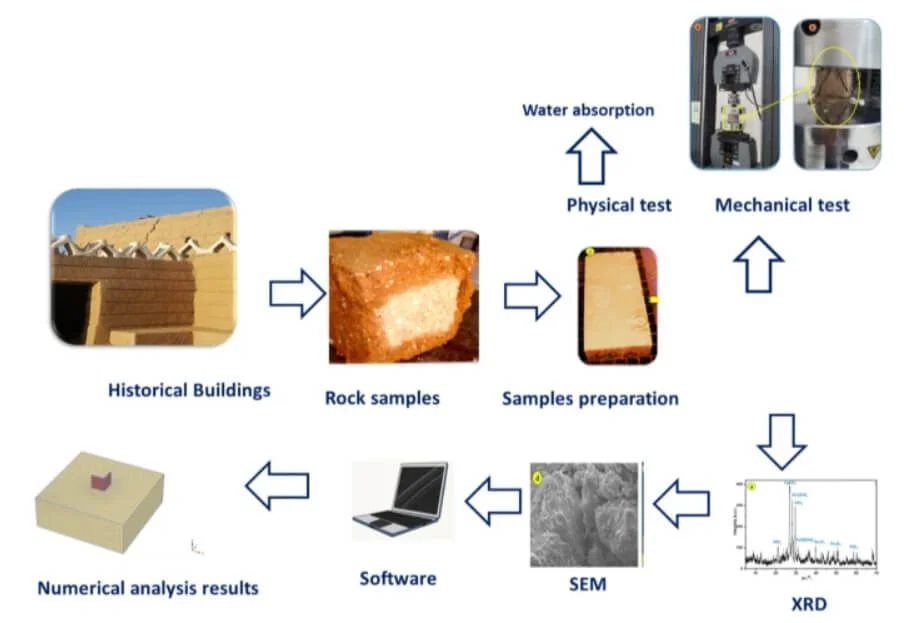
A detailed flowchart to explain the methodology and experimental tests of the present work.

Degradation Drivers of the Historical Buildings

The primary culprits contributing to the decline and fracturing of Najran City's historical buildings are recognized as the dissolution of clay minerals and salt crystallization, wind erosion, and intermittent wetting–drying cycles triggered by climate variables such as temperature and humidity. The area's mining expansion, according to Saudi Arabia's 2030 vision, further introduces man-made challenges and impacts on these ancient structures, which, coupled with natural weathering processes, create a complex deterioration network.

Methodological Approach Towards Preservation

To decipher the underlying degradation mechanisms and strive towards preservation, a meticulous approach embracing both field and lab observations, alongside numerical simulations, was adopted.

Field and Lab Observations: Techniques such as SEM, EDX, and XRD analyses were deployed, revealing kaolinite as a predominant mineral, with certain samples revealing traces of halite and goethite minerals. Other crucial data like unconfined compressive strength (average of 2 MPa) and water absorption (within the upper limit of 15%) of the earthen wall samples were also observed through experimental data.

Numerical Simulations: Utilizing the PLAXIS 3D software, a finite element model of a typical earthen historical building was developed. This model, simulating the behavior of the silty sand soil layer beneath the building and evaluating the non-linear response of the earthen structures, confirmed that excessive settlement and environmental conditions were the primary culprits behind structural failure.
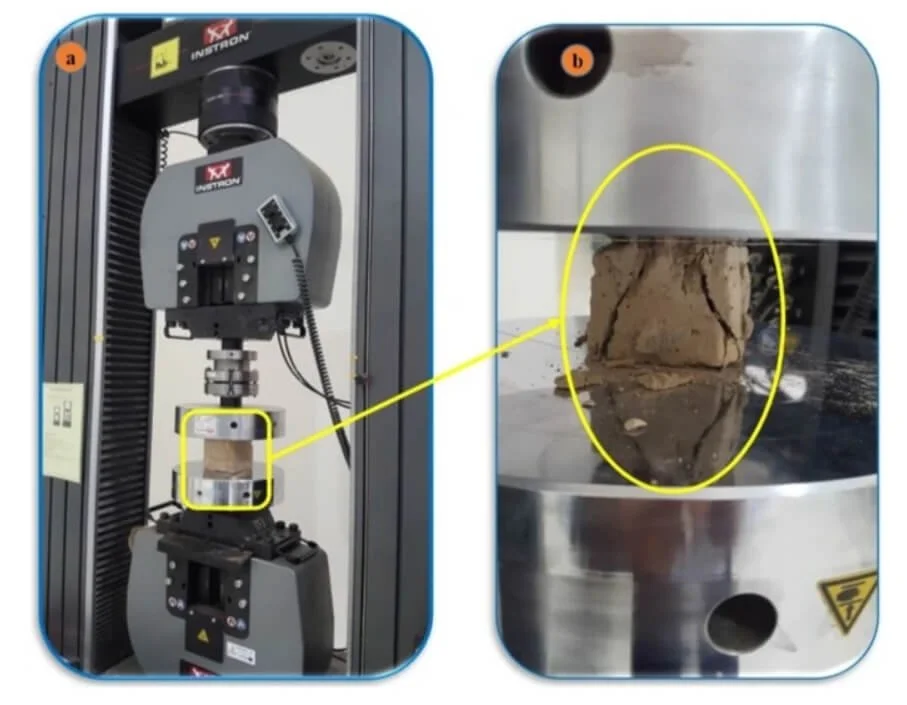
Compressive strength test of prepared cubed from historical buildings (a) test setup, (b) sample after failure and loading rate.

Role of Environmental Variables

The intricate web of environmental variables, such as fluctuating temperatures, contrasting day and night humidity, and wind erosion, plays a pivotal role in expediting the degradation of historical buildings. The absorption test results, which calculated the percentage of moisture absorbed by the blocks, showed adherence to acceptable standards, albeit closely bordering the upper allowed limit. However, the resultant continuous wetting and drying cycles pose significant threats to the stability and longevity of the structures.

Insights from Human-induced Damage

Man-induced damages, including spray paint graffiti, scrape marks from sharp tools, and intentional structural perforations, further aggravate the deteriorative cycle. This underscores the significance of integrating preventative and restorative measures into the conservation strategy to safeguard historical edifices against such detrimental human activities.

Concluding Observations

Through a systematic integration of field observations, laboratory analyses, and numerical simulations, the research highlights the imperative to recognize the interplay between geotechnical, environmental, and anthropogenic factors in the degradation of historical structures. Understanding these interactions will facilitate the development of targeted restoration and preservation strategies, thereby safeguarding the architectural heritage of Najran City and ensuring the tales of its antiquity continue to echo through future generations.
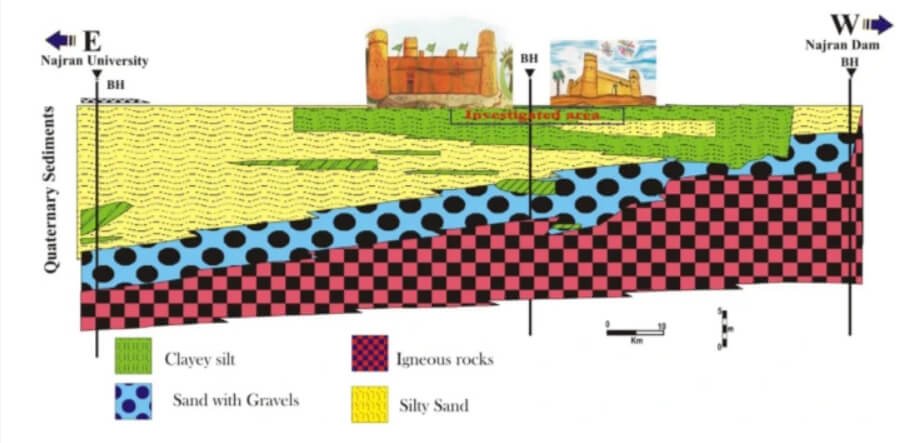
E–W profile along the area of study area showing the subsurface layers of foundation beds of the historical building.

Future Perspectives

Preservation Techniques: Employing innovative and sustainable preservation techniques that counteract the effects of identified degradation drivers

Policy-making: formulating policies that safeguard the architectural heritage from both environmental and human-induced damages, ensuring that they continue to stand tall as symbols of Najran's vibrant history and culture.

Community Engagement: Fostering a community-oriented approach that cultivates an appreciation for architectural heritage and encourages active participation in its conservation

23,000 Years Ago: New Research Sheds Light on Early Human Presence in America

October 11, 2023

For decades, the question of when and how humans first settled in the Americas has been a contentious topic in the field of archaeology. The conventional wisdom, until recently, was that humans arrived in the North American interior around 14,000 years ago, coinciding with the formation of an ice-free corridor between massive ice sheets in Canada and the northern United States. However, groundbreaking research has challenged this narrative, pushing the timeline back by several millennia.

In a significant departure from the previously accepted timeline, a study published in September 2021 asserted that humans had set foot in the Americas approximately 23,000 years ago, a time when the last Ice Age was at its peak. This revelation added a substantial 7,000 years to the known history of human presence on the continent, effectively rewriting the prehistory of the Americas.

Critics of this extraordinary claim pointed to concerns about the accuracy of the radiocarbon dating method used in the 2021 study. They raised the issue of the "hard water" effect, which occurs when groundwater, isolated from the atmosphere for an extended period, contains carbon-14 that has already undergone radioactive decay, potentially skewing radiocarbon dates.

Image courtesy of USGS.

Acknowledging these concerns as an essential part of the scientific process, researchers embarked on a mission to retest and confirm their findings. Their efforts included innovative techniques and methodologies that shed new light on the ancient past of the Americas.

One of the key aspects of the new research involved dating fossilized pollen grains found in sediment layers both above and below the footprints discovered near White Sands, New Mexico. These common ditch grass seeds were subjected to radiocarbon dating, a well-established and reliable technique for dating organic materials. However, dating pollen grains presented a unique challenge due to their minuscule size, typically around 0.005 millimeters in diameter. To obtain a sufficient amount of carbon for dating, thousands of pollen grains were required.

To overcome this challenge, the researchers turned to medical science and employed a technique called flow cytometry. Normally used to count and sample individual human cells, this method uses the fluorescence of cells stimulated by a laser to identify and isolate them from a liquid stream. In this case, it was adapted to count and concentrate fossilized pollen grains for radiocarbon dating.

The footprints come from a group of people of different ages. National Park Service

After extensive and painstaking laboratory work spanning over a year, the researchers successfully dated the pollen, with a focus on pine pollen that was unaffected by the "hard water" effect. These new dates validated the original chronology of the footprints and conclusively demonstrated that old water effects were not at play at the White Sands site.

Beyond confirming the timeline of the footprints, the pollen analysis also provided insights into the vegetation that thrived when the people left their marks in the area. The plant species identified were consistent with what one would expect to find in Ice Age New Mexico.

As an additional layer of verification, the research team employed optically stimulated luminescence (OSL) dating. This method relies on the accumulation of energy within buried quartz grains over time, originating from background radiation. By measuring the light emitted by these grains when exposed to light in a controlled laboratory setting, scientists can determine the last time the grains saw sunlight, thus providing an age estimate. Remarkably, the OSL dates aligned with those obtained through other dating techniques.

In summary, the combination of radiocarbon dating, pollen analysis using flow cytometry, and OSL dating has provided a robust and convincing argument for the presence of humans in the Americas approximately 23,000 years ago. This research challenges long-held beliefs about the timing of human migration to the continent and underscores the importance of continued scientific exploration and inquiry.

The journey to understanding the history of human settlement in the Americas is far from over, but with each breakthrough, we inch closer to unraveling the mysteries of our past. This remarkable research not only advances our knowledge of ancient human migration but also highlights the power of interdisciplinary collaboration in unraveling the tapestry of our shared history.

In Paleontology

Major New Discoveries at Göbekli Tepe and Karahan Tepe

October 11, 2023

This past weekend, a number of incredible new discoveries have been announced, from the latest excavations at the 11-12,000-year-old Tas Tepeler sites of Gobekli Tepe and Karahan Tepe in Turkey. Considering their age, each new discovery is absolutely stunning in its own right, and in this video we’re going to break it all down.

We have a 7 foot 6 inch human statue, a vulture statue, as well as a new enclosure at Karahan Tepe. We also have an incredible painted wild boar statue from Enclosure D at Gobekli Tepe. Watch this video to learn more and to see some fantastic photos and footage.

The Immortal Count of Saint Germain

October 11, 2023

The Count of Saint Germain was a European adventurer who achieved prominence in European high society of the mid-18th century due to his achievements in science, alchemy, philosophy, the arts and... immortality. But how is this possible? Watch the video below to find out!

DNA Analyses and Genetic Origins of the Ainu

October 11, 2023

In this video we will talk about the Ainu, the indigenous people from the northern region of Japan, their culture, genetic profile, and ancestry. They are well known as the ethnic group that appears in manga series “Golden Kamuy.” Enjoy!

Opening The Coffin Of King Henry VIII

October 11, 2023

One of the most notorious Kings of England was King Henry VIII, the 6 wifed King who even executed two of his own wives. But Henry VIII's health throughout his life was awful and shocking, and he would become ill around 1547. He had suffered with smallpox and gout and was very large and obese and he would then die inside the Palace of Whitehall. Henry VIII would request that when he died he would want to be buried with his third wife Jane Seymour, inside of St George's Chapel in Windsor Castle. This was the burial place of many medieval Kings and Queens, and Henry VIII commissioned a huge tomb to be built but this would never be finished.

Henry VIII was buried inside of a small vault under the Quire of St George's Chapel, and this was a very modest and small burial site despite his reputation in History. But this burial site would be disturbed a number of times as Charles I the executed King was interred next to Henry VIII and the coffin of Henry VIII had been disturbed and broken.

Why did the infantry not chop off the horses' legs?

October 11, 2023

Roughly in the 8th century of our era, wealthy people who owned horses thought that they could fight while mounted, using spears and swords. This was the era of Charlemagne. In their conquests, the Franks increasingly mounted horses to achieve offensive success as true cavalry, rather than just horse infantry. This is how the first knights appeared. One hundred years later, Charles the Bald called upon all men who could afford horses to respond to the call of war with weapons, to swiftly repel the constant and large-scale Viking invasions...

Large Voids Discovered Under the Giza Pyramid of Khafre

October 11, 2023

There is no indication, no clues and no data to say there is anything significant hidden inside the Giza Pyramid of Khafre.

But that doesn’t mean we should stop looking for hidden passages and chambers, because in the 1970s, California-based SRI International, previously known as the Stanford Research Institute, conducted acoustic soundings through the floor of the Belzoni Chamber, and interestingly, they did find something.

At a depth of 21 metres or 69 feet and then again at 33 metres or 108 feet, the returning echoes indicated there were two large anomalies. Watch this video to learn more and if they are in fact man-made, experts may even know where to look to find a way inside.

Human footprints at the study site in White Sands National Park, New Mexico.

Image credit: National Park Service

Ancient Footprints in New Mexico Confirm Early Human Presence in North America

October 10, 2023

Two years ago, a team of archaeologists claimed to have discovered human footprints dating back 23,000 to 20,000 years in New Mexico. This discovery faced skepticism due to doubts about dating methods. However, recent research provides strong evidence to support this groundbreaking find, shedding light on early human migration in North America.

The Controversial Discovery

The ancient footprints were found in New Mexico's White Sands National Park in 2021. Initial dating relied on radiocarbon dating of organic matter in the sediment layer, suggesting an age between 23,000 and 21,000 years. Skepticism arose over the dating method's reliance on Ruppia cirrhosa seeds, which could absorb older carbon from water, potentially making the layer older.

The study site trench with White Sands National Park Resource Program Manager, David Bustos, in foreground.

Image credit: National Park Service

To address dating doubts, researchers revisited the site and focused on terrestrial pollen in the same sediment layer. Coniferous plants in this layer fix atmospheric carbon, reducing contamination risk. The new dating method confirmed the initial findings, placing the footprints between 23,000 and 22,000 years old, bolstering the belief in early human presence during the Last Glacial Maximum.

Implications for Human Migration

This confirmed dating challenges the Clovis-first hypothesis, suggesting that humans arrived in the Americas much earlier than previously thought. While the Clovis culture was believed to be the earliest group at 15,000 to 13,000 years ago, evidence now hints at arrivals ranging from 25,000 to 33,000 years ago. Footprints offer indisputable proof, unlike artifacts prone to migration between sediment layers. Dr. Reynolds, a researcher, highlighted the significance of footprints as they "cannot migrate down."

A single human footprint at the site.

Image credit: National Park Service

Confirmation of the age of ancient footprints in New Mexico is a significant breakthrough, altering our understanding of early human migration in North America. It challenges previous beliefs and underscores the importance of innovative research methods in unraveling our ancient past. These footprints attest to early human presence during the Last Glacial Maximum, reshaping the narrative of our continent's history.

15 Creepy Things That Were Normal in Ancient Egypt

October 10, 2023

Ancient Egypt is a realm of mysteries and eerie practices. They believed death was a transformation, not an end, using necromancy to communicate with the deceased. Ushaptis, figurines, acted as substitutes in the afterlife. Necromancy served pragmatic and ritual purposes.

The Curse of the Pharaohs, famous in pop culture, had roots in protecting pharaohs' tombs. Curses were inscribed, believed to bring misfortune. Even though science debunked the curse, it endures as a chilling narrative.

Servant sacrifice, practiced early on, saw servants buried with pharaohs. They believed servants would continue their duties in the afterlife. This grim practice reflected their deep belief in the afterlife's continuation.

Ancient Egyptian carvings depict sacrifice

Ingesting gold for immortality was another belief. Gold, consumed in various forms, was thought to grant eternal life. Modern science recognizes gold's use in medicine, adding a curious twist to this ancient practice.

The concept of Ma'at represented truth and justice. The weighing of the heart against Ma'at's feather decided one's fate in the afterlife. Magic, spells, dental implants, and rituals involving red beer, animals, and even human fat reveal the complexities of ancient Egyptian beliefs and practices.

Dream interpretation was highly valued, seen as divine guidance from the gods. These practices offer a glimpse into a civilization's intriguing, if eerie, worldview.

In the following video we will analyze 15 creepy things that were normal in Ancient Egypt. Watch the video to find out more!

The World of Neolithic Greece - The First Seafarers, Traders and Farmers of Prehistoric Greece

October 10, 2023

Before the Minoans, Mycenaeans, and powerful city states such as Athens, Sparta, Corinth and Argos, there were the many prehistoric peoples who occupied the land that we today know as Greece. In this video, we'll take a look at the inhabitants of this land in the days well before recorded history as well as some of their remarkable achievements. Watch the video to find out more!

5 Unexplained Artifacts of The Roman Empire

October 10, 2023

In the 1st century AD, the Roman Emperor Caligula, infamous for his hedonism, sadism, and brutality, asserted his dominion over both land and sea. Two of his ships, however, were mysteriously confined to a tiny volcanic lake known as Lake Nemi.

While historians disagree on the actual purpose of the Nemi Ships, they agree that the colossal vessels were masterpieces of engineering, particularly the larger of the two.

Measuring 240 feet long, the larger ship was akin to a 'floating palace.' It boasted marble statues, mosaic fittings, advanced heating and plumbing systems, and luxurious amenities like baths. Its slightly smaller counterpart, just 10 feet shorter, was equally impressive, with marble palaces, gardens, and an intricate plumbing system for its baths.

The ships featured stunning technological advancements – some of which would be lost until rediscovered in the Middle Ages. These included hand-cranked bilge pumps and piston pumps that supplied the ships with hot and cold running water via lead pipes.

Before the discovery of the ships, it was thought that the Romans were incapable of building such large vessels.

Given their enormity and the lake's modest size—just slightly over half a mile in surface area—it's theorized that they served as pleasure barges, catering to ancient Rome's wealthy elite and their appetites for wine, women, and debauchery.

Their opulence is thought to have mirrored the extravagant lifestyles of Hellenistic rulers from Syracuse.

Previously, Lake Nemi was deemed so sacred that Roman law forbade any vessel from sailing on it. An exception must have been carved out for Caligula's ships.

The ships sailed for roughly a year until Caligula's abrupt downfall in 41 AD. He met his end in a tunnel beneath Rome's Capitoline Hill, assassinated in a conspiracy led by the Praetorian Guard officers and select Roman Senate members, all disillusioned by his erratic behavior, tyrannical rule, and extravagant spending.

Caligula’s floating palaces would meet a similar fate. The massive ships were filled with stones and sunk to the bottom of the lake to wipe Caligula and his depraved reputation from the pages of history.

Although raised from the lake bed in 1929 as part of a major recovery effort initiated by Mussolini, both ships were largely destroyed during the Second World War, with only a few bronze fragments surviving.

Some maintain that it was the retreating Germans in 1944 who intentionally and maliciously destroyed the Nemi Ships, whereas it has more recently been suggested that the US Army accidentally shelled the site...

History of Israel-Palestine Conflict From 1000 BC Until Today

October 10, 2023

In the 17 centuries BC, following the call of God, Abraham, Isaac, Jacob settled in Canaan, later known as the Land of Israel. In 1000 BC, King Saul established the Israelite monarchy, which was later split into the Kingdom of Israel and the Kingdom of Judah. The conquest of Roman Empire in 63 BC gave the name “Palestine” to Judah. During this time, Christianity became a dominant religion towards the end of the Roman Empire. In 636 came an Arab conquest, beginning the spread of Islam. In the 11th century, Christians in Europe launched several crusades to bring the Holy City back to the hand of the Christians while from the 16th century, more and more Jews were joining a movement called Zionism aiming to create a Jewish national state in its ancient homeland.

WWI exploded in 1918 and ended with the collapse of the Ottoman Empire. Its land in the Middle East was carved by the British and French Empires. The region under the control of Britain was what it called the British mandate for Palestine. Tensions between the Jews and the Arabs who both claimed the land grew, which even led to acts of violence.

In 1947, the UN partitioned Palestine into two independent states: a Jewish state and an Arab state with the City of Jerusalem becoming an international zone with a special status.

Less than one year after that, Israel declared itself an independent state. Right after the declaration, the 1948 Arab-Israeli War broke out and ended when a cease-fire agreement was reached in 1949, giving more than two-thirds of historic Palestine, including West Jerusalem, to Israel.

There came more wars and fighting in the following decades, namely the Six-Day War ending with the victory of Israel, the 1982 Israeli invasion of Lebanon kicking the Palestinian Liberation Organization out of Beirut, the First Intifada ending with the Oslo Accords, the Second Intifada ending with Israel’s withdrawal from Gaza.

Then came the establishment of Hamas, a Sunni Islamist militant group founded in 1987, aiming to destroy the state of Israel and create an Islamic state. After the Battle of Gaza (a conflict between Hamas and Fatah), Hamas split from the Palestinian authority and gained power in the Gaza while the West Bank was separately controlled by the PLO.

Israel put Gaza under a suffocating blockade, leading to several bloody wars between Israel and Hamas, the military group in control of the Gaza Strip till today.

What caused wars between Israel and Palestine?

Do you think Israel and Palestine can reach a peace treaty?

Watch the video below to find out more

Ancient Greek Philosophers Quotes to Change Your Life

October 9, 2023

The wisdom of the philosophers of Ancient Greece is truly deep and instructive. In this video we have collected for you the best quotes and sayings of ancient Greek philosophers. Enjoy!

Remodelling the Immense Mayan Monuments of Tikal

October 9, 2023

Hidden away in the jungle of Guatemala, Tikal saw the light of day in the 8th century BC. Inhabited for over a thousand years, the ancient city would encompass up to 12,000 structures and 2 million inhabitants. It reveals its extraordinary temple-pyramids, made using sheer human strength. Tikal had multiple pyramids, an astronomical observatory, and advanced water management systems, showcasing the Mayan civilization's architectural and scientific achievements.

The North Acropolis, the Mundo Perdido astronomical observatory, the magnificent Temple of the Great Jaguar, and Temple IV, one of the tallest in all Mesoamerica, regain their colors of yesteryear and provide us with a unique testimonial of Maya art and ingenuity.

The Legacy of Björn Ironside

October 9, 2023

In the following video we will analyze the legacy of Björn Ironside, who according to the 12th- and 13th-century Scandinavian histories, was the son of notorious Viking king Ragnar Lodbrok and lived in the 9th century, between 855 and 858. Björn Ironside is said to have been the first ruler of the Swedish Munsö dynasty. In the early 18th century, a barrow on the island of Munsö was claimed by antiquarians to be Björn Järnsidas hög, or Björn Ironside's barrow.

Rise & Fall of the Khmer Empire (History of Cambodia Summarized)

October 9, 2023

In the video below, we will analyze the rise and fall of the Khmer Empire, which was a Hindu-Buddhist empire in Southeast Asia, centered around hydraulic cities in what is now northern Cambodia, and was also known as Kambuja by its inhabitants. Watch the video to find out more!

Hidden Chambers Discovered in the Pyramid of Sahure

October 9, 2023

During the last week of September, an incredible archaeological discovery was announced, from the Old Kingdom, 5th Dynasty Pyramid of Sahure, which dates back to the 24th to 25th century BC.

Yes, a previously undiscovered corridor and series of rooms or magazines have been found leading off from the eastern side of the pyramid’s antechamber.

This is an amazing discovery, but it was actually first noted by John Shae Perring in the 19th Century. The team excavating and renovated the pyramid, led by Dr. Mohamed Ismail Khaled have now confirmed the findings and the dilapidated area is being carefully excavated, examined and renovated. Watch this video to learn more about this incredible discovery

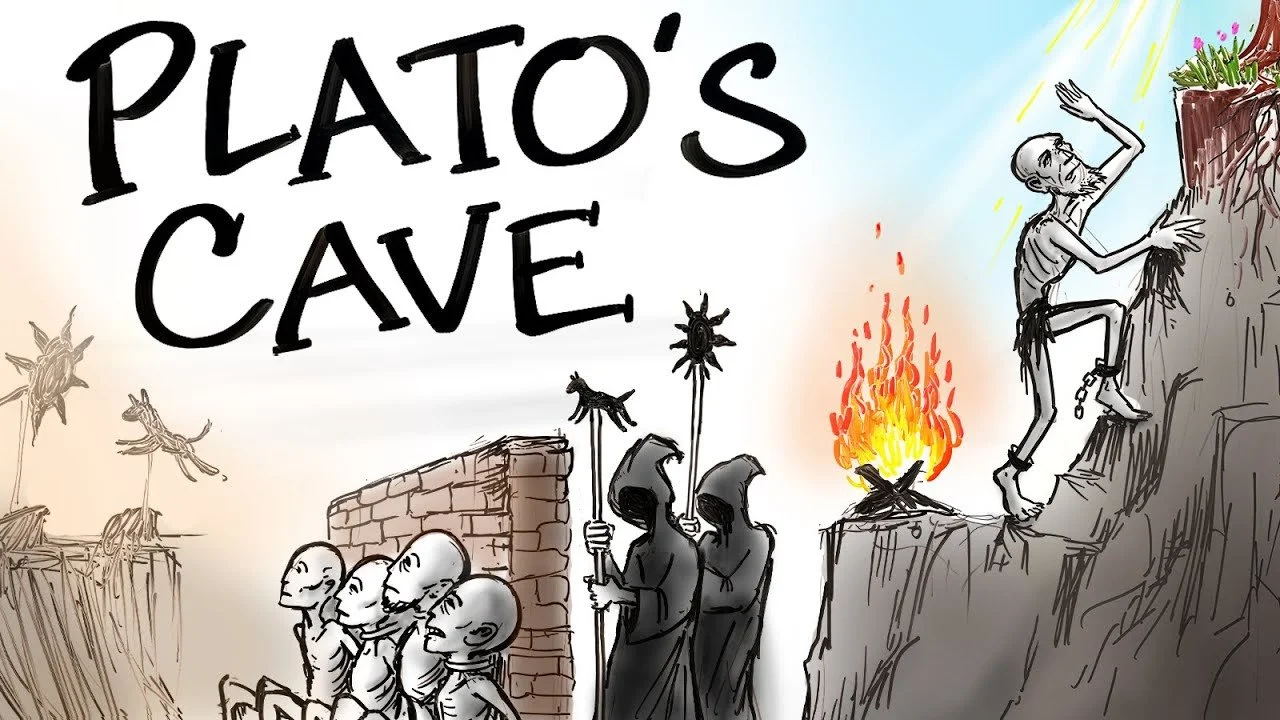
The Profound Meaning of Plato's Allegory of the Cave

October 9, 2023

In this video we explore Plato’s "Allegory of the Cave", its connection to ancient myths, and the ultimate narrative archetype we know as the Hero’s Journey. Plato's "Allegory of the Cave" is one of the most influential philosophical concepts ever introduced, encapsulating timeless questions about reality, knowledge, perception, and enlightenment. Located in Plato's seminal work, "The Republic," the Allegory of the Cave serves as a metaphorical narrative depicting the human condition's journey from ignorance to enlightenment.

The Athenian philosopher Plato (c. 428-347 B.C.) is one of the most important figures of the Ancient Greek world and the entire history of Western thought. In his written dialogues he conveyed and expanded on the ideas and techniques of his teacher Socrates.

The Academy he founded was by some accounts the world’s first university and in it he trained his greatest student, the equally influential philosopher Aristotle. Plato’s recurring fascination was the distinction between ideal forms and everyday experience, and how it played out both for individuals and for societies. In the “Republic,” his most famous work, he envisioned a civilization governed not by lowly appetites but by the pure wisdom of a philosopher-king.

Powerful Spartan Rules For Life

October 9, 2023

Spartan Warriors were one of the best and most feared soldiers of Greece in the 5th Century BC and were known for their professionalism. Their formidable military strength and commitment to guard their land helped Sparta dominate Greece.

The Battle of Thermopylae was fought in 480 BC between the Achaemenid Persian Empire under Xerxes I and an alliance of Greek city-states led by Sparta under Leonidas I. Lasting over the course of three days, it was one of the most prominent battles of both the second Persian invasion of Greece and the wider Greco-Persian Wars.

← Newer Posts Older Posts →
Featured
image_2026-01-17_204356244.png
Jan 17, 2026
Archaeologists find a supersized medieval shipwreck in Denmark
Jan 17, 2026
Read More →
Jan 17, 2026
image_2026-01-17_203016176.png
Jan 17, 2026
Free Access to Greece’s Archaeological Treasures This Sunday
Jan 17, 2026
Read More →
Jan 17, 2026
image_2026-01-17_202652467.png
Jan 17, 2026
Ancient temple rich with gold and ritual altars unearthed on Evia island
Jan 17, 2026
Read More →
Jan 17, 2026
image_2026-01-17_194536616.png
Jan 17, 2026
Signs of neolithic trading and medieval monastery among National Trust’s top discoveries of 2025
Jan 17, 2026
Read More →
Jan 17, 2026
image_2026-01-17_194400111.png
Jan 17, 2026
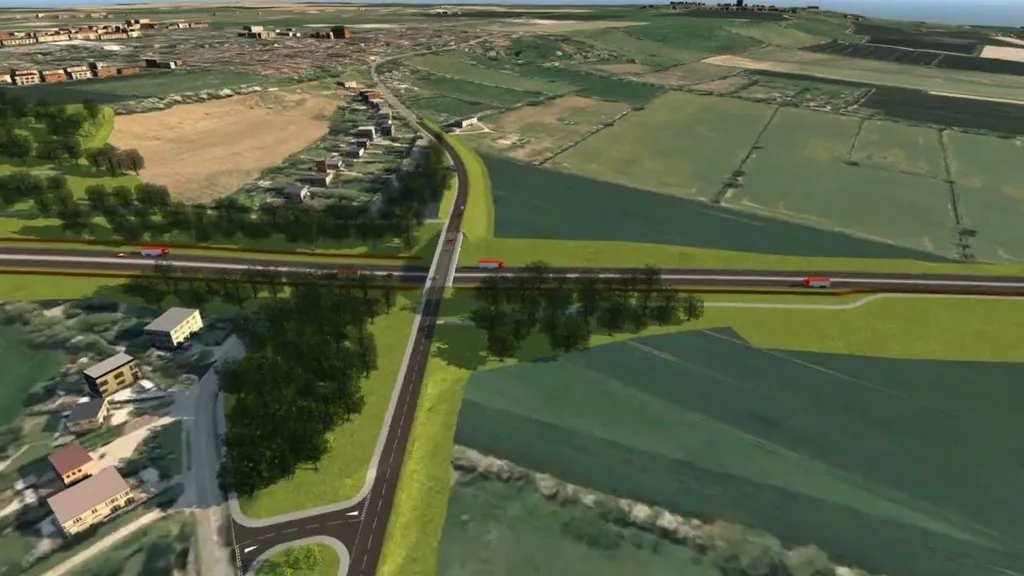
Meet £200m road team and view ancient artefacts
Jan 17, 2026
Read More →
Jan 17, 2026
image_2026-01-17_193815498.png
Jan 17, 2026
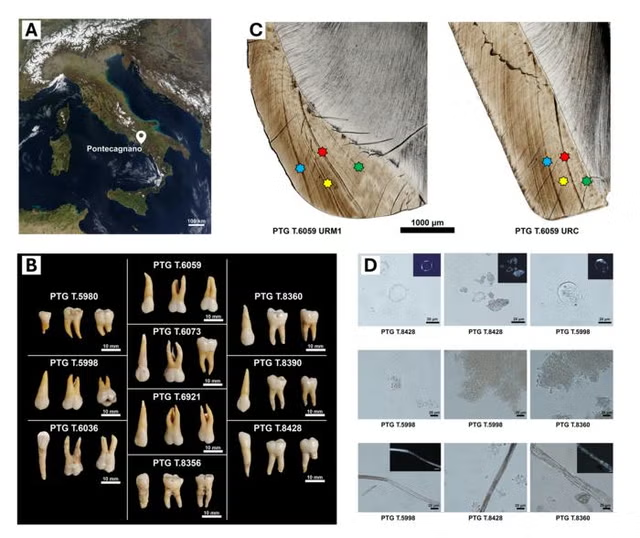
Iron Age teeth fossils reveal diversity of diet of ancient Italians
Jan 17, 2026
Read More →
Jan 17, 2026
read more

Powered by The archaeologist