Archaeologists have uncovered the wreck of a massive medieval cargo ship off the coast of Denmark, offering new insights into medieval trade and life at sea.
The ship was discovered during a seabed survey ahead of a construction project near Copenhagen. Lying on its side and partially buried in sand, it rests about 12 meters below the choppy waters of the Øresund Strait, which separates Denmark and Sweden.
By analyzing the tree rings in the ship’s wooden planks and timbers and comparing them with dated reference samples, researchers determined that the vessel was built around 1410 CE.
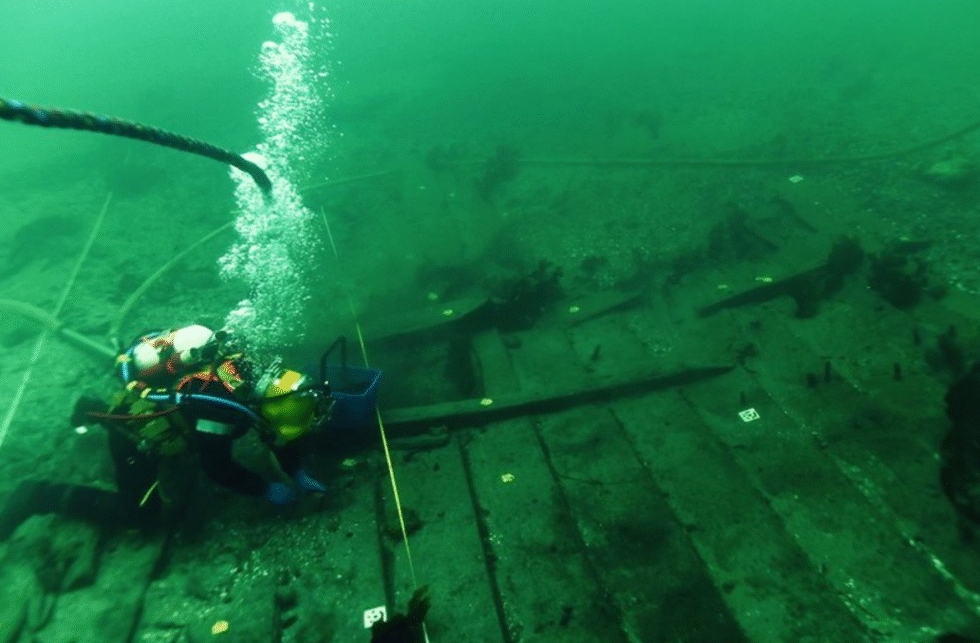
The Skaelget 2 shipwreck, with a diver for scale.
A Medieval Megaship Unearthed
Archaeologists have discovered the wreck of Svaelget 2, a massive medieval merchant ship, off the coast of Denmark, revealing new insights into trade and life at sea in the early 1400s. Its original name has been lost to history.
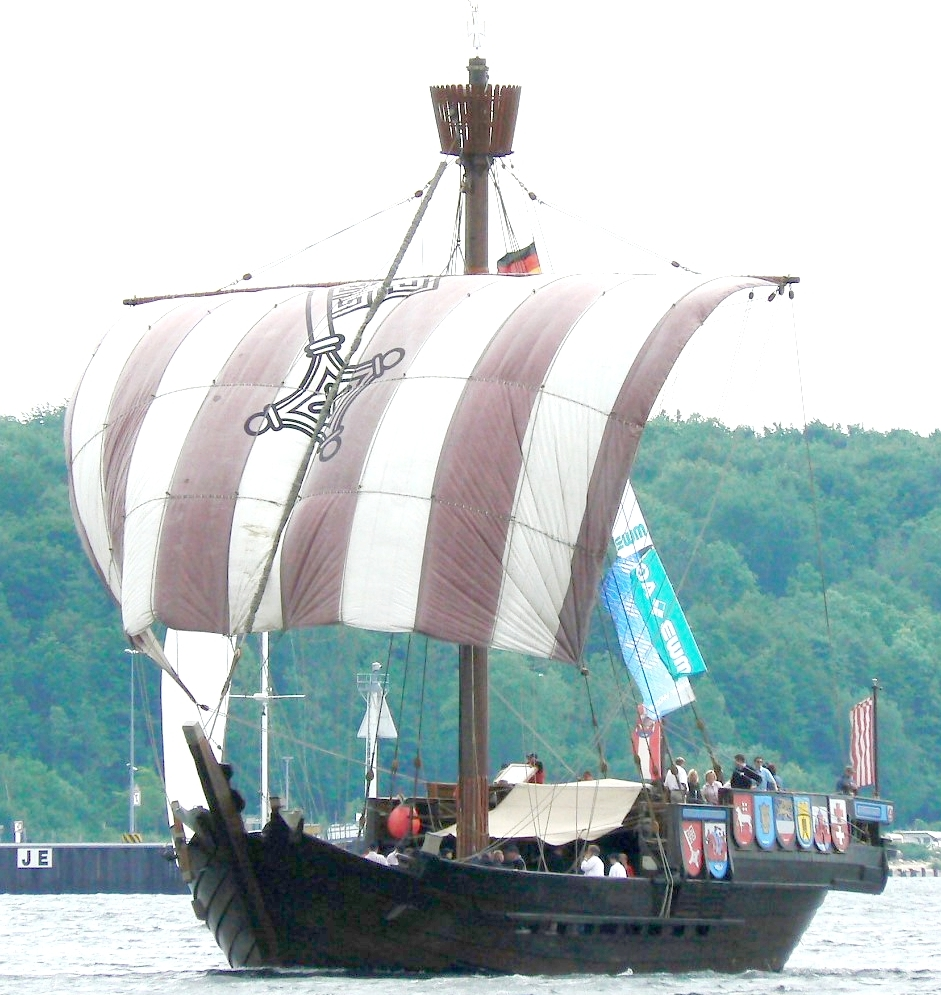
Svaelget 2 was a cog, a wide, flat-bottomed, high-sided cargo ship with a single square sail on one mast. Larger and more advanced than Viking knarrs, cogs were the supertankers of their day, transporting bulky goods across northern Europe. While typical cogs measured 15–25 meters long and carried about 200 tons, Svaelget 2 was 28 meters long, 9 meters wide, and capable of carrying around 300 tons, surprising archaeologists with its size. Its heavy timbers were cut locally in the Netherlands, while the oak planks for the hull came from Poland, showing how the ship itself was a product of the trade networks it served.
Innovative Superstructure
Thanks to layers of sand that protected the wreck for around 600 years, archaeologists could examine the upper structures rarely preserved in other cogs. The ship’s stern castle—a tall wooden structure at the back—was intact, offering shelter for crew and passengers. Stays and ropes for the mast and square sail, as well as chains for securing cargo, were also preserved, providing rare insight into medieval shipbuilding.
Life Aboard Svaelget 2
The cog would have carried 30–45 crew members, whose presence is hinted at by personal items found on deck, including combs, shoes, rosary beads, and tableware. A galley with a small brick fireplace allowed the crew to prepare hot meals in bronze pots, offering a level of comfort unusual for the period.
Cargo and the Ship’s Final Voyage
Svaelget 2 sank fully laden, as no ballast stones were found. Its open cargo hold, intended for bricks, grain, timber, fabric, and other bulk goods, had been washed away by the sea, leaving little trace of the ship’s final haul. Some cargo may have reached distant shores, while the rest likely rests at the bottom of the Øresund Strait.
Archaeologist Otto Uldum of the Viking Ship Museum said the discovery provides a unique, hands-on look at one of medieval Europe’s largest trading ships, its construction, and the daily lives of the sailors who manned it. “It’s a big step forward compared to Viking Age ships,” he said, highlighting the cog’s advanced design and its role in revolutionizing trade in northern Europe.