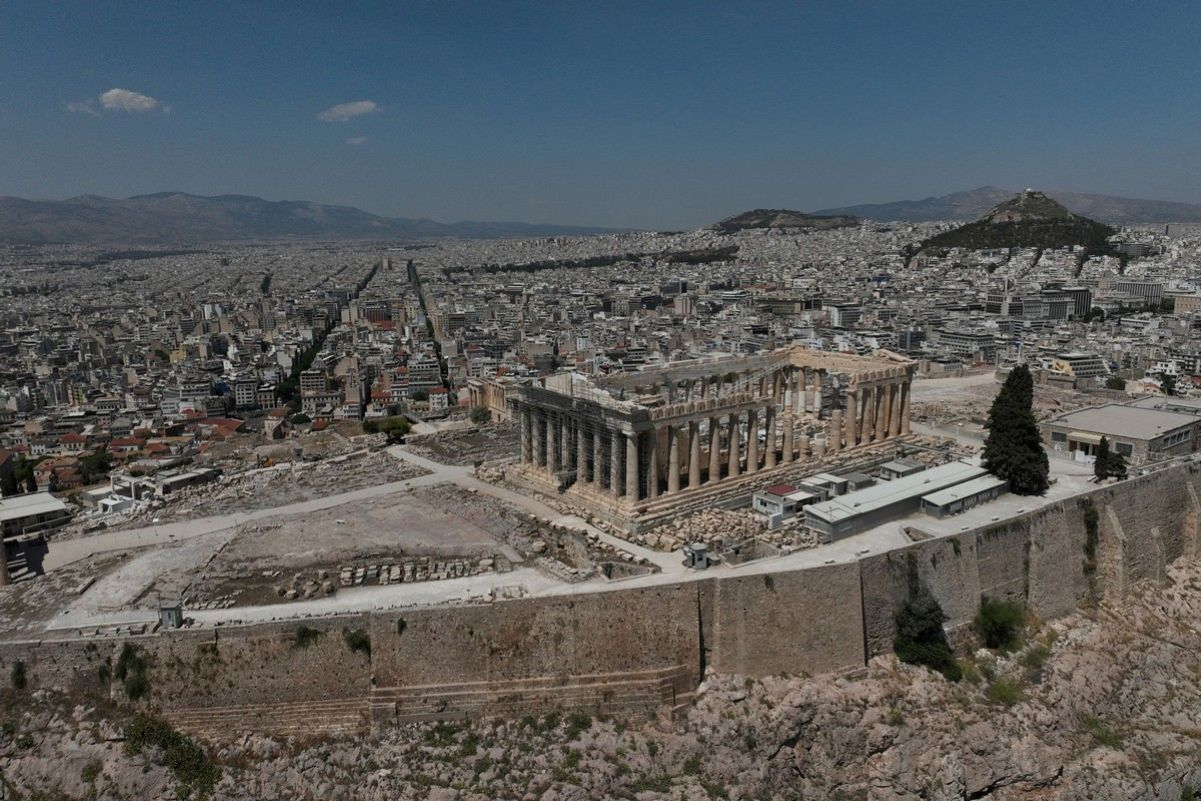
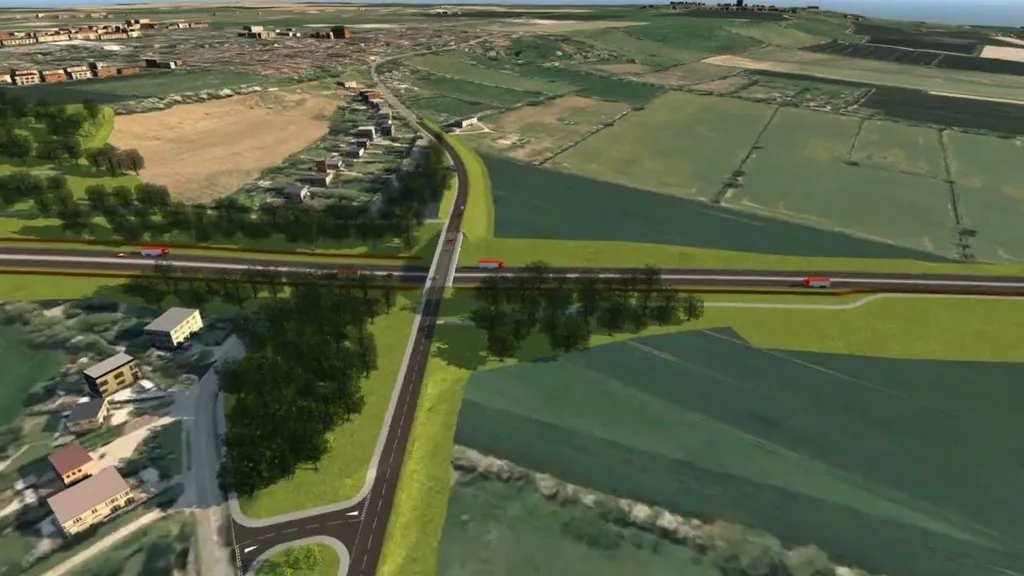
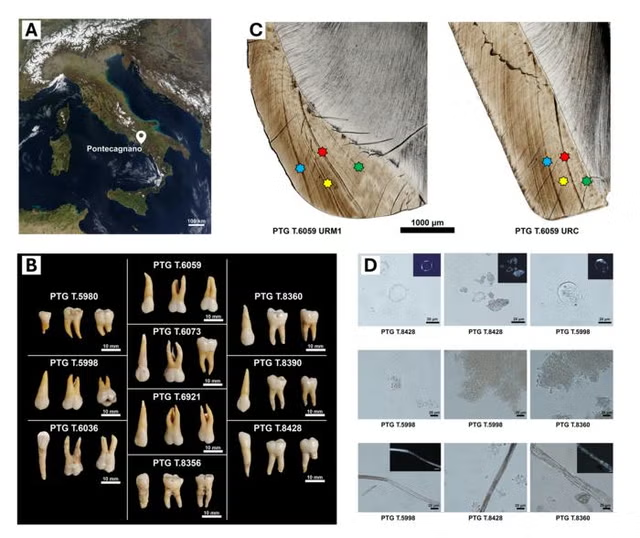
Four thousand years ago, the Harappan civilisation thrived in what is now modern-day Pakistan. By 1800 BC their cities were abandoned. Now a team of scientists think they have discovered why and where did they go. Watch the video to find out more!
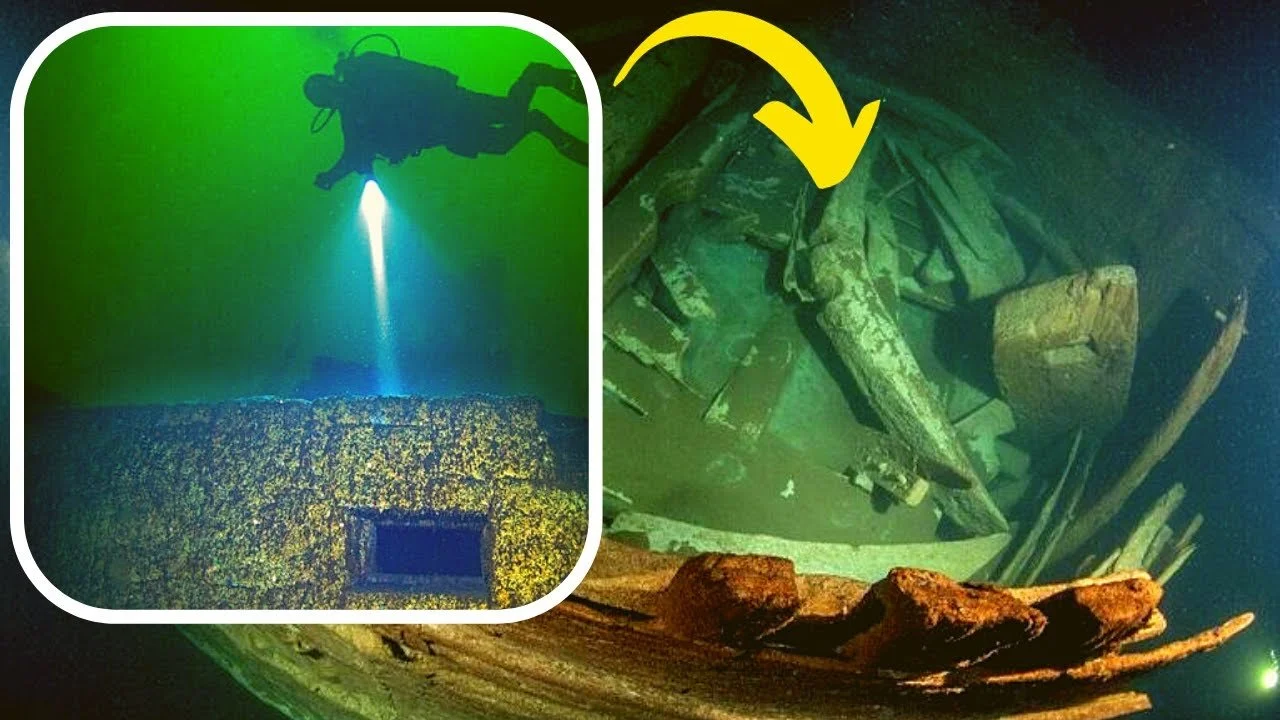
Turkish Divers Searching For Lake Monster Uncover A 3,000 Year Old Mystery
During their quest to locate a lake monster, Turkish divers have stumbled upon an enigma that dates back to 3,000 years ago.
Explorers have long said that Lake Van, the largest lake in Turkey is home to an elusive treasure in its depths, but no one has yet to find it. So when researchers from Van Yüzüncü Yıl University decided to explore the uncharted waters of the ancient lake, they knew full-well that they might come away empty-handed. But that wasn't their only fear that afternoon: an unseen danger lurking beneath the surface threatened to do much more than just hinder their research.

Marcus Aurelius: The Man Who Solved the Universe
The wise man in Stoicism is not afraid of pain, death, poverty, or any of the vicissitudes of The Human Condition, but only fears letting himself down and being less than a complete human being.
Marcus Aurelius chose a life of virtue even when he had unlimited power and resources, showing impressive self-control and commitment to being good. Marcus Aurelius believed that it is our duty as humans to be the kindest and most virtuous individuals we can be, fulfilling our potential and living up to our fullest capabilities. Watch the video for more!

6 myths about the Middle Ages that everyone believes
Medieval Europe. Where unbathed, sword-wielding knights ate rotten meat, thought the Earth was flat, defended chastity-belt wearing maidens, and tortured their foes with grisly gadgets. Except… this is more fiction than fact. So, where do all the myths about the Middle Ages come from? And what were they actually like? Stephanie Honchell Smith debunks common misconceptions about the time period.

12 Most Incredible Archaeological Artifacts Finds
The speaker in this section of a YouTube video discusses several incredible archaeological artifacts discovered around the world. These artifacts come from various time periods and travel regions, representing different cultures and civilizations.
One such artifact is a bronze sculpture of a head of a king from the Kingdom of Benin, found in Nigeria's Ido Museum of West African art. The piece was voluntarily returned by the University of Aberdeen, Scotland, after a review of its acquisition deemed it unethical. Another artifact is the Costco Deo, an ancient artifact discovered in 1976 by a fisherman in Galicia, Spain.
The Costco Deo is a beautifully decorated bowl made entirely out of a single piece of gold and decorated with six thin bands of concentric circles. Despite its unique style, the artifact does not fit the conventional design of known crowns or helmets, adding to its mystery and intrigue. Overall, the discovery of these artifacts has provided valuable insights into the past and has helped to preserve important artifacts for future generations.
The stories of incredible objects from the past always interest us, and we hope they interest you in this video.

7 Types of People Stoicism Warns Us About
Delve into the illuminating philosophies echoed by Seneca's letters, grasp the powerful warnings penned by Marcus Aurelius, and journey through Stoicism's core cautionary tales. Learn about the 7 types of individuals that Stoicism advises us to be wary of, and why. Whether you're a seasoned Stoic scholar or you're just dipping your toes into its rich teachings, this video sheds light on the characters that could divert us from a path of wisdom and virtue. It's not just about identifying these types, it's about understanding and navigating our relations with them. Ready to unravel age-old Stoic insights into human behavior?

The 5 Most Incredible Archaeological Discoveries of Recent Times
There is no hard and fast guide to what a major archaeological discovery should look like, or how old it needs to be to be considered significant.
Predicting the future is difficult, but based on our research we have done some research on the archaeological discoveries and stories we might see in 2023. Here we have compiled the latest archaeological discoveries of 2023 for you. In this video we will explore archaeological wonders big and small, and we start now. Enjoy!

The Beautiful White 'Black' Africans
Their complexion is white, their eyes are blue, and their hair is blonde. They are, nonetheless, fully African in origin. The majority of these people live in one African country. Of course, we’re referring to the Albino people, and Tanzania has the biggest concentration of these gorgeous, intriguing people.
Albinism is a genetic condition where the skin lacks melanin pigment. This results in very pale skin, eyes and hair. People with albinism, also have varying degrees of visual impairment. As a result, many albinos are legally blind and extremely light-sensitive. It affects people of all ethnic backgrounds; its frequency worldwide is estimated to be approximately one in 17,000. The prevalence of the different forms of albinism varies considerably by population and is highest overall in people of sub-Saharan African descent.
While albinism affects one in every 15 000 people in most African sub-regions, it affects one in every 1400 Tanzanians. A mutation of the albino gene OCA2, which produces the melanin pigment responsible for tanning the skin, is carried (if not exhibited) by one in every 19 Tanzanians. Albinism is more common in East Africa because rural tribes have a more isolated genetic pool, and because the society is less mobile.
Albinos are socially alienated and stigmatized. They are often called derogatory terms like "ghosts" and "white goats’, says Fundikila Wazambi of the Legal and Human Rights Centre in Tanzania. Stigmatisation means that they aren’t able to fully participate in socio-economic activities or access essential social services and that their freedom of movement is limited. They are blamed for natural disasters like famine, drought, or locust invasions by those who believe that albinos are cursed.
That deep, internal struggle felt by many with albinism often goes unnoticed by others. Because they often don't look like the people within their racial group, the question is: where do they fit? People with albinism in Tanzania have a price on their heads – whether dead or alive, adults or children. Albino trafficking isn't reported enough in Tanzania and other East and Southern African countries where their body parts are in high demand.
In East Africa, the average person with albinism dies at the age of 30 from skin cancer, and only 2% of people with albinism live to the age of 40. This needs to change. Albinos are our brothers and sisters and deserve to live stigma-free with full support from society to live full, happy lives. It is my hope that this video will inspire this paradigm shift.

New Evidence Shows Experts Have Dinosaurs' Extinction All Wrong
Recent evidence indicates that the prevailing theories regarding the extinction of dinosaurs may be erroneous, as experts have been found to have misinterpreted the available data.
Perhaps no animal, living or dead, has captivated the world in the way that dinosaurs have. But what if everything we thought we knew about these prehistoric creatures turned out to be wrong? When one paleontologist began excavating a dig site in the mountains of North Dakota, he soon discovered a lost piece of dinosaur history that may change everything we thought we knew about the terrible lizards that once ruled the world.

The First Gun Ever
What did the first firearm look like? It’s quite difficult to say for certain what the first true gun actually was— but we know where and (roughly) when it was invented. In this video, we travel to medieval China to give us an idea of what the earliest firearms were like and how they were used. From flamethrowing spears to guns that spat poison flames, we look at a number of early firearms and how they (very slowly) changed the face of war. Watch the video below for more!

The History of Central America
Central America - gorgeous, exciting and troubled. This is one of the most interesting places on Earth and yet most of us barely have a vague understanding of what this region is all about. This is not a single country, of course, but the history of the nations that live here is strongly intertwined. Today we'll have a look at the history of Central America. Enjoy!

Opening The Coffin Of King Henry V
One of the most ruthless yet celebrated Kings of England was Henry V, the man who valiantly led the English Army against the French during the Battle of Agincourt. Henry V would reign for only a short period throughout the Medieval period, and he was a King for only 9 years but he is remembered for his military skill and might. However Henry V's died early, and he would be buried inside of a ornate tomb inside of Westminster Abbey. But his tomb in the recent decades was opened and what was found was incredibly shocking.
In 1953 Henry V's tomb was opened inside of Westminster Abbey and it was found that buried in his tomb with the King was the King's close friend Richard Courtenay. This led historians to consider the role that Henry V's friend had in his life, and some even questioned if he was the King's lover. But this was a shocking discovery.

Super Kinky Facts About Sex In Ancient Babylon
Throughout the ages, different cultures have had vastly different sexual practices, ranging from mundane to bizarre. Like culture itself, sexuality is more than just a means of procreation; it is an expression of the dominant ideas of the time and can tell us a lot about what’s floating around in the collective zeitgeist of a particular society and ourselves as a species. So it goes without saying that if we peer into the sexual lives of the distant past, we find hints of ourselves, no matter how different they may have been in their expression of this fundamentally universal human activity.
Babylon (or Babylonia) was one of the first civilizations in existence, a region of settlements that is believed to have been initially established around 4000 BC. Famous for the Code of Hammurabi, Babylon was a society rich with culture, including a detailed writing system, accounting with mathematics, a diverse cuisine, and, of course, sex, with even the wild and lusty Greeks viewing the Babylonians as a sex-obsessed culture. Here is a glimpse into the world of Babylon, told through the lens of ten facts about sex in the ancient civilization.

A day in the life of an ancient Athenian
It’s 427 BCE, and the worst internal conflict ever to occur in the ancient Greek world is in its fourth year. Athens is facing a big decision: what to do with the people of Mytilene, a city on the island of Lesbos where a revolt against Athenian rule has just been put down. How did these kinds of decisions get made? Robert Garland outlines a day in the life of Athenian democracy. Watch the video for more!

The Mystery of the Trojan Horse
The age-old tale of the Trojan Horse and the fall of Troy has been recounted through generations, marking it as one of the most illustrious stories ever shared. This narrative, often depicted through vibrant art and storytelling, is soon to be explored in depth in a captivating documentary.
A monumental wooden horse, housing valiant Greek soldiers, is portrayed as a goodwill offering to the Trojans. With no suspicions, the Trojans accept this ominous gift and position it within their fortified city. As night descends, the hidden Greeks emerge from their wooden concealment, unlocking the city gates for their comrades. In merely a few hours, the indomitable city of Troy is engulfed in unyielding flames, narrating a tale of deceit and strategic triumph.
But, could the legendary horse be merely a figment of ancient imagination? The documentary delves into novel, groundbreaking findings that propose a different truth. It challenges the traditional narrative, suggesting that the famed Trojan Horse might not have been a horse at all. So, how did the ingenious Greeks achieve their historic deceit against Troy? And how will these revelations reshape the history chronicled in textbooks for future generations?
This documentary ventures beyond the myth, unraveling the mysteries surrounding one of history's most intriguing wartime strategies in Troy. Through a blend of historical evidence and scholarly interpretations, the documentary invites audiences to reevaluate a tale deeply ingrained in our cultural memory and discover the real story of Troy and the Trojan Horse.

Everything you Know About Roman Roads is Wrong
The construction of Roman roads involved laying lines from each direction until they met in the middle, suggesting a more precise method of road-building than previously thought. The traditional belief that Roman roads required digging down 3 to 6 ft for a foundation is a misconception that has been perpetuated for 400 years, despite archaeological evidence suggesting otherwise.
The image of the entire Roman Empire in Britain being paved with Roman roads is a misconception perpetuated by the media for decades.
️ The Roman roads were not always straight lines, as pre-Roman routes like the Harrow way and Pilgrim's way zigzagged across the country, suggesting that the Romans prioritized efficiency and resource accessibility over defense.
The assumption that the tools and jigs used to build Roman wagons remained the same for centuries and potentially millennia is based on no evidence whatsoever. Watch the video below to find out more!

What Happened to Dead Bodies After Big Battles Throughout History?
Given that even Neanderthals would bury their dead (even including objects with the bodies) and various human hunter-gatherer groups likewise used to bury or cremate people at specifics sites that functioned as sort of pilgrimage locations for these nomads, it should come as no surprise that since the dawn of known warfare soldiers have pondered the question of what to do with the bodies of their fallen comrades and enemies. So what did various groups actually do throughout history? Watch the video to find out!
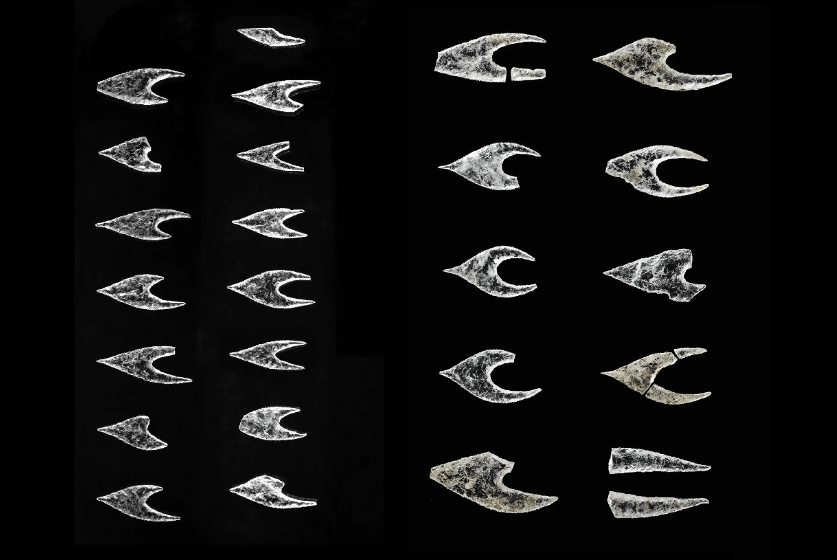
The Prehistoric Weapons Made from Crystal: A Glimpse into the Ancient Iberian Elite
In the annals of prehistory, humans have always exhibited an innate ability to adapt and innovate, especially when it comes to crafting tools and weapons. The late prehistoric Iberian Peninsula stands as a testament to this ingenuity, where an elite tradition emerged, featuring the use of rock crystals to fashion a unique array of weapons, including micro-blades, arrowheads, and daggers. This fascinating period, which coincided with the Chalcolithic Copper Age, unveiled a distinct material choice and craftsmanship that set the elite apart. In this article, we delve into the intriguing world of prehistoric crystal weapons, exploring their purpose, rarity, and the advanced lithic techniques employed in their creation.
The Tradition of Crystal Weapons
Throughout prehistory, most cultures around the world relied on cryptocrystalline materials like chert, flint, obsidian, and quartzite to manufacture their stone tools and weapons. This process, known as lithic reduction, involved striking stone flakes from a core material, using a hammerstone or similar hard hammer fabricator. The resulting tools served functional purposes in hunting, protection, and various daily tasks.
However, in parts of southern Iberia around 3,000 BC, a distinct tradition emerged. Rather than using the conventional cryptocrystalline materials, the elite opted for macro-crystalline quartz, characterized by its translucent appearance. This marked the beginning of a new era where crystal was reserved for crafting elite weaponry and amulets, distinguishing the upper echelons of society.
Functional Constraints of Crystal Weapons
Using crystal as a raw material for weapon manufacturing posed unique challenges. Unlike conventional stone, crystal is less flexible and more fragile. This made it less practical for the routine demands of tool and weapon use. As a result, other stones, such as variscite and amber, were exclusively used to craft body ornaments, leaving crystal for more specialized purposes.
Among the crystal weapons found in archaeological excavations, they were most commonly discovered in small quantities within Mesolithic burial sites. However, exceptions stand out, such as the dolmens of Lanchas I, El Corchero, and Ontiveros, where significant numbers of crystal arrowheads were unearthed. Moreover, the Cuesta de Los Almendrillos megalith yielded an impressive collection of crystal micro-blades.

The Dolmen de Montelirio Discovery
One of the most remarkable discoveries in the realm of crystal weapons occurred during the excavation of the Dolmen de Montelirio between 2007 and 2010. Here, archaeologists unearthed an 8.5-inch crystal dagger, along with crystal arrowheads and an intricately carved ivory handle. This dagger is not merely a functional tool but an artifact of great symbolic significance. It is believed to have represented vitality, magical powers, and a connection with the ancestors.
Furthermore, the Dolmen de Montelirio crystal dagger showcases an advanced level of lithic technique and craftsmanship, underlining the sophistication of the artisans responsible for its creation.
The Symbolism and Rarity of Crystal Weapons
Although crystal was readily available in the region, the scarcity of fashioned crystal weapons suggests that these objects were reserved for high-status individuals who could commission such sophisticated items. The crystal weapons found in archaeological sites offer insights into the symbolism, status, and ceremonial aspects of prehistoric Iberian society. These objects not only served as tools but also as expressions of power, spirituality, and social hierarchy.
The prehistoric crystal weapons of Iberia are a testament to the innovative nature of human societies throughout history. These unique artifacts, crafted during the Chalcolithic Copper Age, symbolize the elevated status of their owners and provide a window into the spiritual and ceremonial aspects of prehistoric Iberian culture. As we continue to explore the archaeological treasures of our past, the legacy of crystal weapons endures as a testament to human ingenuity and creativity.

Archaeologists uncovered thousands of coins and artifacts, treasures buried in an emergency 1,400 years ago, at a school in Ningbo, photos show. Photo from the Institute of Archaeology at the Chinese Academy of Social Sciences
1,400-Year-Old Treasure Discovered Beneath Chinese School Playground
In a remarkable archaeological discovery, the seemingly ordinary school playground in Ningbo, China, has unveiled a hidden world of history. Beneath the surface lay the ruins of a 1,400-year-old settlement, complete with storage pits and thousands of valuable artifacts. This find offers a unique glimpse into the past, buried under the playground where schoolchildren once played.
The Institute of Archaeology at the Chinese Academy of Social Sciences unveiled this extraordinary discovery on October 10, 2023. The excavation, carried out during the preparations for a school construction project, revealed 65 pits, eight wells, and various ancient structures, all dating back over a millennium. These remnants paint a picture of a once-vibrant settlement.

Some of the coin stacks found under the playground. Photo from the Institute of Archaeology at the Chinese Academy of Social Sciences
One of the most captivating aspects of this discovery is the collection of copper coins, totaling 2,478 in number. In one storage pit, archaeologists found 796 neatly stacked copper coins, each featuring square holes in the center, offering a visual representation of ancient currency. Another 1,682 coins were found in a nearby well. These coins, along with their manner of burial, suggest that they were hidden by residents as an emergency measure during a period of rebellion and famine in the sixth century A.D.

The acorns found in one of the storage pits. Photo from the Institute of Archaeology at the Chinese Academy of Social Sciences
In addition to the coins, the excavation revealed well-preserved plant remains in one of the pits, including bamboo, gourds, peach pits, and a substantial quantity of acorns. This botanical evidence sheds light on the dietary habits and agricultural practices of the people who inhabited the area over a millennium ago.
Apart from the coins and plant remnants, the storage pits and wells contained a variety of artifacts, such as pottery fragments, tiles, altars, washbasins, and more. Among these treasures, archaeologists discovered two well-preserved lamps that were once part of a bronze chandelier. These lamps date back to the Han dynasty (206 B.C. to 220 A.D.) and the Six Dynasties period (220 A.D. to 589 A.D.), showcasing a rich historical and cultural heritage.

Two lamps, part of a bronze chandelier, found in a well. Photo from the Institute of Archaeology at the Chinese Academy of Social Sciences
Ningbo, located in Zhejiang province, has a history rich in significant archaeological discoveries, and this recent find adds another layer to its historical tapestry. As experts continue to analyze and interpret the significance of this discovery, the school playground in Ningbo has transformed into a place of historical intrigue. It provides a remarkable window into the lives of the people who once inhabited this settlement and the events that led them to bury their precious treasures in a time of desperation during a tumultuous period in history.
This discovery serves as a poignant reminder that history can often lie hidden just beneath our feet, waiting to be unearthed and shared with the world.

One of the wells found under the playground. Photo from the Institute of Archaeology at the Chinese Academy of Social Sciences

Earthworks Created by Indigenous Peoples 500 to 1,500 Years Ago Were Discovered in the Amazon
The Amazon rainforest, often referred to as the "lungs of the Earth," is a region teeming with natural beauty and biodiversity. Yet, beneath its lush canopy, a hidden history is slowly revealing itself. A recent study published in Science has uncovered an astonishing number of ancient earthworks created by indigenous peoples who lived in the Amazon 500 to 1,500 years ago. These earthworks, with almost 10,000 yet to be discovered, offer intriguing insights into the lives and cultures of ancient Amazonian civilizations.
Earthworks are structures made by manipulating the earth's surface, whether through the digging of ditches or the raising of mounds. These enigmatic structures have been linked to various purposes, such as ceremonial and defensive functions. They provide a window into the past, shedding light on how these ancient communities lived and interacted with their environment.
Many pre-European colonial Amazonian earthworks have been unearthed in deforested areas, but researchers have long suspected that a multitude of similar sites remain hidden beneath the dense Amazonian rainforest. To reveal these concealed relics, scientists employed a powerful tool - lidar, or light detection and ranging technology. Lidar uses laser pulses to scan the earth's surface, creating detailed 3D maps of the terrain. This technology allowed researchers to detect earthworks that were otherwise hidden beneath the forest canopy.
According to geographer Vinicius Peripato, a researcher at Brazil's National Institute for Space Research, "Lidar is really essential to confirm the presence of the structures, especially beneath the forest." Through lidar analysis, researchers identified 24 previously unknown earthworks, each offering a unique glimpse into the past. These newly discovered earthworks varied in form and function, ranging from settlements with plazas and fortified villages to megalithic buildings and geoglyphs.
Impressively, the lidar survey covered only a minuscule 0.08% of the vast Amazon rainforest, which spans an area of 2.6 million square miles (6.7 million square kilometers). Despite this limited scope, the researchers managed to map 937 existing earthworks and used an algorithm to identify additional sites based on shared topographic characteristics. To narrow down the possibilities further, they analyzed tree survey data, looking for signs of the 79 species known to have been cultivated and grown by pre-Columbian cultures.
The results were staggering. The model suggested that over 10,000 earthworks remain hidden beneath the Amazon's canopy, with the known sites representing just a fraction, no more than 9% of the potential discoveries. These findings fundamentally alter our understanding of the Amazon jungle's history. Previously, many scientists believed the forest had remained untouched for ages, but the earthworks suggest otherwise, indicating that the Amazon was once home to thriving indigenous populations.
Dr. Michael Heckenberger, a professor of anthropology at the University of Florida, noted, "The conclusions are not surprising but follow a trend in Amazonian studies to increase the scale, density, and impact of human occupations on the Amazon forest." These findings illuminate the dynamism and innovation of indigenous cultures in the Americas, challenging the notion of the Amazon as an untamed wilderness.
The discovery of these earthworks carries not only scientific significance but also societal implications. Indigenous Amazonians can use this research to assert their longstanding presence in the jungle, defending their land rights. These revelations might also inspire new archaeological expeditions to previously unexplored corners of the Amazon, expanding our knowledge of this ancient and diverse ecosystem.
As the secrets of the Amazon continue to unfold, the rainforest's value as a treasure trove of knowledge and culture becomes increasingly apparent. The Amazon is not just a source of natural wonder but also a repository of untold stories from the past, waiting to be revealed by modern technology and inquisitive minds.