• MAIN PAGE
  • LATEST NEWS
    • Lost Cities
    • Archaeology's Greatest Finds
    • Underwater Discoveries
    • Greatest Inventions
    • Studies
    • Blog
  • PHILOSOPHY
  • HISTORY
  • RELIGIONS
    • Africa
    • Anatolia
    • Arabian Peninsula
    • Balkan Region
    • China - East Asia
    • Europe
    • Eurasian Steppe
    • Levant
    • Mesopotamia
    • Oceania - SE Asia
    • Pre-Columbian Civilizations of America
    • Iranian Plateau - Central Asia
    • Indus Valley - South Asia
    • Japan
    • The Archaeologist Editor Group
    • Scientific Studies
    • Aegean Prehistory
    • Historical Period
    • Byzantine Middle Ages
    • Predynastic Period
    • Dynastic Period
    • Greco-Roman Egypt
  • Rome
  • PALEONTOLOGY
  • About us
Menu

The Archaeologist

  • MAIN PAGE
  • LATEST NEWS
  • DISCOVERIES
    • Lost Cities
    • Archaeology's Greatest Finds
    • Underwater Discoveries
    • Greatest Inventions
    • Studies
    • Blog
  • PHILOSOPHY
  • HISTORY
  • RELIGIONS
  • World Civilizations
    • Africa
    • Anatolia
    • Arabian Peninsula
    • Balkan Region
    • China - East Asia
    • Europe
    • Eurasian Steppe
    • Levant
    • Mesopotamia
    • Oceania - SE Asia
    • Pre-Columbian Civilizations of America
    • Iranian Plateau - Central Asia
    • Indus Valley - South Asia
    • Japan
    • The Archaeologist Editor Group
    • Scientific Studies
  • GREECE
    • Aegean Prehistory
    • Historical Period
    • Byzantine Middle Ages
  • Egypt
    • Predynastic Period
    • Dynastic Period
    • Greco-Roman Egypt
  • Rome
  • PALEONTOLOGY
  • About us
No results found

The Origins of the Greeks: Unraveling the Mysteries of Minoans, Pelasgians, and Cycladic Culture

January 20, 2024

The origins of the ancient Greeks have long fascinated historians and archeologists, with numerous theories and debates surrounding the early development of Greek civilization. This article seeks to delve into the complex tapestry of the Greek past, exploring the enigmatic Minoans, Pelasgians, and Cycladic cultures and shedding light on the diverse theories regarding the ethnogenesis and evolution of the Greek people.

Minoans: Europe's First Major Civilization

The Minoans, renowned as Europe's first major civilization, flourished on the island of Crete during the Bronze Age. Their sophisticated artwork, architectural feats, and extensive trade networks have captivated scholars for centuries. Despite these achievements, the Minoan language remains a mystery, with no clear links to Greek, posing significant challenges in unraveling their history and culture.

Pelasgians: A Debated Connection with the Minoans

The relationship between the Pelasgians and the Minoans has sparked considerable debate among historians and archaeologists. While some theories propose a connection between the two, robust evidence is required to establish this link conclusively. The Pelasgian language and culture remain elusive, known primarily through artistic depictions and archaeological discoveries, leaving much to be explored and understood about their place in early Greek history.

CYCLADIC Culture: Uncovering Enigmatic Origins

The Cycladic people present another enigma in the narrative of Greek origins. It is difficult to piece together this ancient culture's history and influence on early Greek civilization because we don't know the language they spoke. Artistic relics and archaeological findings provide glimpses of their culture, yet much remains shrouded in mystery, awaiting further exploration and discovery.

Proto-Greeks and Ethno-Genesis

The Greek civilization traces its origins to the proto-Greeks of the third millennium BCE. The diversification of the proto-Indo-European language into various dialects led to the emergence of pre-pro-Greek as a distinct dialect. The migration of proto-Greeks from the Pontic-Caspian steppe region to the southern Balkan Peninsula brought them into contact with local populations and tribes, shaping the early foundations of Greek culture and identity.

Cultural Exchanges and Ethnogenesis

Cultural exchanges and interactions with non-Greek populations have had a significant impact on the evolution of Greek society. The Mycenaean and Minoan civilizations, sharing a significant portion of their ancestry from Neolithic farmers of Western Anatolia, played crucial roles in shaping early Greek identity. Modern Greeks bear resemblance to the Mycenaeans, albeit with an additional dilution of their early Neolithic ancestry.

first national unity of Greek Identity in the Archaic Period

Trade, political advancements, and colonization all contributed to the emergence of Greek civilization and identity in the Archaic Period. Interactions with non-Greek peoples and cultures facilitated the exchange of ideas, contributing to the evolution of Greek culture and identity.

Foundations of Greek Identity

The promotion of solidarity and Greek identity was embodied in the Olympic Games, serving as a unifying force. Additionally, foundational texts such as Theogony and The Iliad, as well as the establishment of institutions like the Oracle of Apollo at Delphi, served to bring together delegates from different Greek city-states, fostering mutual religious convictions and solidifying Greek identity.

Unification Against a Common Enemy

The Persian Wars played a pivotal role in unifying the Greeks against a common enemy. The experience of repelling Persian invasions consolidated the Greek people's sense of singular identity as defenders of Greek freedom and autonomy, strengthening the cohesive bond of the Greek city-states.

In conclusion, the origins of the ancient Greeks are rich with complexity and intrigue, encompassing enigmatic civilizations, diverse interactions, and the formation of a distinct Greek identity. The ongoing exploration of Minoan, Pelasgian, and Cycladic culture, alongside the diverse theories and historical narratives, continues to shape our understanding of the early Greek world, illuminating the multifaceted tapestry of the Greek past.

In Greece's Historical Period

The Revelations of Alexander Solzhenitsyn: Exposing the Brutality of the Soviet Union

January 20, 2024

Renowned for his unyielding courage in the face of oppression, Alexander Solzhenitsyn was a literary giant whose unflinching pen laid bare the brutal reality of life under communism in the Soviet Union. Through his writings, Solzhenitsyn delivered damning revelations that resonated across the globe, fundamentally altering perceptions of the Soviet system and shaping the course of the Cold War.

Solzhenitsyn's harrowing experiences, documented in his writings, brought to light the horrors of life under the repressive Soviet regime. His seminal work, "One Day in the Life of Ivan Denisovich," published during the Khrushchev "thaw" following his own release from the gulag system, provided a searing depiction of the harsh realities faced by countless individuals unjustly imprisoned and forced into labor camps.

Having questioned the prevailing Soviet narratives during World War Two, Solzhenitsyn's unwavering commitment to truth resulted in his arrest in East Prussia and subsequent incarceration in the brutal gulag system. It was within the confines of these camps that he encountered numerous individuals who shared their own stories of unjust arrests and the atrocities committed by the NKVD, solidifying his resolve to expose these injustices through his writing.

Despite Khrushchev initially defending his publication, Solzhenitsyn was subject to intense scrutiny and close surveillance by the Soviet secret police because of the provocative nature of his work. His subsequent book, "Gulag Archipelago," which laid bare the decades of brutality under the Soviet system, was perceived as a direct threat to the Soviet state. In fact, an assassination attempt using the toxic chemical ricin in 1971 signaled the extent to which his writings posed a challenge to the status quo.

Not content with solely exposing the repressive nature of the Soviet Union, Solzhenitsyn also took aim at the pro-Soviet rhetoric prevalent in the Western press. His accounts of Western nations, including England, supporting Soviet lies and unjustly repatriating fleeing refugees during World War Two elucidated the deep impact of his work on socialist intellectuals, challenging their support for socialist states during the Cold War.

The release of "Gulag Archipelago" sent shockwaves through the Western world, leading to a reevaluation of socialist movements and a revival of scrutiny on the Soviet Union. Solzhenitsyn's seminal work precipitated a shift in socialist intellectuals' perspectives, drawing attention to alternative revolutionary expressions and ultimately contributing to a transformation in Western views on the Soviets and the inevitable collapse of the Soviet Union.

Despite facing allegations of supporting Nazi movements and hatred for his country, Solzhenitsyn's steadfast commitment to truth and unwavering courage in the face of totalitarian control remain a poignant reminder of the enduring relevance of his warnings about collectivist systems. His legacy serves as a powerful testament to the extraordinary impact of a single individual's resolve and the enduring power of the written word in exposing injustice and tyranny.

In an era where the threat of totalitarian control looms large, Solzhenitsyn's revelations continue to serve as a stark reminder of the enduring relevance of his warnings and the indomitable power of truth in the face of oppression.

Tags History

NEW DISCOVERY: 8,500-Year-Old Trepanned Human Skull Discovered at Çatalhöyük

January 19, 2024

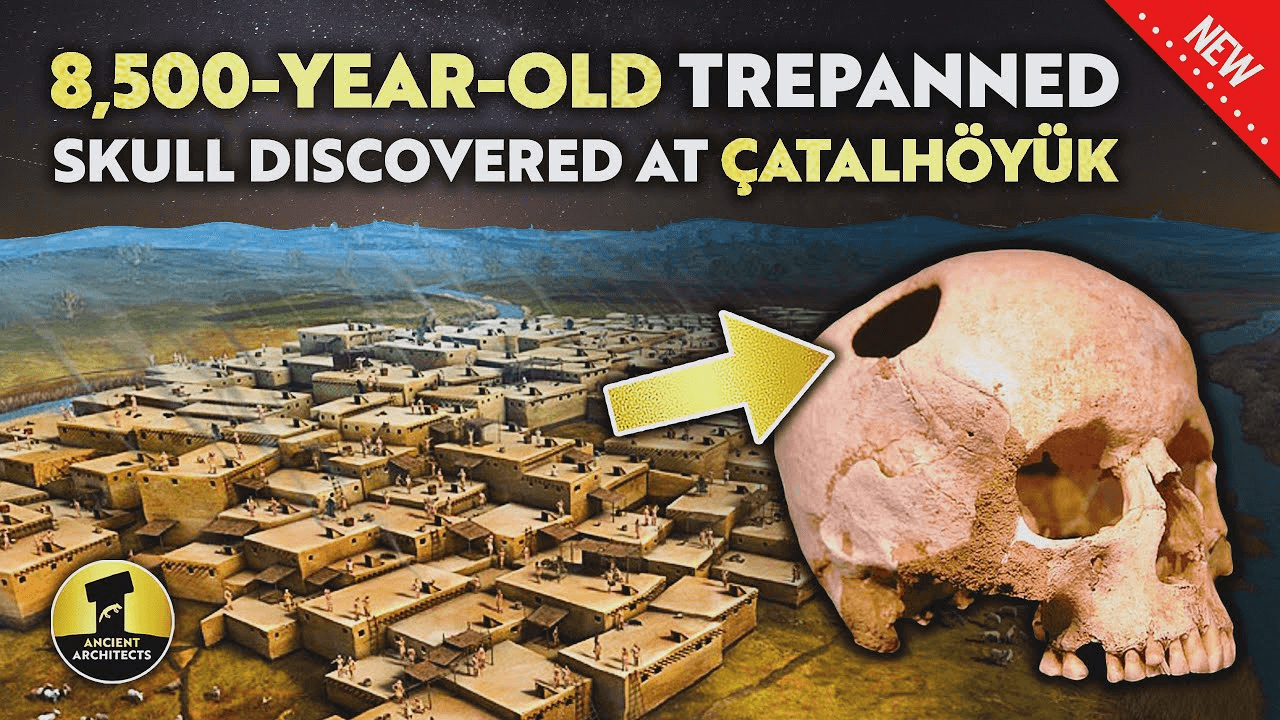
Embark on a journey into the ancient past with a groundbreaking discovery at Çatalhöyük, a mesmerizing proto-city in Turkey’s Central Anatolian Plateau. Dating back to a remarkable period between 7,500 and 6,400 BC, this UNESCO World Heritage site has unveiled evidence of trepanation, an ancient skull drilling operation that sheds light on early medical practices.

Trepanation, involving the deliberate drilling of a hole into the human skull, was a medical procedure believed to address various health issues by numerous ancient cultures worldwide. The newfound example in Turkey stands as one of the oldest instances ever uncovered, providing a glimpse into the medical practices of a thriving community that once inhabited the expansive 34-acre site of Çatalhöyük. In its zenith, this proto-city is estimated to have been home to a bustling population of up to 10,000 people.

Join us in this captivating video as we delve into the significance of this extraordinary archaeological find, unraveling the mysteries of ancient medical interventions and gaining insights into the lives of our ancestors at Çatalhöyük.

10 Historical Figures Brought to Life

January 19, 2024

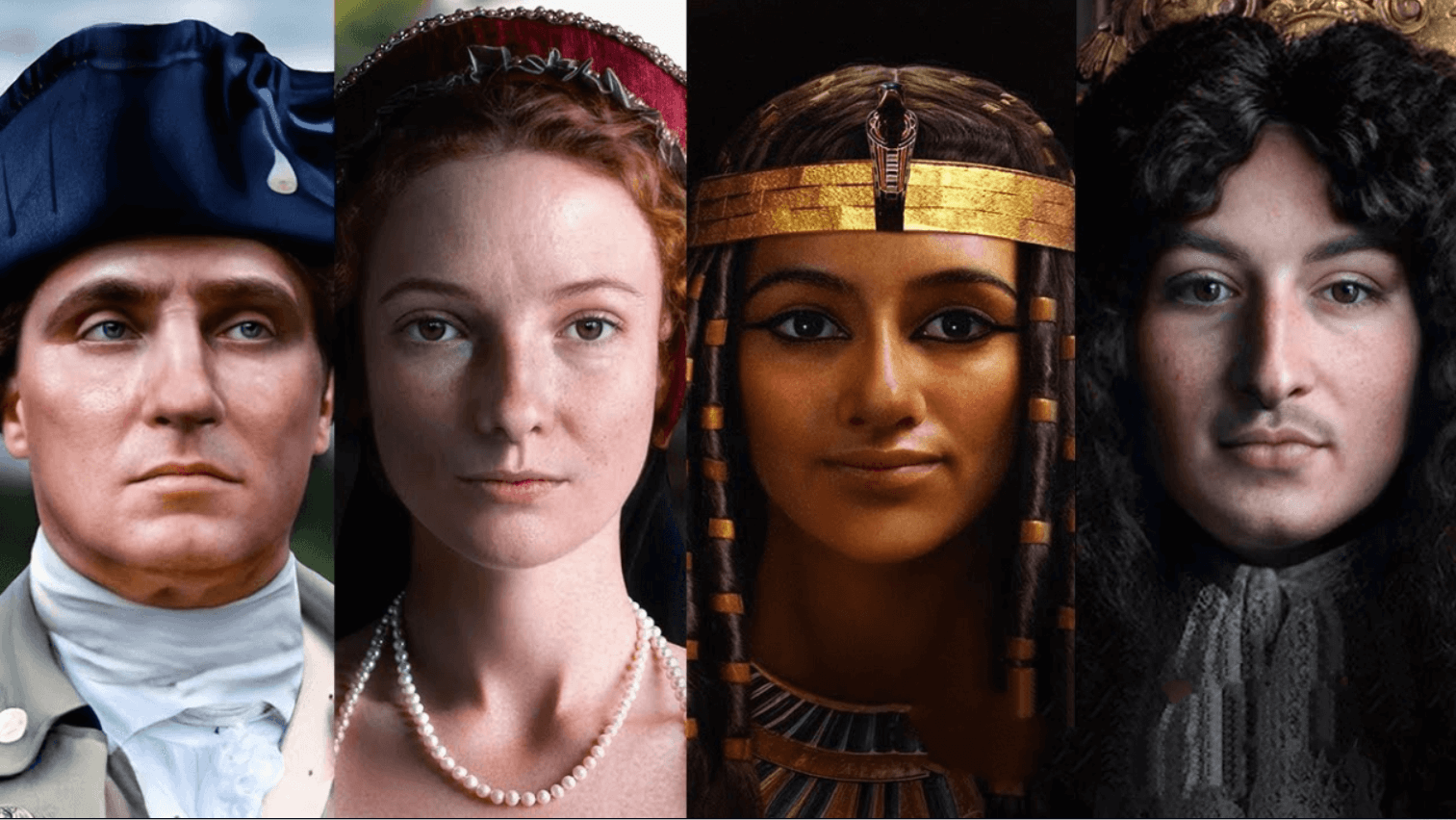
Explore the fascinating world of historical recreations as we unveil the top ten figures brought back to life through meticulous reconstruction:

  1. Richard III: Peer into the face of the infamous king whose remains were discovered beneath a parking lot, reshaping our understanding of history.

  2. Hatshepsut: Witness the rebirth of the powerful female pharaoh, known for her remarkable reign in ancient Egypt.

  3. Jane Austen: Immerse yourself in the countenance of the beloved literary figure whose timeless works continue to captivate readers.

  4. Joan of Arc: Gaze upon the visage of the courageous French heroine who played a pivotal role in the Hundred Years' War.

  5. Boudicca: Behold the reconstruction of the fierce Celtic queen who led a rebellion against Roman rule in ancient Britain.

  6. King Louis XIV: Step into the court of the Sun King, one of the most influential monarchs in French history.

  7. Harriet Tubman: Encounter the face of the fearless abolitionist and conductor of the Underground Railroad, who guided numerous slaves to freedom.

  8. Queen Elizabeth II: Witness the regal presence of the longest-reigning current monarch, Queen Elizabeth II.

  9. Cleopatra: Reimagine the beauty and power of the last pharaoh of Ancient Egypt, Cleopatra.

  10. Henry VIII: Confront the imposing figure of the Tudor king known for his six marriages and transformative impact on English history.

These recreations offer a glimpse into the faces of history, allowing us to connect with the individuals who shaped the course of time and left an indelible mark on the world.

As The Glaciers Melted On This Mountainside, A Frightening Sight Emerged

January 19, 2024

In the chilling aftermath of glacial melt in the serene landscapes of Trentino, northern Italy, a horrifying spectacle unfolded – the emergence of frozen corpses dating back to World War I. As the glaciers yielded to the warming climate, a grim chapter of history was unveiled.

Maurizio Vicenzi, navigating the snowy slopes of San Matteo, stumbled upon an unsettling tableau – three corpses suspended from an ice wall. These silent witnesses from the past, preserved in their icy tombs, offer a poignant reminder of the dark and sinister secrets that lie beneath the seemingly tranquil exterior of this mountainous region.

The frozen corpses, remnants of the tragic events of World War I, bring to light the enduring impact of conflict on the landscape. Their discovery, a haunting testament to the relentless passage of time, serves as a stark reminder of the human toll exacted by war and the profound ability of nature to unveil forgotten narratives.

12 Most Abandoned Ancient Technologies That Really Exist

January 19, 2024

Embark on a journey through time as we marvel at the extraordinary creations of our ancient ancestors. While their achievements stand as testament to human ingenuity, the methods and techniques they employed remain shrouded in mystery. The secrets of ancient technology present a puzzle as perplexing as the innovations we anticipate in the future.

In this video, we unravel the enigma surrounding the construction of awe-inspiring ancient marvels. Though the artifacts and structures have withstood the test of time, the intricacies of their creation have eluded us across the centuries. The craftsmanship and engineering prowess of our forebears continue to astound, leaving us grappling with the unanswered question: How were these remarkable feats accomplished?

Join us in a quest for understanding, as we delve into the captivating realm of ancient technology. As we peer into the past, the echoes of lost knowledge beckon us, and we find ourselves on a perpetual quest to unveil the secrets that time has veiled.

Who were the Nephilim?

January 19, 2024

The Nephilim are enigmatic figures mentioned in the book of Genesis in the Bible, specifically in Genesis 6:1-4. The exact nature and identity of the Nephilim have been the subject of much debate and interpretation throughout history.

The biblical passage describes the Nephilim as the offspring of the "sons of God" and the "daughters of men." The term "sons of God" has led to various interpretations, with some suggesting that these beings were fallen angels or divine beings, while the "daughters of men" were human women. The union between these two groups supposedly resulted in the Nephilim.

One prevailing interpretation is that the Nephilim were giants, based on the mention of them being "mighty men of old" and "men of renown." This perspective is found in various ancient Jewish texts, as well as later Christian traditions.

However, interpretations vary, and not all agree on the identity of the Nephilim. Some scholars argue that the term may not necessarily refer to giants but could symbolize a group of powerful and oppressive individuals. The ambiguity of the biblical text has allowed for a range of perspectives, and the true nature of the Nephilim remains a mystery with no consensus among scholars or religious traditions.

What Happened When Pompeii Erupted (Minute by Minute)

January 19, 2024

Embark on a journey through the ancient streets of Pompeii as we unravel the harrowing events of the fateful day when the volcano erupted, etching the city into the annals of history as one of the most infamous disaster locations. Join us to witness the catastrophic aftermath of nature's fury, as the once vibrant city of Pompeii succumbed to the relentless force of the volcano.

In this exploration, discover the chilling transformation of Pompeii into a haunting landscape of ash, where the very essence of life was frozen in time. The remnants of this natural disaster have left an indelible mark, immortalizing the city's inhabitants in a petrified state. Join us in this poignant journey through history, where the streets of Pompeii echo with the silent testimony of a calamity that forever altered the course of time.

AI generated image

12 Most Ancient Archaeological Discoveries Scientists Still Can't Explain

January 18, 2024

Delve into the intriguing enigma of our past as we grapple with the challenge of understanding the actions and creations of our ancient ancestors. Despite the belief that knowledge of the past should surpass that of the future, we find ourselves confronted with numerous mysteries. The intricate actions and artifacts left behind by our forebears often elude our comprehension, casting a veil of uncertainty over their significance.

Join us in this video as we unveil some of the most perplexing discoveries unearthed by archaeologists—objects and places that continue to baffle our modern sensibilities. These remnants from antiquity beckon us to decipher the cryptic narratives embedded within, shedding light on the rich tapestry of our shared history. Peer through the lens of mystery and marvel at the resilience of the past that, despite the passage of time, persists in captivating our imagination.

Egypt’s Forgotten Pyramid: The Ruined 'Layer Pyramid' of Zawyet el Aryan

January 18, 2024

Explore the enigmatic history of the Layer Pyramid, nestled in the necropolis of Zawyet el Aryan in Northern Egypt, a silent witness to the mysteries of the 3rd Dynasty of the Old Kingdom.

Regrettably, this once significant pyramid now languishes within the confines of a restricted military area, overshadowed by neglect and forgotten by time. Over a century has passed since any archaeological endeavor has graced its presence, leaving a void filled with conflicting and incomplete information.

The Layer Pyramid's purpose remains elusive; no artifacts have surfaced, and the absence of a burial trace adds to the perplexity. The very nature of the pyramid—whether it was intended as a burial structure or abandoned mid-construction—remains an unanswered question.

Tragically, this historical relic is currently left to decay within a military perimeter. Without swift intervention, the Layer Pyramid teeters on the brink of irreparable loss. As the sands of time continue to erode its essence, urgent action is required to preserve this ancient enigma before it fades into oblivion.

10 of the RAREST Animals on Earth

January 18, 2024

Dive into the fascinating world of some of the rarest and most endangered species on Earth in this video. Join us as we explore the unique characteristics and precarious existence of these remarkable creatures:

1. Vaquita (Phocoena sinus)

2. Eastern Black Crested Gibbon (Nomascus nasutus) and Hainan Gibbon (Nomascus hainanus)

3. Greater Bamboo Lemur (Prolemur simus)

4. Madagascar Pochard (Aythya innotata)

5. Orange-Bellied Parrot (Neophema chrysogaster)

6. Palos Verdes Blue (Glaucopsyche lygdamus palosverdesensis)

7. Chinese Giant Salamander (Andrias davidianus)

8. St. Lucia Racer (Liophis ornatus)

9. Jamaican Iguana (Cyclura collei)

10. Devils Hole Pupfish (Cyprinodon diabolis)

Witness the extraordinary beauty and diversity of these species, while also reflecting on the urgent need for conservation efforts to ensure their survival in the face of numerous threats.

Pompeii: Inside The Ancient City That Was Buried Alive

January 18, 2024

Pompeii remains suspended in time since the eruption of Mount Vesuvius in 79 AD, concealing ancient secrets that are now being unveiled through cutting-edge technologies. Despite meticulous conservation efforts, the city faces constant threats from extensive tourism, the looming danger of landslides, and the ever-present possibility of another devastating eruption from Mount Vesuvius.

Journey into the heart of Pompeii's mysteries with us, as we explore its rich past and the intersection of ancient civilizations, from bygone eras to the Space Race. Every week, experience award-winning documentaries featuring some of the world's preeminent historians. Stay tuned for immersive tales of the past, where the echoes of history come to life through the lens of groundbreaking technology.

14 Animals So Strange You Won't Believe They Exist

January 17, 2024

The video presents 14 unique and rare animals from around the world that many people may not know exist. These creatures have evolved over thousands of years and display unusual physical features and behaviors that make them stand out. Some of the animals featured in the video include:

1. Red-Lipped Batfish

2. Lowland Streaked Tenrec

3. Tufted Deer

4. Blue Glaucus

5. Aye-Aye

6. Star-Nosed Mole

7. Blobfish

8. Goblin Shark

9. Saiga Antelope

10. Gerenuk

11. Pink Fairy Armadillo

12. Cantor's Giant Softshell Turtle

13. Purple Frog 14. Okapi

Physics Reveals How the Pyramids were Actually Built

January 17, 2024

The Great Pyramids of Giza are the oldest and longest surviving wonders still in existence. This video explores the forces involved in building the pyramids, including the lifting power needed to lift a 10-ton block.

The Egyptians did not leave behind schematics for their construction process, but using basic principles of physics and geometry, the video backwards engineers the machine they used to lift the blocks. The Great Pyramid of Giza, which initially stood 481 feet tall, took 27 years to complete and is made up of around 2.3 million limestone blocks, with an average weight of 2.5 tons.

The blocks at the base of the pyramid weigh up to 10 tons. The ancient Egyptians used a simple machine, later named the Herodotus machine after the historian who documented its use, to lift the blocks. The machine consisted of a large wooden beam secured with heavy rope and a wooden scaffold built around the block.

The basic operation involved tilting the block to the left, inserting two wooden slats on the right, pivoting the block around the slats on the right, and then inserting more slats on the left before pivoting the block around the slats on the left. This process repeats, adding more slats each time, until the block reaches its desired location.

Animals That CAME BACK From Extinction

January 17, 2024

Scientists are exploring the possibility of using biotechnology to bring back extinct species. One species that could help fight climate change is the woolly mammoth, which could help restore grasslands in the Arctic tundra, preventing permafrost from melting and releasing carbon into the atmosphere.

Dr. George Church, a founder of Texas-based company Colossal Biosciences, plans to create an elephant-mammoth hybrid that can survive in the Arctic tundra. Church will remove DNA from a female Asian elephant's ovum and replace it with mammoth-like DNA, creating an elephant-mammoth embryo that will be placed in an African elephant surrogate. Colossal Biosciences claims it will have an elephant-mammoth calf by 2027.

Another species that could be brought back is the thylacine, also known as the Tasmanian tiger, which became extinct due to persecution by farmers in Australia. Its extinction caused trophic downgrading, leading to the spread of diseases and invasive species. Colossal Biosciences has teamed up with the University of Melbourne and research center TIGGRR to de-extinctify the Tasmanian tiger using preserved DNA. However, the process of bringing back extinct species raises moral concerns and faces significant technological challenges.

12 Most Amazing And Unexpected Finds Scientists Still Can't Explain

January 16, 2024

Scientists often work on guesswork and theories until proven wrong, and many mysteries still puzzle them. Archaeologists discovered a 5,000-year-old tomb beneath the Hellfire Club in Dublin, Ireland, which may have caused the building's haunting rumors. The Neanderthals were capable of creating complex structures, such as the ring structures found in the Brunel cave in France, suggesting abstract or ritualistic behavior.

A 5,000-year-old needle made of animal bone was found in a cave in Siberia, believed to be the oldest sewing needle in the world and made by the Denisovans.

A 17th-century Dutch trading vessel, called a flute, was discovered well-preserved at the bottom of the Baltic Sea by Finnish divers in 2020, with no visible damage to the ship. The Grobbel man, a mummified body found in Denmark, is a unique exhibit in the Moesgaard Museum.

Scientists Discover an Unknown Tribe You Won't Want to Meet!

January 16, 2024

The video discusses 15 of the most terrifying tribes in the world, ranging from the Sentinel tribe on North Sentinel Island to the Salid tribe in the Western Amazon basin. The Sentinel tribe has been living on their island for over 55,000 years and rejects contact with the outside world, even attacking those who approach their island. The Bak tribe in the Philippines, on the other hand, is open to interactions with other people and engages in trade with maritime communities. The Suri tribe in Ethiopia and South Sudan have traditional beliefs and engage in bloody battles with neighboring groups, often using automatic firearms. The Salid tribe in the Amazon basin is one of the last groups living in isolation and only hunt and fight with clubs, without religious practices, and some sources claim they practice infanticide.

What’s Really Happening in the Bermuda Triangle

January 16, 2024

The Bermuda Triangle is an area in the Atlantic Ocean where over the past 200 years, 20 planes, 50 ships, and hundreds of people have vanished. The area has been called the "Devil's Triangle" or the "Bermuda Triangle" and has become a subject of scientific hypotheses, books, and documentaries.

Researchers have uncovered hundreds of wrecks in the area, but no explanation for the strange occurrences has been found. The mystery began in 1492 when Christopher Columbus passed through the area and reported strange occurrences with his compass and the sea rising.

The mystery continued throughout the centuries with reports of ghost ships and strange lights. In 1881, a ship sailing from Liverpool to New York City reported encountering a ghost ship with no crew, and when they were reunited with the ship the next day, there was no trace of the crew. Despite the many reports, the exact cause of the mysterious events in the Bermuda Triangle remains unknown.

Unearthed: The Lost Empire of Palmyra

January 16, 2024

The documentary "Lost Empire of Palmira" explores the ancient city of Palmira, located in the heart of Syria and known as the "pearl of the desert." The city's grand ruins, which have survived for almost 2,000 years, were attacked and destroyed by ISIS in 2015 in an attempt to wipe out its non-Islamic heritage.

The documentary follows investigators as they return to the site, equipped with pioneering technology, to piece together the recently shattered city. They use ancient engineering techniques and venture into forgotten tombs to uncover how thousands of citizens survived and thrived in Palmira two millennia before ISIS arrives.

The documentary digitally reconstructs the city at the height of its glory and reveals the secrets of the lost empire of Palmira. Experts aim to solve the enduring riddle of the city's origins, and ancient texts suggest that Palmira was part of the Roman Empire by the first century CE, but its people had roots in the area before Roman takeover. The Temple of the city, which was a jewel in the desert, held clues about the origins of the Palmarin people.

The documentary also uncovers the story of one queen who was responsible for both the city's greatest glory and its tragic downfall.

12 Most Incredible Archaeological Finds

January 16, 2024

This video presents a collection of incredible archaeological discoveries from around the world. The first discovery is a cache of beer bottles found at the site of the old Scarboro Castle Inn in Leeds, England, which had been bottled and stored in the 19th century. The beer was found to be 0.15% lead, which would be poisonous if consumed.

The second discovery is a 2,000-year-old bronze ring featuring a stunning solitaire gemstone found in what is thought to be an ancient ritual bath in the city of David, Israel.

The third discovery is a tomb in Israel that may be the fabled Lost Tomb of the Maccabees. Experts are still debating whether the tomb they found in 2015 was the real thing or not.

The fourth discovery is a pair of tombs buried below the city of Xiang in China, one of which is cylindrical and the other a pyramid.

The fifth discovery is a recreation of ancient wall paintings found in a mysterious tomb in Shanxi, China. Enjoy!

← Newer Posts Older Posts →
Featured
image_2026-08-05_222629280.png
August 7, 2026
Sclayn Cave: Belgium's 100,000-Year Neanderthal Site
August 7, 2026
Read more →
August 7, 2026
image_2026-08-05_223138784.png
August 7, 2026
Spy Cave: Belgium's Neanderthal Type Specimens
August 7, 2026
Read more →
August 7, 2026
image_2026-08-05_223245368.png
August 7, 2026
Goyet Cave: Belgium's Aurignacian Ivory Bear
August 7, 2026
Read more →
August 7, 2026
image_2026-08-05_223319806.png
August 7, 2026
Trou de l'Hermite: Belgium's Maglemosian Site
August 7, 2026
Read more →
August 7, 2026
image_2026-08-05_223405445.png
August 7, 2026
Abri des Folles-Fontaines: Belgium's Late Glacial Art
August 7, 2026
Read more →
August 7, 2026
image_2026-08-05_223508772.png
August 7, 2026
Chaleux Cave: Belgium's Mousterian Tools
August 7, 2026
Read more →
August 7, 2026
read more

Powered by The archaeologist