Introduction
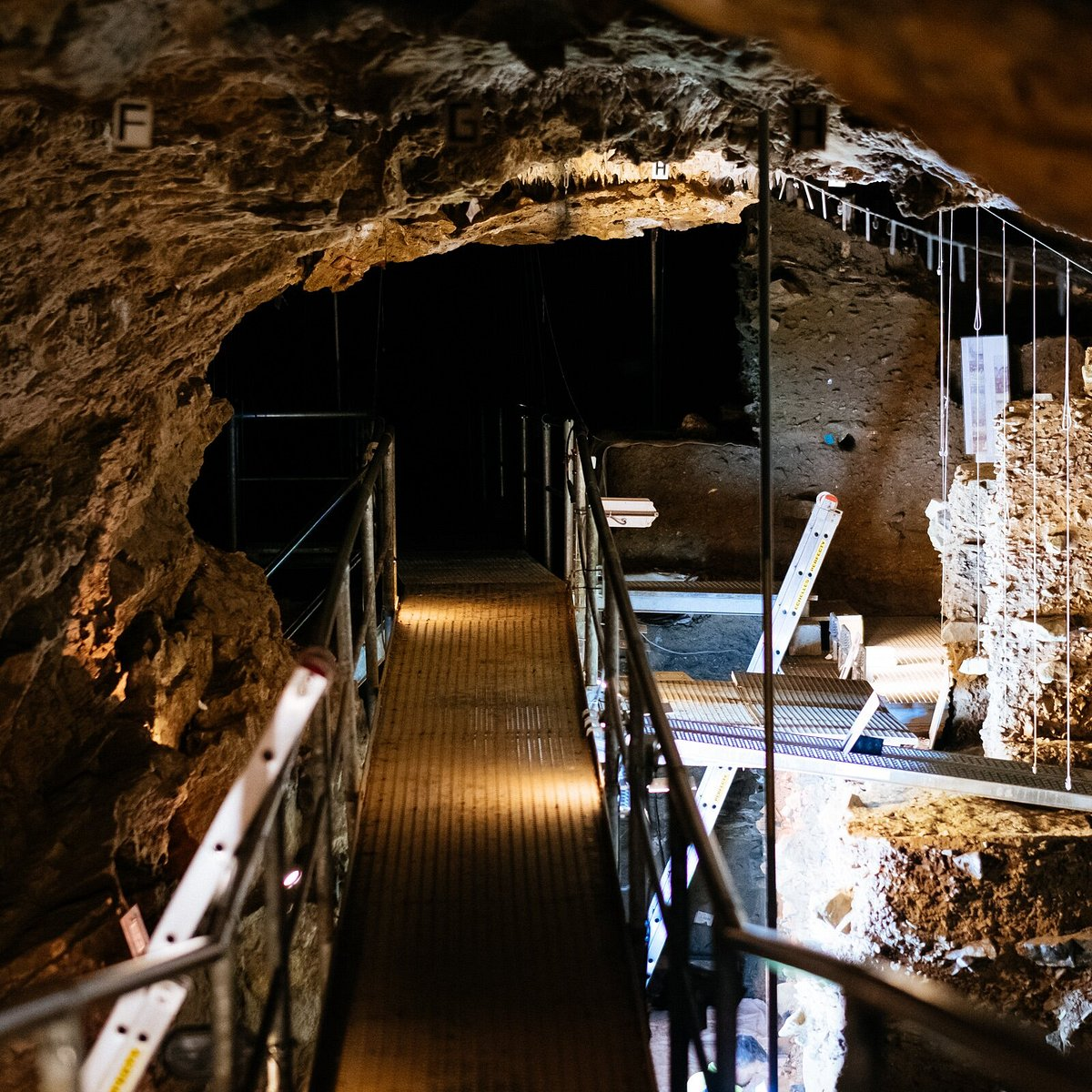
Located along the Meuse River near Andenne, Belgium, Sclayn Cave is one of Europe's most important Middle Paleolithic archaeological sites. The cave has preserved evidence of repeated Neanderthal occupation dating back approximately 100,000 years, making it a crucial location for understanding the daily lives, hunting practices, and environmental adaptations of prehistoric humans. Excavations have uncovered exceptionally preserved stone tools, butchered animal bones, hearths, and one of Belgium's best-known Neanderthal child fossils, providing valuable insight into family life during the Ice Age.
Geological Formation and Occupation
Sclayn Cave formed naturally within Carboniferous limestone cliffs overlooking the Meuse Valley. Its elevated position protected occupants from flooding while offering wide views of the surrounding landscape, making it an ideal seasonal shelter for Neanderthal hunting groups.
Archaeological evidence indicates that the cave was occupied repeatedly rather than continuously. During colder periods of the Pleistocene, small Neanderthal groups likely returned to the cave while following migrating herds of large mammals across the valley.
The cave's layered sediments preserved thousands of years of occupation, allowing archaeologists to reconstruct changing climates and human activities over multiple Ice Age cycles.
Stone Tool Technology
Excavations at Sclayn Cave have yielded hundreds of Mousterian stone tools, the characteristic technology of Neanderthals. These tools were produced primarily from locally available flint using the Levallois prepared-core technique, which enabled knappers to remove carefully shaped flakes from specially prepared stone cores.
Recovered implements include scrapers used to process animal hides, knives for butchering meat, pointed spear tips, denticulated cutting tools, and flakes used for woodworking and plant processing. The consistency and quality of the stone tools demonstrate advanced planning and remarkable technical skill.
The Sclayn Neanderthal Child
One of the cave's most significant discoveries is the partial skeleton of a young Neanderthal child, estimated to have been between 8 and 10 years old at the time of death. The remains include portions of the skull, jaw, teeth, and limb bones, providing valuable information about Neanderthal growth, development, and anatomy.
Studies of the child's bones indicate that Neanderthal children matured differently from modern humans while sharing many similar developmental patterns. The fossil has become one of Belgium's most important contributions to the study of human evolution.
Environment and Hunting
Animal remains recovered from the cave include woolly rhinoceroses, mammoths, reindeer, horses, bison, cave bears, and red deer. Cut marks on many bones demonstrate systematic butchering using stone tools, while fractured bones suggest that Neanderthals extracted nutritious bone marrow.
Charcoal deposits and hearth remains show that fire played a central role in cooking, warmth, and protection from predators during harsh Ice Age winters.
Conclusion
Sclayn Cave provides exceptional evidence of Neanderthal intelligence, adaptability, and survival during the Middle Paleolithic. Through its remarkably preserved fossils, Mousterian stone tools, and environmental remains, the site offers an invaluable window into the lives of prehistoric humans living in Ice Age Europe over 100,000 years ago.