Learn how pigs spread across Pacific islands, what their DNA reveals about ancient human journeys, and why their legacy still matters today.
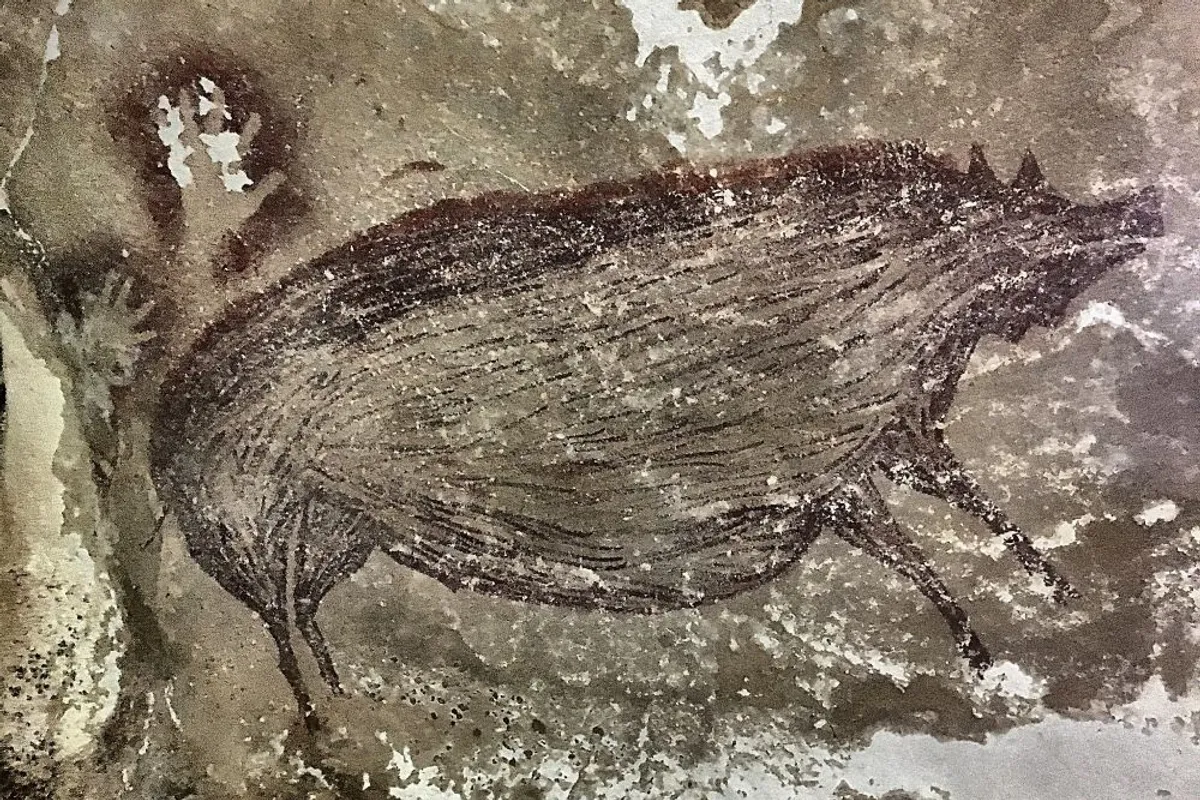
45,000-year-old cave painting of two Sulawesi warty pigs in Indonesia
Pigs have managed to cross some of the planet’s toughest natural barriers, reaching islands where most mammals never ventured. From Southeast Asia to remote Pacific islands, they are found on both sides of the Wallace Line — a biogeographic boundary that usually limits wildlife distribution.
A recent genomic study in Science explains this phenomenon. By examining DNA from over 700 modern and archaeological pigs, researchers discovered that humans have been transporting pigs across the Asia-Pacific region for tens of thousands of years. The genetic patterns show that Pacific pig populations reflect repeated human migrations, from early hunter-gatherers to agricultural societies, leaving behind DNA that records when, where, and how people traveled between islands.
“It is very exciting that we can use ancient DNA from pigs to peel back layers of human activity across this megabiodiverse region,” said senior study author Laurent Frantz.