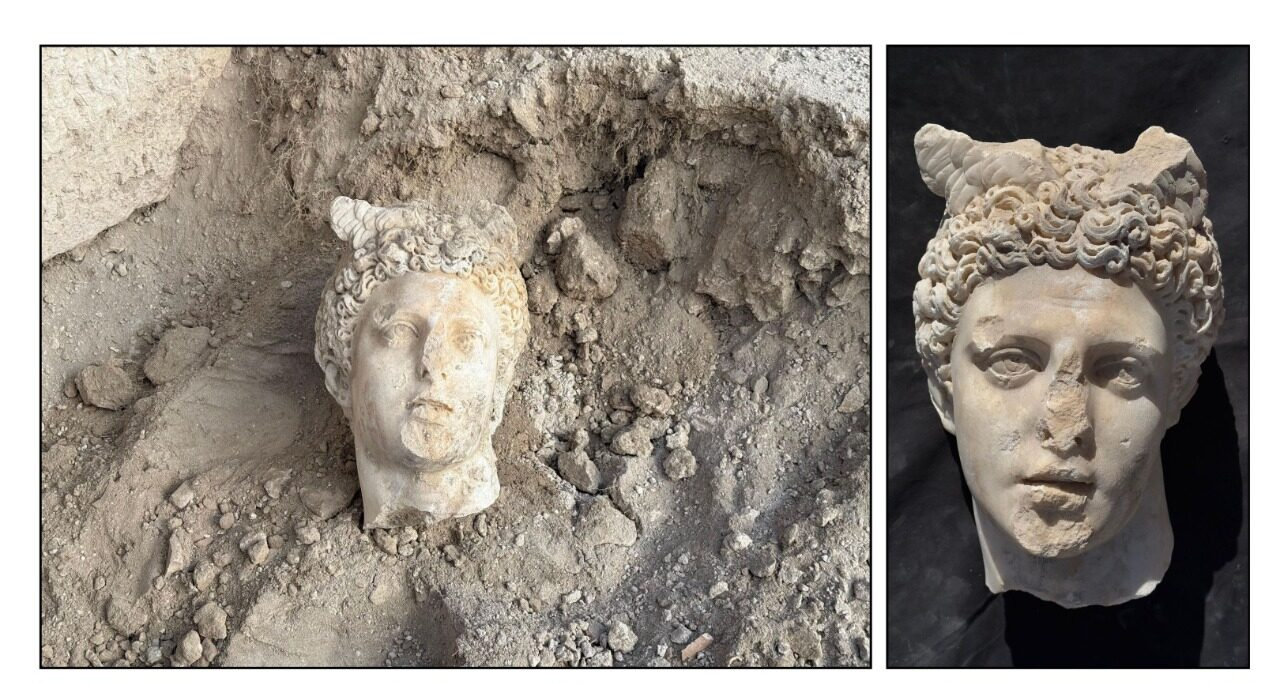
Archaeologists in Laodikeia Ancient City, near present-day Denizli, Türkiye, have uncovered a marble head of Hermes, highlighting the artistic skill and cultural richness of the Roman Imperial period.
Excavations in the Bouleuterion and Prytaneion complexes, conducted under the Ministry of Culture and Tourism’s Geleceğe Miras (Heritage for the Future) Project, revealed the sculpture in the eastern corridor of the Bouleuterion. Carved from high-quality white Dokimeion (İscehisar) marble, prized for its purity and durability, the head is dated to the mid-2nd century CE.
The piece features delicate facial details, carefully rendered eyes and irises, and elegantly curled hair topped with the signature wing motif, reflecting the style of Praxiteles. Experts classify it as a “Hermes Andros” type, celebrated throughout the Mediterranean for its naturalism, balance, and grace.
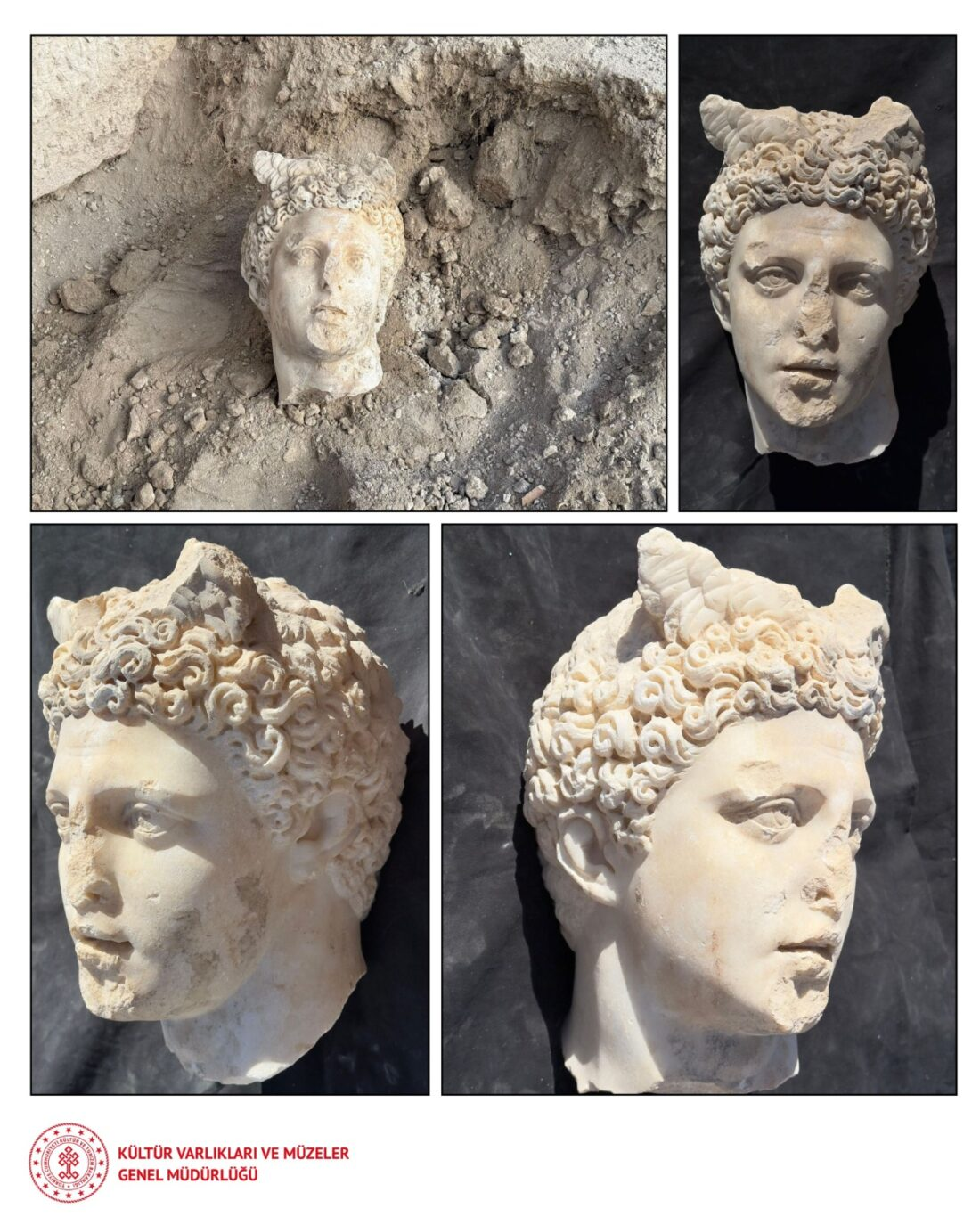
The discovery offers insight into Laodikeia’s wealth and cultural sophistication. Located at key trade routes in the Lycus Valley, the city prospered through textile production, agriculture, and commerce. Its resources supported grand civic projects—monumental theaters, colonnaded streets, temples, and council buildings—showing both political clout and cultural ambition. Artifacts like the Hermes head illustrate how this prosperity fueled artistic patronage, underscoring Laodikeia’s role as a lively urban center in the Roman era.
Laodikeia also held significant historical and cultural meaning. While noted as one of the Seven Churches of Asia in early Christian tradition, the city maintained strong links to classical religion and philosophy. Structures like the Bouleuterion and Prytaneion served administrative purposes while also reflecting civic pride, using art and architecture to express the community’s identity and values.