Introduction
Across the ancient world, libraries functioned as more than repositories of written texts; they were centers of power, memory, religion, science, and identity. Long before the modern concept of public archives, civilizations invested immense resources in preserving knowledge on clay tablets, papyrus scrolls, parchment codices, bamboo slips, and palm leaves. Yet many of these collections were never meant for public access. Some were deliberately hidden to protect sacred, political, or esoteric knowledge, while others became concealed by circumstance—buried by volcanic eruptions, sealed by collapsing buildings, or abandoned during war and conquest. These hidden libraries, lost for centuries or millennia, offer extraordinary archaeological insight into the intellectual life of ancient societies.
The destruction and concealment of libraries were often the unintended consequences of natural disasters or violent historical transitions. Fires, earthquakes, floods, invasions, and religious upheavals erased entire bodies of literature. However, paradoxically, the same events that destroyed these repositories sometimes preserved them, sealing texts in environments that shielded them from decay. Archaeological discoveries of such libraries have transformed historical understanding, revealing lost philosophies, scientific treatises, religious doctrines, administrative systems, and literary traditions previously unknown or fragmentary.
This article explores ancient hidden libraries lost to time, examining their historical contexts, archaeological evidence, major discoveries, dating methods, cultural significance, and the modern research that continues to bring their contents to light. From Mesopotamian palace archives and Greco-Roman philosophical libraries to early religious caches concealed during persecution, these collections illuminate both the fragility and resilience of human knowledge.
Historical Background: Libraries in the Ancient World
The emergence of libraries coincided with the development of writing systems and complex bureaucratic states. In ancient Mesopotamia, cuneiform writing on clay tablets facilitated record-keeping, legal administration, and scholarly inquiry as early as the third millennium BCE. Palaces and temples maintained archives that gradually evolved into curated collections of texts covering astronomy, mathematics, medicine, mythology, and divination. These were not libraries in the modern sense but structured repositories serving elite scribal communities.
In Egypt, written knowledge was closely tied to religious institutions. Temple libraries, often referred to in inscriptions as “Houses of Life,” preserved ritual texts, medical manuals, astronomical observations, and mythological narratives. Access was restricted to trained priest-scribes, reinforcing the sacred status of written knowledge. Papyrus scrolls, though vulnerable to fire and humidity, allowed for more extensive literary production than clay tablets.
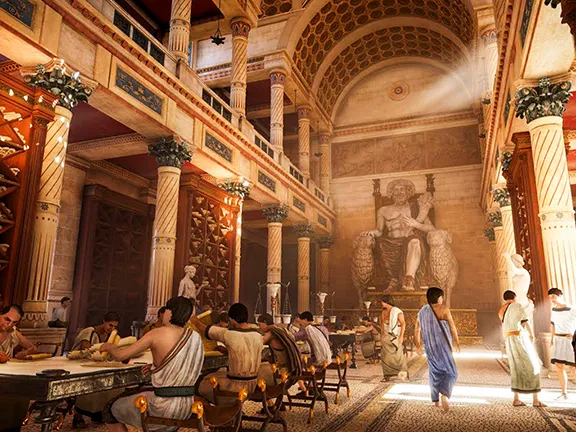
The Greek world introduced a broader intellectual conception of libraries. Philosophical schools, such as those founded by Plato and Aristotle, accumulated private collections used for teaching and research. This tradition culminated in the great Hellenistic libraries, particularly those of Alexandria and Pergamon, which sought to collect all known knowledge. Roman libraries later expanded access, with both imperial and private collections flourishing across the empire.
In Asia, comparable traditions developed independently. In China, imperial archives preserved bamboo and silk manuscripts containing philosophical, administrative, and scientific texts. In South Asia, palm-leaf manuscripts transmitted religious and scholarly traditions, often stored in monastic libraries. Across these regions, libraries were vulnerable to political change, religious reform, and environmental conditions, leading to widespread loss.
Hidden libraries emerged when texts were deliberately concealed for protection or inadvertently sealed by catastrophe. These repositories often survived precisely because they were removed from circulation, escaping deliberate destruction while remaining physically preserved.
Archaeological Evidence of Hidden Libraries
The identification of ancient libraries relies on a convergence of archaeological indicators. These include the discovery of large concentrations of texts in a single architectural context, the presence of shelving systems or storage jars, scribal tools such as styluses and ink wells, and inscriptions identifying rooms or buildings as archives or libraries. Contextual association with temples, palaces, villas, or monastic complexes further strengthens interpretation.
Preservation conditions vary significantly depending on material and environment. Clay tablets survive well in dry conditions and even benefit from accidental firing during conflagrations, as heat hardens the clay. Papyrus and parchment, by contrast, require arid or sealed environments to endure. Volcanic ash, desert sands, and sealed caves have played critical roles in preserving fragile organic materials.
Stratigraphic analysis allows archaeologists to determine whether texts were deposited intentionally or as a result of sudden destruction. In some cases, tablets or scrolls are found neatly arranged, suggesting deliberate storage. In others, chaotic distributions indicate collapse or rapid abandonment. Together, these patterns help reconstruct the circumstances under which libraries were hidden or lost.
Key Discoveries of Ancient Hidden Libraries
The Library of Ashurbanipal at Nineveh
One of the most significant ancient libraries ever discovered belonged to Ashurbanipal, the Assyrian king who ruled in the seventh century BCE. Excavated in the mid-nineteenth century at Nineveh in modern Iraq, this royal library contained over 30,000 clay tablets and fragments. Unlike earlier palace archives, Ashurbanipal’s collection was consciously assembled as a scholarly library, encompassing literature, history, lexicography, medicine, astronomy, and religious rituals.
The library was destroyed when Nineveh fell in 612 BCE during a coalition attack by the Babylonians and Medes. The resulting fires baked many of the clay tablets, preserving them for millennia beneath the ruins. Among the texts recovered is the most complete version of the Epic of Gilgamesh, a foundational work of world literature. The library provides unparalleled insight into Mesopotamian intellectual traditions and the role of royal patronage in knowledge preservation.
The Villa of the Papyri at Herculaneum
Buried by the eruption of Mount Vesuvius in 79 CE, the Roman town of Herculaneum preserved one of the only surviving libraries from the classical world written on papyrus. Discovered in the eighteenth century, the Villa of the Papyri contained hundreds of carbonized scrolls stored in wooden cabinets. The library is widely believed to have belonged to Lucius Calpurnius Piso Caesoninus, a Roman statesman and patron of philosophy.
The scrolls primarily contain works of Epicurean philosophy, many attributed to the philosopher Philodemus. The eruption’s intense heat carbonized the papyri, rendering them extremely fragile but also preventing complete decay. Modern imaging techniques have begun to recover previously unreadable texts, expanding understanding of Hellenistic philosophy and Roman intellectual life.
The Nag Hammadi Library
In 1945, a collection of thirteen leather-bound codices was discovered near Nag Hammadi in Upper Egypt. Buried in a sealed jar, these manuscripts date to the fourth century CE and contain Gnostic Christian texts, many previously unknown. Written in Coptic, the collection includes gospels, theological treatises, and philosophical dialogues that challenge orthodox Christian narratives.
Scholars believe the library was hidden by monks during periods of religious conflict, possibly following ecclesiastical bans on non-canonical texts. The deliberate concealment of these codices allowed them to survive intact, providing critical evidence for the diversity of early Christian thought and the theological debates of late antiquity.
The Dead Sea Scrolls
Discovered between 1947 and 1956 in caves near Qumran, the Dead Sea Scrolls represent one of the most important manuscript discoveries of the twentieth century. Dating from the third century BCE to the first century CE, the scrolls include biblical texts, sectarian writings, and legal documents associated with a Jewish community, often identified with the Essenes.
The scrolls were hidden in jars within caves, likely to protect them during the Roman suppression of Jewish revolts. The arid environment of the Judean Desert preserved the manuscripts remarkably well. Their discovery revolutionized the study of the Hebrew Bible and Second Temple Judaism, offering textual evidence far earlier than previously known manuscripts.
Chinese Bamboo and Silk Manuscript Caches
In China, several hidden manuscript collections have been uncovered in tombs and sealed chambers. Notable examples include the Mawangdui tombs, dating to the Han dynasty, which contained silk manuscripts on philosophy, medicine, astronomy, and military strategy. These texts were buried intentionally as grave goods, reflecting beliefs about knowledge in the afterlife.
The manuscripts include early versions of classical texts, such as the Dao De Jing, revealing textual variations and intellectual diversity. Their preservation offers insight into the transmission of Chinese thought and the role of written knowledge in elite culture.
Dating Methods Used in Library Discoveries
Establishing the chronology of hidden libraries relies on multiple dating techniques. Stratigraphy provides relative dating by analyzing the layers of occupation and destruction surrounding a find. In sealed contexts, such as tombs or buried rooms, stratigraphy can offer precise temporal frameworks.
Radiocarbon dating is crucial for organic materials like papyrus, parchment, bamboo, and silk. This method determines the age of the writing medium, though it must be complemented by paleographic analysis to date the writing itself. Paleography examines script styles, letter forms, and writing conventions to establish chronological ranges.
For clay tablets, epigraphic analysis and historical references within the texts often provide precise dates. Many Mesopotamian tablets are dated according to regnal years, allowing exact historical placement. In some cases, associated artifacts such as pottery, coins, or architectural features further refine dating.
Cultural and Intellectual Significance
Hidden libraries fundamentally reshape understanding of ancient civilizations. They reveal intellectual traditions that were marginalized, suppressed, or entirely forgotten. Philosophical schools known only through hostile later sources gain authentic voices, as seen in the Epicurean texts of Herculaneum. Religious movements previously considered heretical or obscure emerge as complex and influential, as demonstrated by the Nag Hammadi codices.
These libraries also illuminate the social structures surrounding knowledge production. The existence of restricted or secret collections underscores the role of literacy as a marker of power. Control over texts meant control over law, ritual, history, and ideology. The deliberate concealment of libraries during periods of crisis reflects the perceived value of written knowledge as something worth preserving at great risk.
Moreover, hidden libraries contribute to textual criticism and the history of ideas. Earlier manuscript versions allow scholars to trace the evolution of texts, identify later interpolations, and understand how doctrines and narratives changed over time. In many cases, they preserve works otherwise known only by title or quotation.
Modern Research and Technological Advances
Contemporary research has transformed the study of ancient libraries through non-invasive technologies and interdisciplinary collaboration. Multispectral imaging allows faded or carbonized texts to be read without unrolling or damaging them. X-ray phase-contrast tomography has enabled virtual unwrapping of scrolls, particularly those from Herculaneum, revealing text previously thought irretrievable.
Digital humanities initiatives have made high-resolution images and transcriptions widely accessible, fostering international scholarly collaboration. Advances in materials science help conservators stabilize fragile manuscripts, while linguistic analysis aided by computational tools accelerates decipherment.
Ongoing excavations and surveys continue to uncover new repositories, particularly in regions affected by conflict or environmental change. Ethical considerations now play a central role, emphasizing the protection of cultural heritage and the responsible publication of findings.