• MAIN PAGE
  • LATEST NEWS
    • Lost Cities
    • Archaeology's Greatest Finds
    • Underwater Discoveries
    • Greatest Inventions
    • Studies
    • Blog
  • PHILOSOPHY
  • HISTORY
  • RELIGIONS
    • Africa
    • Anatolia
    • Arabian Peninsula
    • Balkan Region
    • China - East Asia
    • Europe
    • Eurasian Steppe
    • Levant
    • Mesopotamia
    • Oceania - SE Asia
    • Pre-Columbian Civilizations of America
    • Iranian Plateau - Central Asia
    • Indus Valley - South Asia
    • Japan
    • The Archaeologist Editor Group
    • Scientific Studies
    • Aegean Prehistory
    • Historical Period
    • Byzantine Middle Ages
    • Predynastic Period
    • Dynastic Period
    • Greco-Roman Egypt
  • Rome
  • PALEONTOLOGY
  • About us
Menu

The Archaeologist

  • MAIN PAGE
  • LATEST NEWS
  • DISCOVERIES
    • Lost Cities
    • Archaeology's Greatest Finds
    • Underwater Discoveries
    • Greatest Inventions
    • Studies
    • Blog
  • PHILOSOPHY
  • HISTORY
  • RELIGIONS
  • World Civilizations
    • Africa
    • Anatolia
    • Arabian Peninsula
    • Balkan Region
    • China - East Asia
    • Europe
    • Eurasian Steppe
    • Levant
    • Mesopotamia
    • Oceania - SE Asia
    • Pre-Columbian Civilizations of America
    • Iranian Plateau - Central Asia
    • Indus Valley - South Asia
    • Japan
    • The Archaeologist Editor Group
    • Scientific Studies
  • GREECE
    • Aegean Prehistory
    • Historical Period
    • Byzantine Middle Ages
  • Egypt
    • Predynastic Period
    • Dynastic Period
    • Greco-Roman Egypt
  • Rome
  • PALEONTOLOGY
  • About us

Rigid Gender Roles Are a Lie. Just Ask These 7,000-Year-Old Skeletons.

March 9, 2026

A popular idea about ancient societies suggests that strict gender roles existed in the distant past—men hunted while women gathered. However, archaeological research continues to challenge that assumption. Evidence from ancient burials shows that the reality was likely much more flexible.

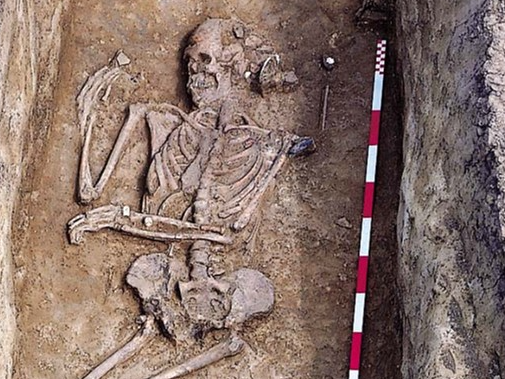
A recent study published in the American Journal of Biological Anthropology examined 125 skeletons from two Neolithic burial sites in what is now Hungary. The research was led by Sébastien Villotte from the French National Center for Scientific Research. The team focused on remains from two archaeological locations: Polgár-Ferenci-hát and Polgár-Csőszhalom, both dating back roughly 7,000 years.

Evidence from the Earlier Burial Site

At the older site, Polgár-Ferenci-hát, researchers studied the remains of 94 adults. The burials contained very few grave goods, and there was little evidence that objects were distributed differently between men and women.

Scientists examined skeletal markers that can indicate physical activity, such as stress on the spine from heavy lifting or wear on the upper arms caused by repetitive motion. These indicators appeared across both male and female skeletons. The findings suggest that physical labor in this community was not clearly divided by gender.

Changes in the Later Community

Several centuries later, at the site of Polgár-Csőszhalom, burials began to show stronger symbolic patterns. Many women were buried with belts made from beads crafted from Spondylus shells, while men were often buried with polished stone tools.

Burial positions also appeared to follow gender-based customs. Men were typically placed on their right side, while women were positioned on their left.

Despite these emerging traditions, the rules were not consistently followed. Some individuals were buried on the opposite side from what the pattern suggested. In one case, a woman was buried with a stone tool rather than the shell-bead belt usually associated with female burials.

Overlapping Roles in Daily Life

The skeletal evidence from Polgár-Csőszhalom also continued to show overlap in physical activities between men and women. Signs of similar labor patterns appeared in both sexes, suggesting that daily tasks were not rigidly divided.

Overall, the findings indicate that gender-related traditions may have developed gradually in these communities, but they were far from rigid or universal. Women sometimes carried out roles typically associated with men, and those roles appear to have been recognized and respected within the society.

The research suggests that social roles in Neolithic communities were more flexible than many modern assumptions about the ancient past.
← Monumental Roman Forum Discovered Beneath Barcelona Hotel Forces 90-Degree Rewrite of Ancient City BarcinoDo Chimpanzees Know Crystal Magic, or Are They Just Really Into Jewelry? →
Featured
image_2026-03-08_183512157.png
Mar 9, 2026
Discovery of Egyptian artefacts at Durlston Country Park
Mar 9, 2026
Read More →
Mar 9, 2026
image_2026-03-08_183151185.png
Mar 9, 2026
Archaeologists Discover 409 Gold Coins Beneath Historic House in Torzhok
Mar 9, 2026
Read More →
Mar 9, 2026
image_2026-03-08_182457562.png
Mar 9, 2026
Monumental Roman Forum Discovered Beneath Barcelona Hotel Forces 90-Degree Rewrite of Ancient City Barcino
Mar 9, 2026
Read More →
Mar 9, 2026
image_2026-03-08_182252369.png
Mar 9, 2026
Rigid Gender Roles Are a Lie. Just Ask These 7,000-Year-Old Skeletons.
Mar 9, 2026
Read More →
Mar 9, 2026
image_2026-03-08_182156213.png
Mar 9, 2026
Do Chimpanzees Know Crystal Magic, or Are They Just Really Into Jewelry?
Mar 9, 2026
Read More →
Mar 9, 2026
image_2026-03-08_181908177.png
Mar 9, 2026
Cleopatra and queens exhibition opens in town
Mar 9, 2026
Read More →
Mar 9, 2026
read more

Powered by The archaeologist