• MAIN PAGE
  • LATEST NEWS
    • Lost Cities
    • Archaeology's Greatest Finds
    • Underwater Discoveries
    • Greatest Inventions
    • Studies
    • Blog
  • PHILOSOPHY
  • HISTORY
  • RELIGIONS
    • Africa
    • Anatolia
    • Arabian Peninsula
    • Balkan Region
    • China - East Asia
    • Europe
    • Eurasian Steppe
    • Levant
    • Mesopotamia
    • Oceania - SE Asia
    • Pre-Columbian Civilizations of America
    • Iranian Plateau - Central Asia
    • Indus Valley - South Asia
    • Japan
    • The Archaeologist Editor Group
    • Scientific Studies
    • Aegean Prehistory
    • Historical Period
    • Byzantine Middle Ages
    • Predynastic Period
    • Dynastic Period
    • Greco-Roman Egypt
  • Rome
  • PALEONTOLOGY
  • About us
Menu

The Archaeologist

  • MAIN PAGE
  • LATEST NEWS
  • DISCOVERIES
    • Lost Cities
    • Archaeology's Greatest Finds
    • Underwater Discoveries
    • Greatest Inventions
    • Studies
    • Blog
  • PHILOSOPHY
  • HISTORY
  • RELIGIONS
  • World Civilizations
    • Africa
    • Anatolia
    • Arabian Peninsula
    • Balkan Region
    • China - East Asia
    • Europe
    • Eurasian Steppe
    • Levant
    • Mesopotamia
    • Oceania - SE Asia
    • Pre-Columbian Civilizations of America
    • Iranian Plateau - Central Asia
    • Indus Valley - South Asia
    • Japan
    • The Archaeologist Editor Group
    • Scientific Studies
  • GREECE
    • Aegean Prehistory
    • Historical Period
    • Byzantine Middle Ages
  • Egypt
    • Predynastic Period
    • Dynastic Period
    • Greco-Roman Egypt
  • Rome
  • PALEONTOLOGY
  • About us
No results found

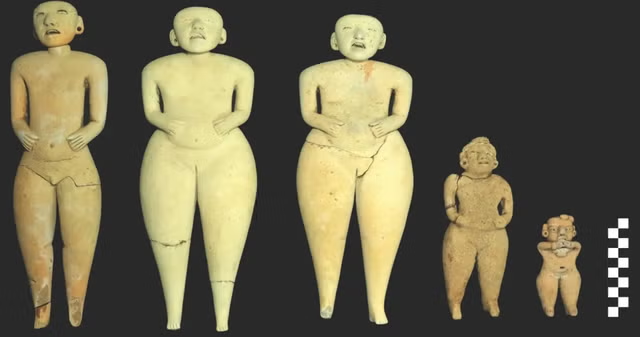
Strange dolls discovered atop El Salvador pyramid (Przedwojewska-Szymańska/PASI; Antiquity (2025))


Ancient Puppets with Dramatic Expressions Unearthed atop El Salvador Pyramid

March 6, 2025

Archaeologists have made a fascinating discovery in El Salvador—a collection of 2,400-year-old ceramic puppets featuring strikingly expressive faces. These artifacts, dating back to approximately 400 BC, were found atop a pyramid and are believed to have played a role in ancient public rituals.

Mysterious Puppets with Changing Expressions

The five ceramic figures vary in size, with three standing about 30 cm (1 foot) tall and two smaller ones measuring 10 cm (0.3 feet) and 18 cm (0.6 feet). What makes them particularly intriguing is their ability to change expressions depending on the viewing angle. From one perspective, they appear angry, while from another, they seem frightened or even amused.

According to researchers, this distinctive design suggests the dolls were likely used in theatrical performances, conveying stories—either mythical or based on real events—to an audience. The absence of human remains at the site further supports the theory that these figures were part of public ceremonies rather than funerary practices.

A Glimpse into Indigenous Rituals

Dr. Jan Szymanski, a researcher from the University of Warsaw and co-author of the study published in Antiquity, described the puppets as "clay actors." He noted that their vivid expressions can even appear eerie when viewed up close, reinforcing their theatrical purpose.

These figurines bear a resemblance to similar artifacts discovered in Guatemala, indicating a shared cultural tradition between the two ancient societies. However, whether they represent historical figures remains uncertain, as the region experienced a cataclysmic volcanic eruption between 400 and 500 AD. This disaster, which released significantly more volcanic gas and ash than the eruption of Mount Vesuvius that buried Pompeii, may have erased much of the historical context surrounding these artifacts.

Significance of the Discovery

The find provides valuable insight into the customs and storytelling methods of the Indigenous people who once inhabited the region. By studying these puppets, archaeologists hope to further decode the nature of the performances and rituals they were part of, shedding light on an ancient theatrical tradition that may have played a crucial role in early Mesoamerican society.

While many questions remain, this discovery offers an extraordinary glimpse into the artistic and cultural expressions of a civilization long lost to history.
Source: https://www.independent.co.uk/news/science...
← Uncovering the Hidden History of St Mary le Port in BristolArchaeologists Investigate Mysterious Roman Offering at Scottish Iron Age Site →
Featured
image_2026-09-01_150407961.png
September 9, 2026
Dunadd Fort: Argyll's Inauguration Rock Carvings
September 9, 2026
Read more →
September 9, 2026
image_2026-09-01_150445885.png
September 9, 2026
Kilmartin Glen: Argyll's 5,000-Year Megalithic Landscape
September 9, 2026
Read more →
September 9, 2026
image_2026-09-01_150523753.png
September 9, 2026
Nether Largie: Argyll's Clyde Tomb Alignment
September 9, 2026
Read more →
September 9, 2026
image_2026-09-01_150612586.png
September 9, 2026
Ri Cruin: Argyll's Bronze Age Cairn Circle
September 9, 2026
Read more →
September 9, 2026
image_2026-09-01_150753980.png
September 9, 2026
Barnaluasgan: Argyll's Standing Stones
September 9, 2026
Read more →
September 9, 2026
image_2026-09-01_150644895.png
September 9, 2026
Ballymeanoch: Argyll's Kerbed Cairn
September 9, 2026
Read more →
September 9, 2026
read more

Powered by The archaeologist