• MAIN PAGE
  • LATEST NEWS
    • Lost Cities
    • Archaeology's Greatest Finds
    • Underwater Discoveries
    • Greatest Inventions
    • Studies
    • Blog
  • PHILOSOPHY
  • HISTORY
  • RELIGIONS
    • Africa
    • Anatolia
    • Arabian Peninsula
    • Balkan Region
    • China - East Asia
    • Europe
    • Eurasian Steppe
    • Levant
    • Mesopotamia
    • Oceania - SE Asia
    • Pre-Columbian Civilizations of America
    • Iranian Plateau - Central Asia
    • Indus Valley - South Asia
    • Japan
    • The Archaeologist Editor Group
    • Scientific Studies
    • Aegean Prehistory
    • Historical Period
    • Byzantine Middle Ages
    • Predynastic Period
    • Dynastic Period
    • Greco-Roman Egypt
  • Rome
  • PALEONTOLOGY
  • About us
Menu

The Archaeologist

  • MAIN PAGE
  • LATEST NEWS
  • DISCOVERIES
    • Lost Cities
    • Archaeology's Greatest Finds
    • Underwater Discoveries
    • Greatest Inventions
    • Studies
    • Blog
  • PHILOSOPHY
  • HISTORY
  • RELIGIONS
  • World Civilizations
    • Africa
    • Anatolia
    • Arabian Peninsula
    • Balkan Region
    • China - East Asia
    • Europe
    • Eurasian Steppe
    • Levant
    • Mesopotamia
    • Oceania - SE Asia
    • Pre-Columbian Civilizations of America
    • Iranian Plateau - Central Asia
    • Indus Valley - South Asia
    • Japan
    • The Archaeologist Editor Group
    • Scientific Studies
  • GREECE
    • Aegean Prehistory
    • Historical Period
    • Byzantine Middle Ages
  • Egypt
    • Predynastic Period
    • Dynastic Period
    • Greco-Roman Egypt
  • Rome
  • PALEONTOLOGY
  • About us

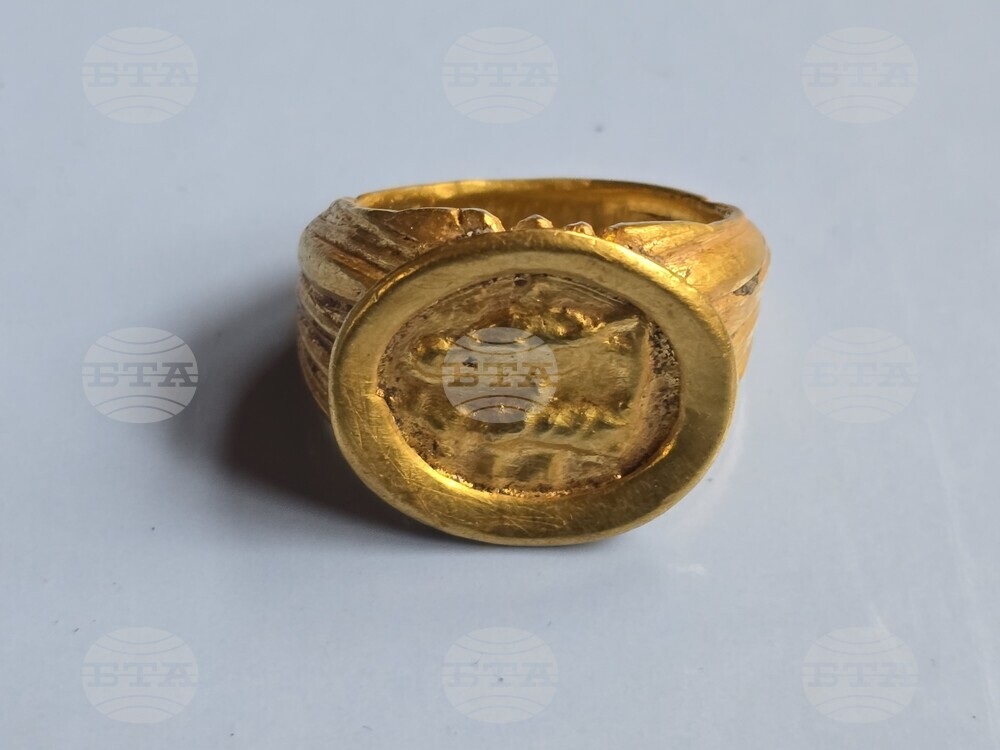
The gold ring unearthed in Vidin.

Archaeologists in Vidin Find Gold Ring from 2nd or 3rd Century AD

December 5, 2025

A Roman-era gold ring weighing 23.63 grams was unearthed on Thursday during excavations at Ancient Bononia in Vidin, according to excavation director Zdravko Dimitrov. The artifact was discovered on the final day of this season’s dig, nearly six meters below the surface.

The ring dates to the late 2nd century or early 3rd century AD. Dimitrov described it as a symbol of marital loyalty, likely exchanged between newlyweds in the Roman Empire. The piece features an oval plaque soldered to the band, showing a carved image of a married couple. Both sides of the ring are decorated with fluted grooves. It was crafted locally, probably produced in one of the renowned goldsmith workshops of Ratiaria.

Excavations at Ancient Bononia for 2025 have now wrapped up. Conservation efforts are currently underway as the site is prepared for the winter season. Vidin Deputy Mayor Martin Donchev confirmed that funding will continue for future work at Ancient Bononia and for excavations around the moat of the Baba Vida fortress.

← 1,900-Year-Old Medusa Cameo Unearthed in Hallstatt: One of the Most Significant Roman-Era Finds in Alpine AustriaAn Ancient Form of Cardio You Should Try This Winter →
Featured
image_2025-12-05_234812480.png
Dec 5, 2025
What can ancient Chinese texts teach us about solar eclipses and Earth's rotation?
Dec 5, 2025
Read More →
Dec 5, 2025
image_2025-12-05_234313849.png
Dec 5, 2025
Human history could be rewritten after boffins find bizarre 4,000-year-old burial site
Dec 5, 2025
Read More →
Dec 5, 2025
image_2025-12-05_233815974.png
Dec 5, 2025
Celebrated Rutland mosaic depicts ‘long-lost’ Troy story connecting Roman Britain to the ancient classical world
Dec 5, 2025
Read More →
Dec 5, 2025
image_2025-12-05_232843168.png
Dec 5, 2025
Exploring landscapes of power in early medieval East Anglia
Dec 5, 2025
Read More →
Dec 5, 2025
image_2025-12-05_232711121.png
Dec 5, 2025
Archaeologists Uncovered an Ancient Roman Funeral Pyre—And a Treasure Trove of Gold
Dec 5, 2025
Read More →
Dec 5, 2025
image_2025-12-05_232053508.png
Dec 5, 2025
Researchers Discover the Shocking Age of the Mysterious Pecos River Rock Art
Dec 5, 2025
Read More →
Dec 5, 2025
read more

Powered by The archaeologist