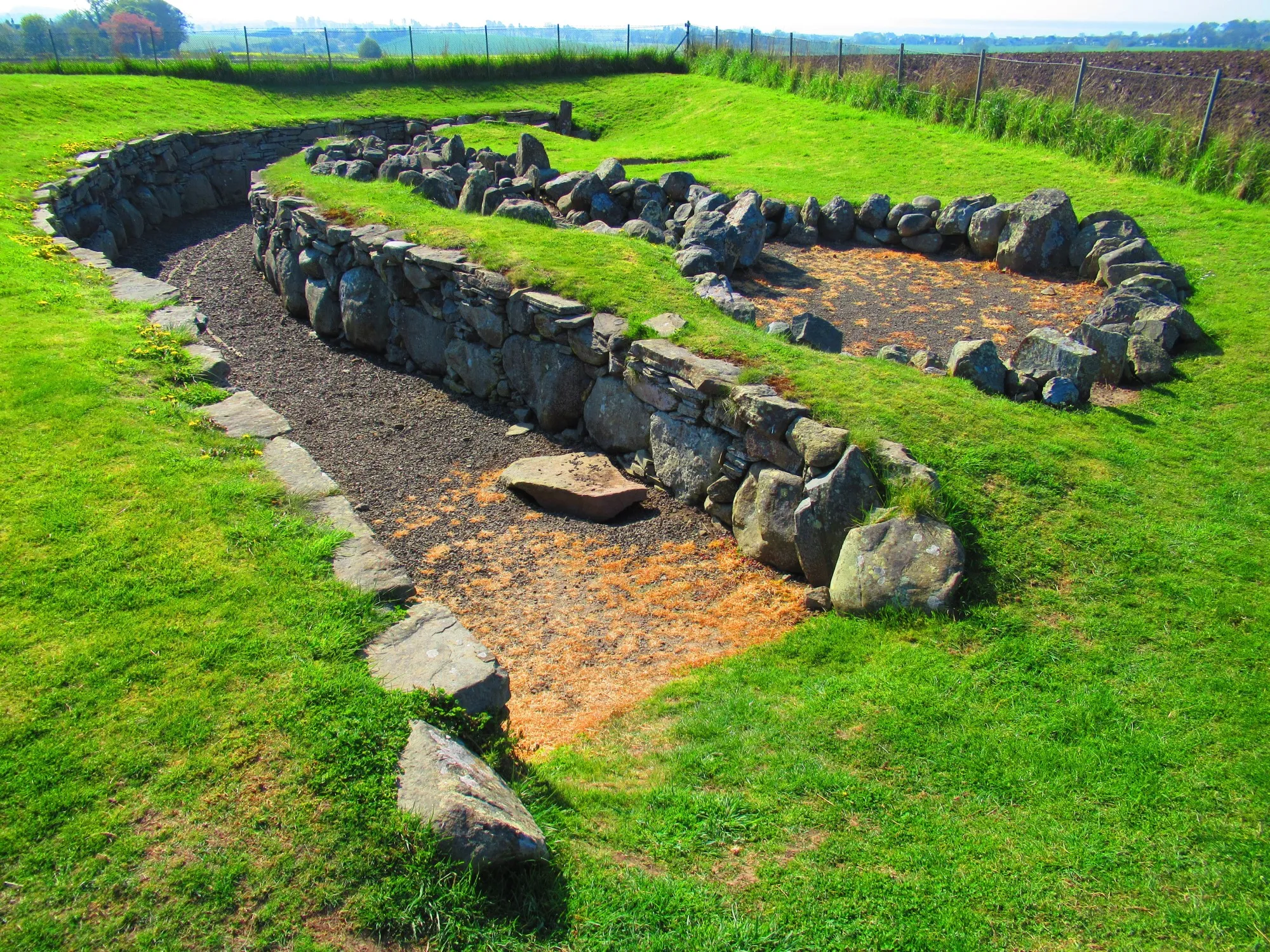
The Ardestie Earth House in Angus is one of Scotland's best-known examples of an Iron Age souterrain.
The structure consists of a long underground passage and chamber constructed from large stones.
Its preservation offers an unusual opportunity to examine how prehistoric communities used underground architecture.
An Underground Structure
Ardestie was deliberately built below ground.
The walls consist of carefully arranged stone slabs.
The roof was supported by large stones placed across the passage.
The Entrance
A narrow entrance provided access to the subterranean chamber.
The restricted opening may have helped regulate:
access;
temperature;
and security.
Possible Storage
The underground environment would have remained relatively cool and stable.
This could have made it suitable for storing food.
Food Preservation
Before refrigeration, controlling temperature was important.
Underground environments naturally provide:
shade;
insulation;
and relatively stable temperatures.
This could slow decomposition.
Iron Age Farming
The community associated with Ardestie likely depended heavily on agriculture.
They cultivated crops and raised livestock.
Animal Husbandry
Livestock provided:
meat;
milk;
hides;
bones;
and labor.
Pottery
Iron Age pottery can help identify activity within the structure.
Vessels could have been used for:
storage;
cooking;
and food preparation.
The Purpose Debate
Archaeologists continue to debate the exact function of souterrains.
Possible interpretations include:
storage;
refuge;
workshop;
ritual space;
or specialized household activity.
The answer may differ from one site to another.
Landscape Context
Ardestie existed within a wider agricultural landscape.
The underground structure was not isolated.
It formed part of a settlement system containing fields, houses, livestock areas, and other structures.
Why Ardestie Matters
Ardestie demonstrates that Iron Age communities in Scotland used sophisticated techniques to manipulate underground space.
Conclusion
The Ardestie Earth House is an impressive example of prehistoric engineering.
Its underground architecture demonstrates practical knowledge of construction and environmental conditions while raising fascinating questions about food storage, security, domestic life, and ritual.