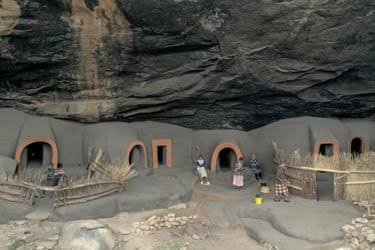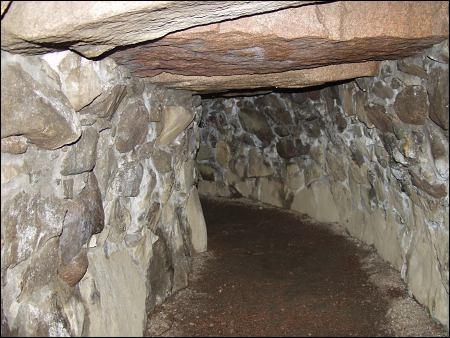
The Culsh Earth House, in Aberdeenshire, belongs to a distinctive category of prehistoric underground structures known as souterrains.
These structures are particularly fascinating because they were deliberately constructed beneath the ground.
Their exact purpose remains debated, but archaeological evidence suggests they could have been associated with storage, domestic activities, or other functions.
What Is a Souterrain?
The word souterrain means “underground.”
In Scottish archaeology, it refers to an underground or partially underground stone-built structure associated primarily with later prehistoric settlements.
Construction
A typical souterrain could contain:
a narrow entrance;
stone walls;
a low roof;
and a subterranean chamber.
The confined architecture would have required careful construction.
Why Go Underground?
Several explanations have been proposed.
Underground structures could provide:
stable temperatures;
protection from weather;
secure storage;
and concealment.
Storage
One of the strongest possibilities is food storage.
Cool, stable environments can slow spoilage.
The underground chamber could therefore have helped protect:
grain;
dairy products;
meat;
or other food.
However, not every souterrain necessarily served as a storage cellar.
Ritual Possibilities
Some underground structures may have had symbolic significance.
Entering darkness and returning to daylight could have carried ritual meaning.
Archaeologists therefore consider both practical and symbolic interpretations.
Iron Age Communities
Souterrains are commonly associated with Iron Age and later prehistoric settlements.
These communities practiced:
agriculture;
livestock raising;
craft production;
and trade.
Farming
Cereal crops and livestock were important.
Animals provided:
meat;
milk;
hides;
and labor.
Tools and Pottery
Artifacts found in souterrains can include:
pottery;
stone tools;
metal objects;
and food remains.
These provide clues about their use.
Social Organization
Building underground structures required substantial labor.
This indicates that prehistoric households could undertake significant construction projects.
Why Culsh Matters
Culsh contributes to our understanding of prehistoric underground architecture in northeastern Scotland.
It demonstrates that Iron Age communities were capable of manipulating the landscape beneath their settlements as well as building structures above ground.
Conclusion
The Culsh Earth House is a fascinating example of prehistoric subterranean architecture.
Whether primarily used for storage, domestic activity, ritual, or a combination of functions, the structure demonstrates the ingenuity of Iron Age communities.