• MAIN PAGE
  • LATEST NEWS
    • Lost Cities
    • Archaeology's Greatest Finds
    • Underwater Discoveries
    • Greatest Inventions
    • Studies
    • Blog
  • PHILOSOPHY
  • HISTORY
  • RELIGIONS
    • Africa
    • Anatolia
    • Arabian Peninsula
    • Balkan Region
    • China - East Asia
    • Europe
    • Eurasian Steppe
    • Levant
    • Mesopotamia
    • Oceania - SE Asia
    • Pre-Columbian Civilizations of America
    • Iranian Plateau - Central Asia
    • Indus Valley - South Asia
    • Japan
    • The Archaeologist Editor Group
    • Scientific Studies
    • Aegean Prehistory
    • Historical Period
    • Byzantine Middle Ages
    • Predynastic Period
    • Dynastic Period
    • Greco-Roman Egypt
  • Rome
  • PALEONTOLOGY
  • About us
Menu

The Archaeologist

  • MAIN PAGE
  • LATEST NEWS
  • DISCOVERIES
    • Lost Cities
    • Archaeology's Greatest Finds
    • Underwater Discoveries
    • Greatest Inventions
    • Studies
    • Blog
  • PHILOSOPHY
  • HISTORY
  • RELIGIONS
  • World Civilizations
    • Africa
    • Anatolia
    • Arabian Peninsula
    • Balkan Region
    • China - East Asia
    • Europe
    • Eurasian Steppe
    • Levant
    • Mesopotamia
    • Oceania - SE Asia
    • Pre-Columbian Civilizations of America
    • Iranian Plateau - Central Asia
    • Indus Valley - South Asia
    • Japan
    • The Archaeologist Editor Group
    • Scientific Studies
  • GREECE
    • Aegean Prehistory
    • Historical Period
    • Byzantine Middle Ages
  • Egypt
    • Predynastic Period
    • Dynastic Period
    • Greco-Roman Egypt
  • Rome
  • PALEONTOLOGY
  • About us
No results found

Balnuaran of Clava: Inverness's Kerbed Cairns

August 31, 2026

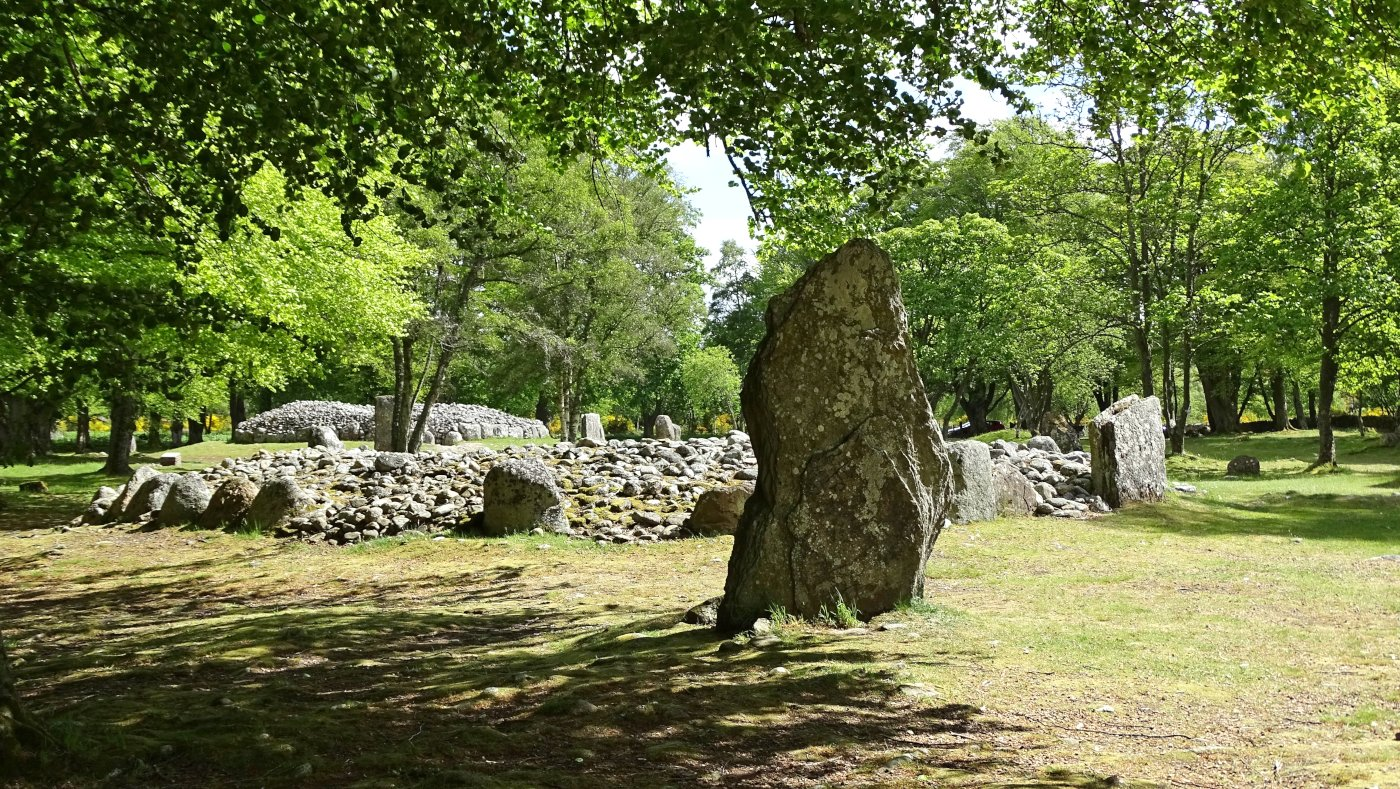
The Balnuaran of Clava is the best-preserved part of the Clava prehistoric complex near Inverness.

The site contains several monumental structures, including passage graves, ring cairns, standing stones, and carefully arranged kerbstones.

Its remarkable preservation provides an unusually clear picture of Bronze Age monumental architecture.

What Is a Kerbed Cairn?

A kerb is a line of stones forming the outer edge of a monument.

At Clava, large stones were carefully arranged around the circumference of cairns.

These stones created a deliberate boundary between the monument and its surroundings.

Circular Geometry

The circular design required careful planning.

Builders needed to determine:

  • the center;

  • the circumference;

  • stone spacing;

  • and the position of entrances.

This indicates considerable practical knowledge of geometry.

Passage Graves

Two of the best-known monuments at Balnuaran of Clava are passage graves.

Their passages point toward the southwest.

The orientation is significant because the setting Sun around the winter solstice appears along this direction.

Solar Alignment

The winter-solstice sunset may have illuminated the interior of the tomb.

This creates a striking connection between:

  • sunlight;

  • darkness;

  • death;

  • and seasonal renewal.

The Meaning of Light

We cannot know exactly what Bronze Age people believed.

However, the deliberate control of light entering the monument suggests that the movement of the Sun may have been meaningful.

Light entering a dark chamber could have created a powerful ceremonial experience.

Ring Cairns

Balnuaran also contains ring-shaped monuments without the same internal passage arrangement.

These structures demonstrate that different forms of ritual architecture existed within the same complex.

Standing Stones

Standing stones surround or accompany the monuments.

Their arrangement creates visual relationships between different parts of the complex.

Construction

Local stones were used extensively.

The builders carefully selected and arranged stones of different sizes.

Some of the larger blocks required considerable effort to transport.

Burial Practices

The monuments were associated with funerary activity.

However, the exact number of burials and sequence of use remain subjects of archaeological investigation.

Why the Site Was Important

Balnuaran was likely more than a cemetery.

The monuments may have hosted:

  • ceremonies;

  • seasonal gatherings;

  • remembrance rituals;

  • and community activities.

Conclusion

Balnuaran of Clava provides one of the clearest examples of Bronze Age monumental planning in Scotland.

Its kerbed cairns, passage graves, standing stones, and solar orientations demonstrate an extraordinary combination of engineering, geometry, ritual, and landscape planning.
← Clava Cairns: Inverness's Bronze Age Passage GravesCulsh Earth House: Aberdeenshire's Souterrain →
Featured
image_2026-08-25_001355140.png
August 31, 2026
Mount Sandel: Northern Ireland's 9,000-Year Settlement
August 31, 2026
Read more →
August 31, 2026
image_2026-08-25_001215052.png
August 31, 2026
Star Carr: England's 10,700-Year Mesolithic Lakeside Camp
August 31, 2026
Read more →
August 31, 2026
image_2026-08-25_001438686.png
August 31, 2026
Staosnaig: Scotland's 6,000-Year Shell Midden
August 31, 2026
Read more →
August 31, 2026
image_2026-08-25_001541318.png
August 31, 2026
Barnhouse: Orkney's Neolithic Village and Standing Stones
August 31, 2026
Read more →
August 31, 2026
image_2026-08-25_001752145.png
August 31, 2026
Links of Noltland: Orkney's 5,000-Year Stone House
August 31, 2026
Read more →
August 31, 2026
image_2026-08-25_001848207.png
August 31, 2026
Skara Brae: Orkney's 5,100-Year Underground Village
August 31, 2026
Read more →
August 31, 2026
read more

Powered by The archaeologist